 Dorry Archiles
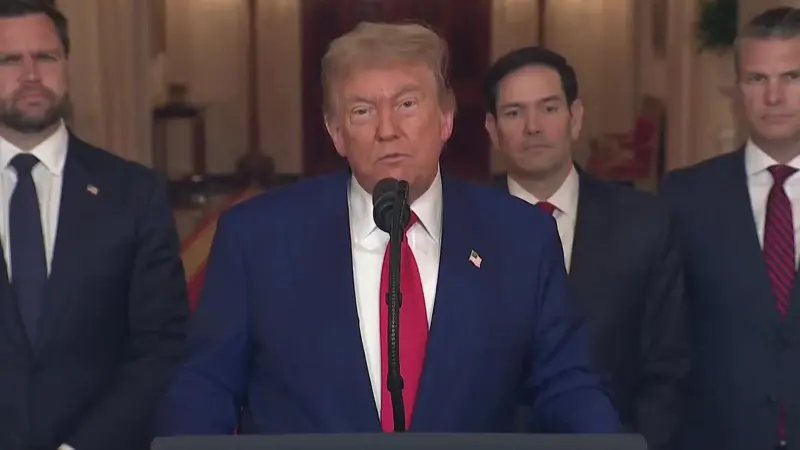
WASHINGTON — President Donald Trump has reportedly threatened to revoke the United States adherence to NATO's Article 5 commitment regarding collective defense if member states do not align with his administration's hardline stance against Iran, a move that has sent ripples through the transatlantic alliance amid escalating tensions in the Middle East.
The potential abrogation of NATO's bedrock principle, which states that an attack on one member is an attack on all, represents a significant escalation in President Trump's long-standing skepticism toward the alliance. Sources close to diplomatic discussions indicate the President conveyed this ultimatum during recent bilateral meetings, expressing frustration over what he perceives as insufficient European support for Washingtons aggressive posture toward Tehran.
This development comes as global powers grapple with Iran's accelerated nuclear program and its increasing assertiveness in the Persian Gulf region. The Trump administration has consistently advocated for maximum pressure on Iran, including stringent sanctions and heightened military presence, a strategy not fully embraced by all NATO partners, particularly those in Europe who favor a diplomatic solution.
The implications of such a threat are profound, potentially dismantling decades of collective security architecture built on the principle of mutual defense. Experts warn that questioning Article 5 could severely undermine NATO's credibility and embolden adversaries who might interpret the disunity as an opportunity to test the alliance's resolve.
NATO Secretary General Jens Stoltenberg has previously emphasized the unwavering commitment to Article 5 as the cornerstone of the alliance, but has remained notably silent on these specific reports. European capitals, however, are reportedly engaged in urgent internal discussions to formulate a unified response to the Presidents unexpected demands.
Historically, Article 5 has been invoked only once: by the United States after the September 11, 2001, terrorist attacks. This historical precedent underscores the gravity of any suggestion that a member nation might unilaterally withdraw from its obligations, especially a founding nation and the alliance's primary military power.
The controversy places European leaders in a difficult position, torn between upholding their multilateral commitments and avoiding a direct confrontation with a pivotal ally. Their economies and security interests are deeply intertwined with both the United States and the stability of the Middle East, making any decision fraught with complex geopolitical calculations.
Observers suggest that President Trumps threat aims to force allies into a more cohesive front against Iran, possibly in anticipation of further escalation or negotiations. However, critics argue that weakening NATO's fundamental defensive pact could have unintended consequences, creating a security vacuum and fostering instability far beyond the immediate Iranian context.
The White House has yet to issue an official statement directly addressing the reports, maintaining its focus on the broader strategy of containing Iran's regional influence. Meanwhile, the Pentagon continues to bolster its forces in the Middle East, reinforcing the impression of an impending confrontation that European leaders are keen to avert.
As the situation unfolds, the transatlantic alliance faces one of its most severe tests. The outcome of President Trumps demands regarding Iran will not only redefine the future of NATO but also significantly reshape the global geopolitical landscape for years to come.