 Stefani Rindus
WASHINGTON — A U.S. Air Force E-3 Sentry airborne early warning and control (AWACS) aircraft was shot down by a sophisticated surface-to-air missile over the contested waters of the South China Sea on Tuesday, marking the first combat loss of the invaluable E-3 jet in American history. All 31 crew members aboard the advanced surveillance platform are presumed lost, a devastating blow to U.S. operational capabilities and a stark escalation of regional tensions.
Defense officials, speaking on condition of anonymity due to the sensitivity of the incident, confirmed the E-3 jet, call sign “Vigilant 7,” disappeared from radar screens at approximately 03:45 UTC. Preliminary intelligence suggests the aircraft was targeted by an advanced, long-range missile system not previously deployed in the region, raising immediate questions about its origin and operator.
President Donald Trump addressed the nation from the Oval Office late Tuesday, expressing profound sorrow for the loss of American lives and vowing a swift and decisive response. “This brazen act of aggression against a sovereign U.S. asset will not go unanswered,” President Trump stated, his voice somber. “The United States will hold those responsible accountable for this heinous attack on our brave service members and our vital interests.”
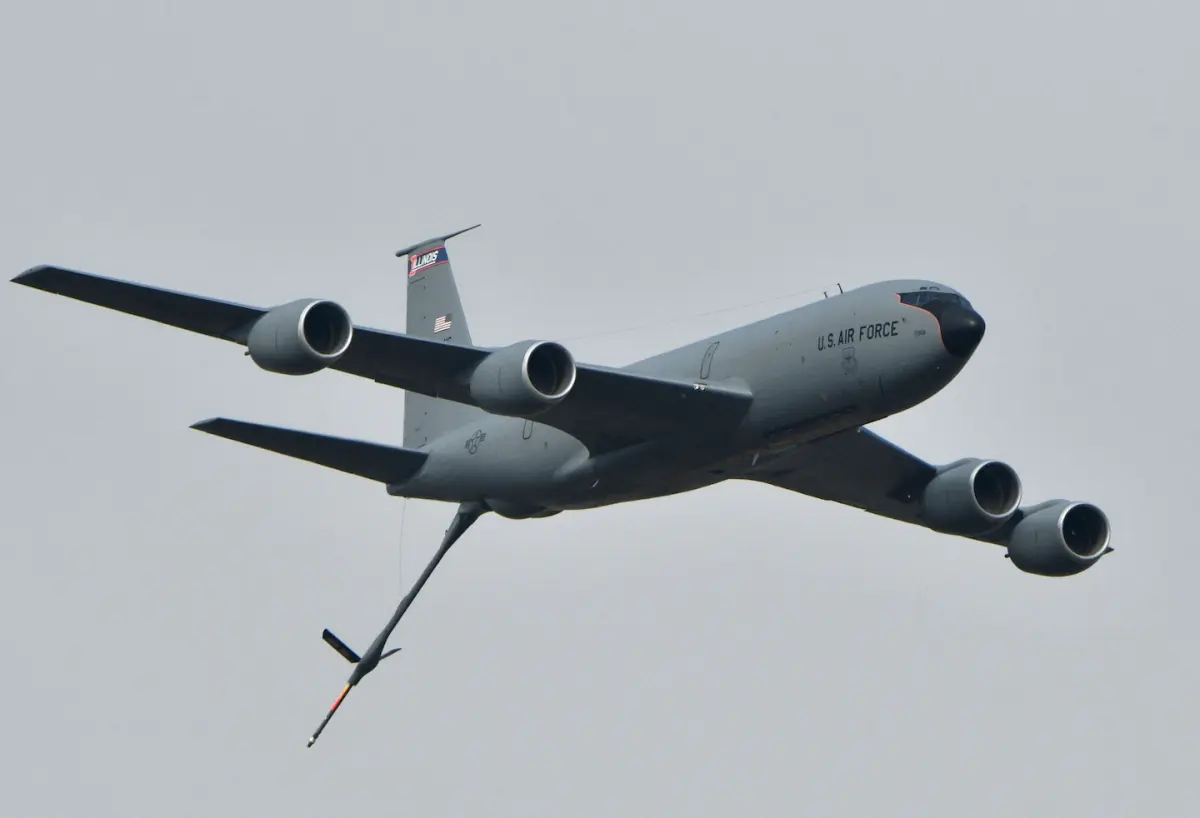
The E-3 Sentry, derived from the Boeing 707, serves as the backbone of NATO and U.S. air defense, providing all-weather surveillance, command, control, and communications. Its distinctive rotating radar dome, a 30-foot-diameter rotodome, houses a powerful radar system capable of detecting aircraft and ships hundreds of miles away, making it a critical asset in modern warfare.
Military analysts underscore the gravity of losing such a strategic asset. “An E-3 is not just an aircraft; it is a flying command center, a vital eye in the sky,” explained Dr. Evelyn Reed, a defense strategist at the Center for Strategic and International Studies. “Its destruction represents not only a tragic loss of life but also a significant degradation of battlefield awareness and command capabilities, especially if the technology aboard falls into adversary hands.”
The Pentagon has initiated a full-scale investigation into the incident, dispatching a naval task force to the area to conduct search and rescue operations, although hopes for survivors are diminishing with each passing hour. Recovery of the E-3 jet wreckage is considered paramount to understanding the missile system employed and to prevent intelligence compromises.
This unprecedented combat loss arrives amidst heightened geopolitical friction in the Indo-Pacific, where competing territorial claims and increased military posturing have strained international relations. The downing of a U.S. E-3 jet is expected to precipitate a significant recalibration of U.S. military strategy and presence in the region.
Secretary of State Michael Pompeo convened an emergency meeting with allied nations, emphasizing the need for a unified international front against acts of aggression. He reiterated the United States’ commitment to freedom of navigation and overflight in international airspace and waters, principles challenged by this attack.
Lawmakers on Capitol Hill reacted with a bipartisan outcry, calling for immediate briefings from defense officials and urging the administration to deploy all necessary resources to determine the perpetrators. Senate Majority Leader Patricia Hayes called the incident “a grave reminder of the dangers our service members face protecting our freedoms.”
The U.S. Air Force operates a fleet of 31 E-3 Sentry aircraft, each valued at hundreds of millions of dollars and requiring highly specialized crews. The lengthy training required for E-3 personnel means the human cost of this loss extends far beyond the immediate tragedy, impacting future operational readiness.
As the international community grapples with the implications of this attack, the focus remains on identifying the responsible party and understanding the full technological capabilities displayed by the weapon that brought down the highly advanced E-3 jet, pushing global tensions to a perilous new peak.