 Edward DP Situmorang
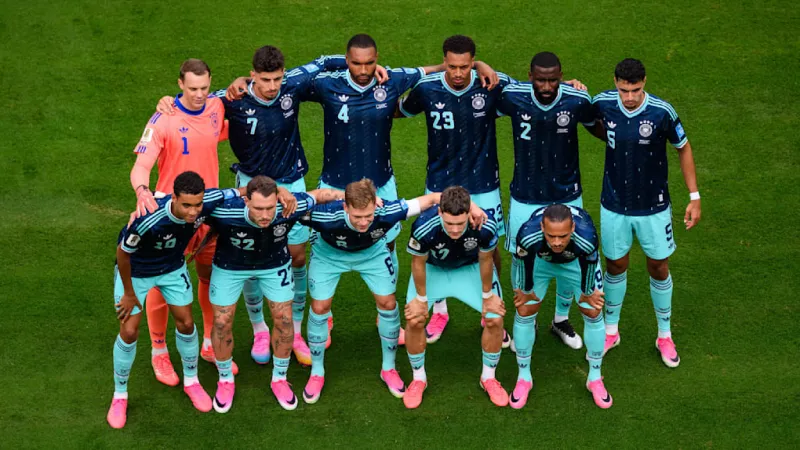
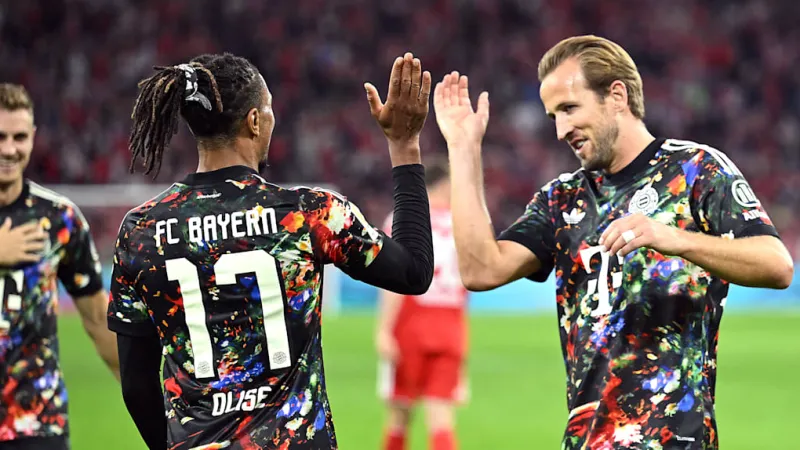
Germany's national football team now knows its opponent for the upcoming World Cup Round of 16, with its complete pathway to the final also definitively mapped out, a clarity achieved remarkably even before the conclusion of the final group stage matches this Sunday.
This early determination ends days of complex computations, as organizers sifted through 495 distinct scenarios to identify the exact third-place finisher Germany will face. Such foresight is a rare advantage in the unpredictable realm of major international tournaments.
The clarification provides the German coaching staff and players invaluable time for strategic planning and targeted preparation. Instead of awaiting the outcome of multiple permutations, their focus can now sharpen on a specific challenge.
For any team vying for the coveted World Cup trophy, understanding the immediate next hurdle, and crucially, the subsequent potential opponents, offers a psychological and tactical edge. This contrasts sharply with rivals who must still monitor various results to ascertain their future.
The intricate nature of group stage standings often leaves teams, fans, and analysts in suspense until the very last whistle. However, for Germany, the mathematical possibilities have converged, lifting the fog of uncertainty surrounding their initial knockout fixture.
This development allows the German squad to fine-tune their approach, potentially conserving energy and avoiding distractions that plague teams still navigating a murky future. The World Cup knockout stages demand peak physical and mental readiness, and early clarity facilitates this.
While other nations continue to battle for positioning, such as in the intense competition among teams like Uruguay and Spain for World Cup Group H supremacy, Germany can concentrate entirely on their identified adversary. The tournament landscape, particularly for the prominent teams, remains fluid, making this definitive outcome all the more significant.
Knowing the route to the final extends beyond merely the Round of 16. It enables a broader perspective on potential challenges in quarterfinals and semifinals, influencing training regimens and squad rotation decisions should Germany progress.
The global spectacle of the World Cup always captivates audiences, with teams like France demonstrating their prowess in dominant group performances, such as their recent 4-1 victory over Norway to claim their group lead. Germany now enters the knockout phase with a distinct advantage in preparation.
This early insight positions Germany to mount a formidable campaign as the World Cup progresses into its most critical phase. Their journey, once shrouded in computational unknowns, is now illuminated, setting the stage for an intense pursuit of the ultimate footballing glory.