 Edward DP Situmorang
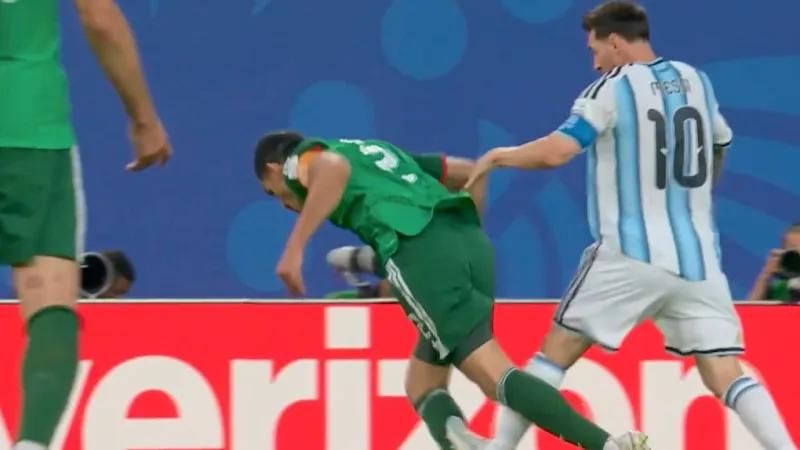
GENEVA - Lionel Messi delivered a stunning three-goal performance against Algeria, but football experts are questioning whether the Argentine superstar was fortunate to remain on the pitch after a controversial early challenge that many deemed worthy of a red card. The incident, occurring in the match's opening stages, has reignited debates surrounding refereeing decisions in high-stakes international football.
The critical moment unfolded when Messi executed a forceful tackle on an Algerian opponent, leaving the player on the ground clutching his leg. Despite the clear intensity of the challenge, the match official opted to issue only a yellow card, a decision that immediately drew scrutiny from pundits and commentators alike.
Prominent football analysts were quick to voice their dissent. One widely respected expert stated unequivocally, "Technically, that was a red card offense. Messi was extremely lucky not to be sent off." This sentiment was echoed across various sports desks, highlighting a consensus view among seasoned observers.
Indeed, the consensus among specialists suggests that the tackle demonstrated excessive force and endangered the safety of the opposing player, fulfilling the criteria typically associated with a direct red card. Had the card been shown, it would have drastically altered the complexion of the game, forcing Argentina to play with ten men for the majority of the encounter.
The referee's decision allowed Messi to remain on the field, subsequently influencing the match outcome with his prolific scoring. His hat-trick cemented Argentina's dominant victory, yet the shadow of the early controversial call persists, raising questions about preferential treatment for high-profile players.
Critics argue that such leniency toward star players undermines the integrity of the game and sets a dangerous precedent for officiating consistency. The perceived Messi red card controversy has become a significant talking point that overshadows an otherwise spectacular individual performance.
The World Cup stage often amplifies these moments, with every decision scrutinized under intense global pressure. Comparatively, other prominent players, such as Cristiano Ronaldo, also face immense pressure in major tournaments, as seen with anticipation surrounding his performance in matches like Portugal's against Congo. Ronaldo Prepares World Cup Debut As Portugal Faces Congo Challenge.
Supporters of the referee's decision might point to the subjective nature of game calls and the potential for context to influence the severity of a foul. However, the uniformity of expert opinion on this specific incident suggests a clear breach of standard disciplinary protocols.
This incident brings to the forefront the long-standing discussion about a perceived "referee bonus" for elite athletes, where their status might unconsciously sway officials to be more lenient. Such discussions are not new in the realm of professional football and often spark heated debate among fans and analysts.
The governing body of football regularly reviews officiating standards and controversial incidents. While the outcome of this specific match stands, the public discussion initiated by the experts will undoubtedly contribute to ongoing dialogues about fairness and rule application at the highest levels of the sport.
Ultimately, the incident serves as a stark reminder of the immense pressure officials face and the split-second decisions that can profoundly impact the narrative and results of pivotal football matches. The debate over Messi's lucky escape will likely endure as a footnote to his otherwise brilliant display, prompting continued scrutiny of high-stakes officiating.