 Chris Robert
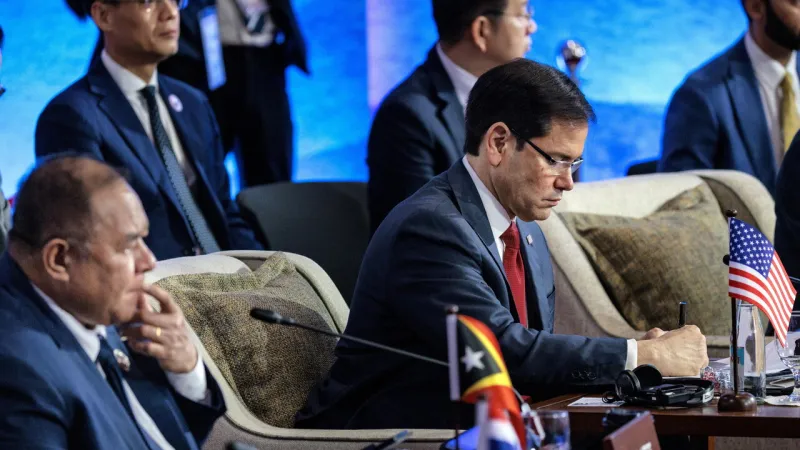
Russian Foreign Minister Sergey Lavrov informed U.S. Secretary of State Marco Rubio that additional arms deliveries to Ukraine are "inadmissible" during their candid discussion on the sidelines of the ASEAN summit. The high-stakes exchange underscored persistent diplomatic fissures between Moscow and Washington concerning the ongoing conflict in Eastern Europe.
The Russian diplomat conveyed Moscow's unwavering position directly to Secretary Rubio, emphasizing the perceived escalatory nature of continued military assistance to Kyiv. This firm stance reiterates Russia's long-held objections to Western aid for Ukraine, which it views as prolonging the hostilities and undermining efforts toward a peaceful resolution.
The bilateral meeting occurred amidst the broader multilateral agenda of the ASEAN summit, a significant regional forum where global powers often leverage opportunities for critical one-on-one dialogues. Such encounters often serve as vital barometers for the state of international relations, even when yielding no immediate breakthroughs.
Adding another layer of complexity to the discussions, Secretary Rubio notably avoided responding to a query regarding potential military or financial assistance from Moscow to Tehran. This silence from the top U.S. diplomat left open questions about the extent of intelligence Washington may possess on such alleged cooperation and its implications for regional stability.
Rubio's reticence on the Russia-Iran nexus suggests a delicate diplomatic calculus, potentially aimed at not prematurely revealing sensitive information or escalating an already tense geopolitical landscape. The United States has consistently voiced concerns over the deepening military and economic ties between Russia and Iran.
The discussions at the ASEAN summit are not isolated. They follow a pattern of high-level diplomatic confrontations between U.S. and Russian officials regarding the war. For context on previous such interactions, see US, Russia Top Diplomats Confront Ukraine War at ASEAN Summit.
The ongoing conflict in Ukraine continues to dominate global security discussions, with Western nations, including the United States, committing substantial military aid to bolster Ukraine's defense capabilities. This support, consistently criticized by the Kremlin, includes advanced weaponry and financial assistance, forming a core contention in U.S.-Russia relations. For insights into the conflict's dynamics, read Ukraine Strikes Russian E-Commerce Hub; Zelenskyy Justifies Escalation.
The potential for increased Russian support for Iran carries significant ramifications for the Middle East, particularly given existing tensions and the robust international sanctions regime targeting Tehran. Concerns about Iran's nuclear program and regional proxy activities remain a priority for U.S. foreign policy. Further details on Iran's regional posture can be found in Iran Warns of Oil Cutoff As US Strikes Escalate in Hormuz.
The Trump administration, under President Donald Trump, has maintained a firm, albeit complex, foreign policy approach towards both Russia and the broader Middle East. While President Trump has pursued avenues for dialogue with Russia, his administration has simultaneously challenged what it perceives as Russian aggression and Iranian destabilizing actions. The complexities of this stance are often intertwined with domestic considerations, as explored in Trump Honors Fallen As Iran Conflict Deepens, Domestic Pressure Mounts.
The ASEAN meeting thus served as a microcosm of broader global power dynamics, highlighting intractable disagreements on key international security issues. While the direct confrontation offered little in terms of resolution, it reaffirmed the entrenched positions of two major geopolitical rivals.
Diplomatic channels, despite their challenges, remain crucial for managing escalating tensions and preventing miscalculation. The exchange between Lavrov and Rubio underscores the continuous need for careful communication, even amid profound policy divergences, in navigating a fragmented international order.
The global community keenly watches these interactions, understanding that the implications extend beyond bilateral relations, influencing security postures and economic stability across continents.