 Debby Wijaya
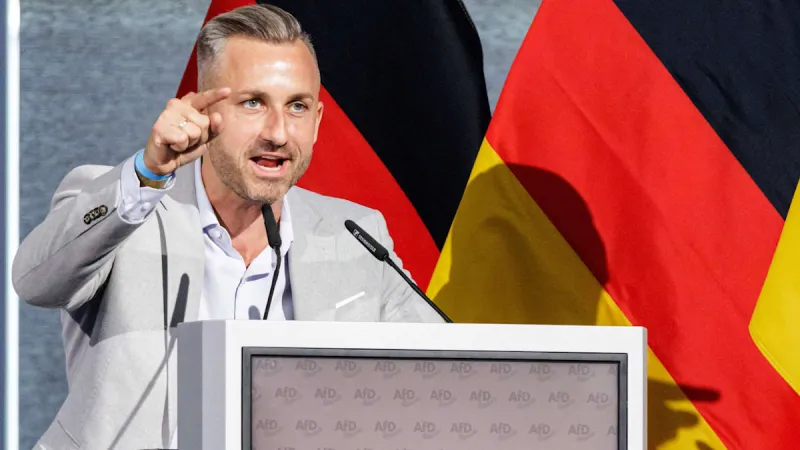
Magdeburg, Germany – Ulrich Siegmund, the Alternative for Germany (AfD) frontrunner for Sachsen-Anhalt, recently presented a contentious 100-day program, vowing immediate action on policies ranging from stricter asylum requirements to increased family incentives. During a presentation in Magdeburg and an interview with Lutz Stordel, Siegmund sharply questioned Germany's fiscal priorities, stating, "We have money for the whole world, but cannot manage free daycare."
The proposed agenda, designed to be implemented swiftly if the AfD secures power in the upcoming Sachsen-Anhalt election, outlines several key planks that resonate with the party's core platform. Siegmund emphasized a commitment to direct governance following the election, stating, "We want to act immediately after the election."
A central tenet of the program includes the introduction of mandatory work obligations for asylum seekers. This policy aims to integrate individuals into the workforce more rapidly while simultaneously addressing perceived strains on public resources. Proponents argue it fosters self-sufficiency and contributes to the local economy.
Complementing the work mandate, the AfD plan also calls for a significant increase in deportations of individuals whose asylum applications have been rejected. This measure aligns with the party's broader immigration stance, advocating for stricter border controls and a reduction in immigration numbers.
Furthermore, the program proposes new financial incentives for families, often referred to as "premiums." While specific details remain under wraps, these measures are intended to boost birth rates and support traditional family structures within Sachsen-Anhalt, reflecting a common theme in AfD policy discussions.
Siegmunds bold statement regarding Germany's global financial commitments versus domestic needs like free daycare has sparked considerable debate. The remarks tap into a growing sentiment among some voters who feel that national resources are disproportionately allocated to international aid rather than pressing internal social issues.
The AfD has consistently criticized the current federal government's spending policies, particularly those related to climate initiatives, European Union contributions, and humanitarian aid abroad. Siegmunds statement encapsulates this critique, framing it as a choice between global responsibilities and the welfare of German citizens.
Observers note that the 100-day program serves as a clear blueprint for the AfD's strategic objectives in Sachsen-Anhalt, aiming to showcase the party's readiness to govern and implement its agenda without delay. This proactive approach seeks to counter narratives that portray the party as solely an opposition force.
The announcement follows previous reports on the party's regional aspirations. A related article, AfD Unveils Sachsen-Anhalt 100-Day Plan for Governance, detailed earlier insights into the party's strategic preparations for leadership in the state.
The political landscape in Sachsen-Anhalt has seen the AfD gain significant ground in recent years, making their electoral prospects a focal point of national political discourse. The party's ability to translate this program into actual policy will depend heavily on the upcoming election results and potential coalition dynamics.
The emphasis on issues like childcare costs is particularly salient in a country grappling with demographic shifts and the economic burdens on young families. Siegmunds challenge highlights a tension between federal and state level responsibilities, and how they impact the daily lives of citizens.
Critics of the AfD's proposals often raise concerns about the practicalities and ethical implications of some of their immigration policies, such as mandatory work for asylum seekers and accelerated deportations. Human rights organizations typically advocate for more integrated and compassionate approaches.
Conversely, supporters view the AfD's program as a necessary course correction, arguing that the existing system is unsustainable and fails to prioritize the interests of German citizens. The party's messaging often resonates with those feeling disenfranchised by mainstream political parties.
The interview with Lutz Stordel provided Siegmund a platform to elaborate on the urgency behind these proposed changes. His assertion of immediate action post-election signals a decisive stance, positioning the AfD as a party ready to disrupt the status quo in Sachsen-Anhalt.
The discussion around the affordability of childcare is not unique to Germany, but Siegmunds direct challenge underscores the political weaponization of such issues. Many European nations are grappling with rising costs and access to quality early childhood education.
As the election cycle progresses, the AfD's 100-day plan will undoubtedly face intense scrutiny from political rivals, media, and the public. Its reception will be a crucial indicator of the party's electoral strength and the potential for a significant shift in Sachsen-Anhalts governance.