 Dorry Archiles
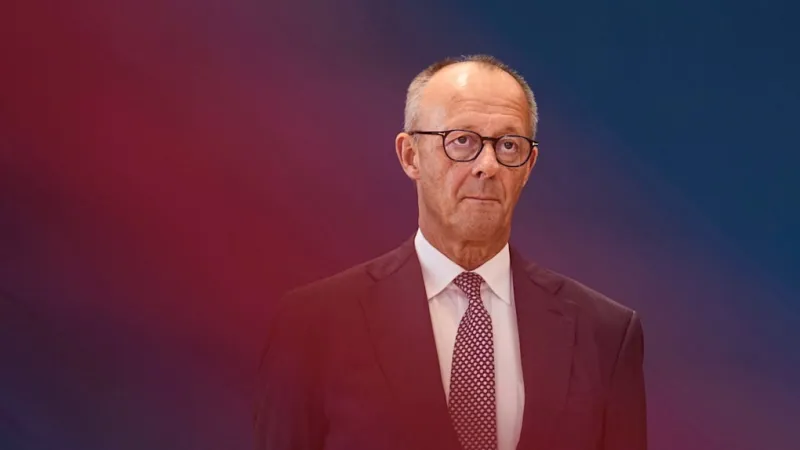
Brussels – German Chancellor Merz is set to arrive in Brussels for an impending European Union summit, where he is widely expected to adopt a confrontational stance on pressing economic issues, potentially leading to a direct challenge against European Commission President Ursula von der Leyen. The agenda is laden with explosive economic topics, prompting von der Leyen to issue a preemptive defense of her policies in a letter obtained by WELT, signaling the high stakes of the upcoming discussions.
The summit is scheduled to address a spectrum of contentious financial and industrial matters, reflecting growing divisions among member states regarding the bloc's economic direction. Chancellor Merz arrives amid increasing pressure at home to champion German interests and advocate for a more fiscally conservative approach to EU policy.
Central to Merz's anticipated critique are concerns over the Commission's handling of the European Green Deal's economic implications and proposals for future common spending. German officials have frequently voiced reservations about potential overreach and the financial burden placed on individual nations, particularly powerhouse economies like Germany.
Ursula von der Leyen's defensive missive underscores the tension preceding the gathering. While the specific contents of her letter remain largely under wraps, sources suggest it addresses criticisms related to competitiveness, regulatory burdens, and the pace of the green transition, affirming the Commission's commitment to balanced and sustainable growth.
This brewing confrontation marks a significant moment for EU leadership, as Berlin and Brussels navigate differing visions for the bloc's economic resilience. The outcome of these discussions could redefine the trajectory of European industrial strategy and fiscal integration in the coming years.
Energy policy, a consistently thorny subject, is also expected to be a major point of contention. Member states continue to grapple with strategies to secure affordable and reliable energy supplies while pursuing ambitious climate goals. Chancellor Merz is likely to push for pragmatic solutions that prioritize industrial competitiveness. Related discussions around shielding electricity prices have recently seen movement, as highlighted by news such as EU Backs Italy's Energy Shield Amidst Bloc Fiscal Tensions.
Fiscal rules and the stability pact will inevitably re-emerge as crucial discussion points. Germany, historically a proponent of strict budgetary discipline, has often found itself at odds with other member states advocating for greater spending flexibility to stimulate growth and investment. These ongoing debates underscore the fundamental philosophical differences within the Union.
Beyond the immediate economic agenda, the summit will also touch upon broader geopolitical challenges, including the EU's role in global trade and its response to international economic pressures. The cohesion demonstrated by member states on these fronts will be critical for the Union's standing on the world stage.
Merz's decision to directly challenge von der Leyen reflects a growing assertiveness from Germany, aiming to reshape the EU's economic framework. The Chancellor's approach signals a departure from previous German leadership styles, embracing a more direct and unreserved advocacy for national and European economic principles as seen from a German perspective.
Observers will keenly watch the exchanges in Brussels, not only for immediate policy outcomes but also for signals regarding future leadership dynamics within the EU. The strength of von der Leyen's position and the effectiveness of Merz's arguments will undoubtedly shape the narrative leading into upcoming European political cycles.
The implications of a significant divergence between Germany and the European Commission could reverberate across various sectors, from industrial policy to the future of the single market. Resolving these economic tensions will be paramount for maintaining unity and driving forward the bloc's ambitious objectives.
As the EU faces a complex array of internal and external economic challenges, the ability of its leaders to forge consensus amidst such pronounced differences will be a true test of its institutional strength and political will. The Brussels summit promises to be a pivotal moment for European economic governance.