 Dodi Irawan
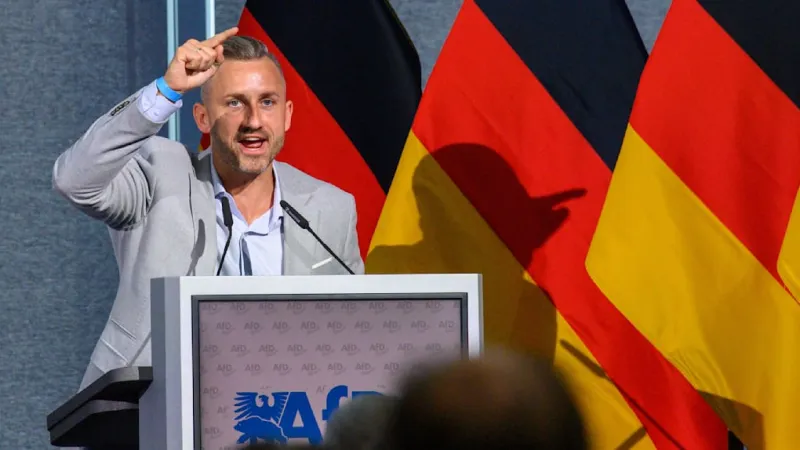
MAGDEBURG – The Alternative for Germany (AfD) party in Sachsen-Anhalt has officially unveiled its comprehensive 100-day program, articulating a clear roadmap for potential governance in the eastern German state. Ulrich Siegmund, the AfD's leading candidate for Sachsen-Anhalt, presented the detailed plan in Magdeburg, reaffirming the party's assertive goal of assuming control of the state government.
The program outlines several key policy initiatives, predominantly focusing on migration and social welfare. Among the most prominent proposals are a significant increase in detention capacities for asylum seekers awaiting deportation and the implementation of a universal work requirement for all asylum applicants.
A notable, perhaps unexpected, aspect of the AfD’s agenda also includes the promotion of driving license subsidies. This particular measure, alongside the more stringent migration policies, indicates a multifaceted approach to appealing to a broad segment of the electorate, addressing both security and everyday concerns.
Mr. Siegmund emphasized that the 100-day program is not merely a collection of campaign promises but a tangible blueprint for immediate action should the party gain executive power. This strategic move aims to demonstrate readiness and competence for administrative responsibilities, a frequent point of criticism from political rivals.
The push for more detention places directly addresses a central tenet of the AfD's platform: a stricter stance on immigration and a more expedited process for deporting individuals whose asylum applications have been rejected. Proponents argue this would enhance public safety and streamline administrative procedures.
Similarly, the proposed mandatory work requirement for asylum seekers reflects the party's position on integration and economic contribution. The AfD posits that such a policy would foster self-sufficiency, reduce reliance on state benefits, and ensure that individuals contribute to society while their legal status is being determined.
The inclusion of driving license subsidies, while seemingly distinct from the party's core migration agenda, speaks to a broader appeal for working-class families and individuals in rural areas where personal mobility is crucial. This move could be interpreted as an effort to counter perceptions of the party focusing solely on immigration issues.
Sachsen-Anhalt has been a stronghold for the AfD, reflecting a broader trend of increased support for the party across eastern Germany. The unveiling of a concrete governance program signals a maturation of the party's political strategy, moving beyond protest politics towards a credible claim for leadership.
Observers note that the AfD’s growing electoral success, particularly in states like Sachsen-Anhalt, presents significant challenges for established political parties. Previous elections in the region have highlighted the party's ability to mobilize voters disillusioned with mainstream politics, as explored in articles like AfD Election Victory in Sachsen-Anhalt: Symbolic Power, Limited Change.
The 100-day plan is designed to set an immediate tone for a potential AfD-led administration, prioritizing issues that resonate strongly with its voter base. It marks an escalation in the party's efforts to translate its electoral gains into tangible policy implementation and governmental influence.
Traditional parties in Germany face the complex task of responding to the AfD's increasingly sophisticated political messaging and its clear ambitions for power. The program's unveiling further intensifies the political discourse surrounding immigration, social policy, and the future direction of Sachsen-Anhalt.
The upcoming electoral cycle will undoubtedly feature intense debate over these proposals, as other parties scrutinize the feasibility, legality, and societal impact of the AfD's declared intentions. The program represents a significant declaration of intent from a party determined to reshape the political landscape of the state.