 Stefani Rindus
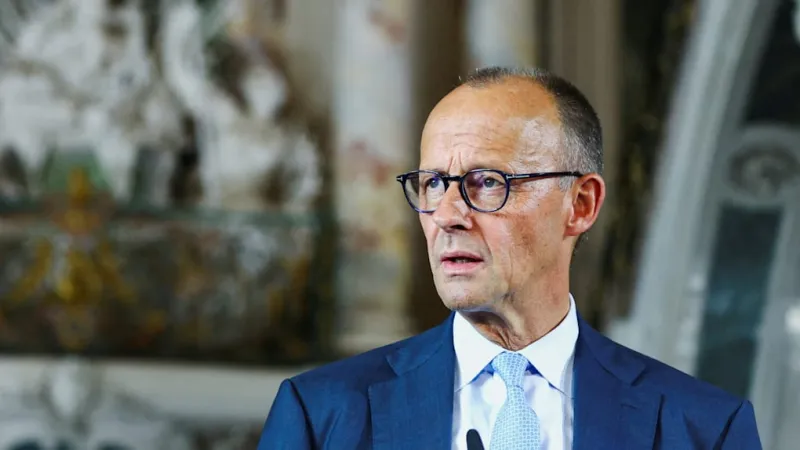
BERLIN – Jens Spahn, a prominent figure within Germany's Christian Democratic Union (CDU), has announced his resignation as parliamentary group leader for the CDU/CSU alliance. His departure follows a contentious internal party debate ignited by his decision to form a family through surrogacy. Friedrich Merz, chairman of the CDU, publicly endorsed Spahn's move, characterizing it as "correct and unavoidable" given the circumstances.
Spahn's choice to use a surrogate mother to expand his family, a practice legally complex and ethically debated in Germany, had provoked significant discord among conservative members. While surrogacy is not permitted under German law, Spahn pursued this path abroad, reportedly in the United States, which triggered questions about consistency with party values and public perception.
Merz's statement underscores the leadership's view on the matter, suggesting the controversy had become an untenable distraction. "Jens Spahn made a decision that was right and unavoidable," Merz stated, emphasizing the need for party cohesion ahead of crucial political challenges. His remarks indicate an effort to contain the fallout and allow the party to move past the internal strife.
Spahn, a former Federal Minister of Health, had been a rising star within the CDU for years, often seen as a potential future leader. His tenure as parliamentary group leader was marked by efforts to modernize the party's image and address contemporary social issues, often pushing boundaries within the traditionally conservative bloc.
The debate over Spahn's personal life extended beyond mere morality, touching on legal ambiguities and the party's stance on reproductive technologies. Some within the Union expressed solidarity, advocating for personal freedom, while others maintained that a high-profile politician should adhere strictly to German legal and ethical norms, regardless of where the procedure took place.
This resignation marks a significant moment for the CDU, particularly as it navigates complex social landscapes and attempts to appeal to a broader electorate. The controversy around Spahn's surrogacy had already fueled a credibility crisis within the CDU, prompting calls for his resignation from various factions. The immediate concern for the party leadership now involves appointing a successor who can unify the parliamentary group and maintain focus on legislative priorities.
The incident reignites the broader public discussion in Germany surrounding surrogacy. While it remains illegal domestically, many German citizens pursue surrogacy options abroad, leading to calls for legislative review or clarification. The legal vacuum often leaves intended parents and children in complex situations regarding legal recognition and parentage.
The term "unavoidable," as used by Merz, suggests that the internal pressure and public scrutiny had reached a point where Spahn's continued leadership would have been detrimental to the party's image and operational effectiveness. Such ethical debates are not new to conservative parties in Germany, which often grapple with reconciling traditional values with evolving societal norms.
Observers suggest that while Spahn's resignation aims to quell the immediate controversy, the underlying ethical and legal questions persist. The CDU will likely face renewed pressure to articulate a clear and consistent policy on modern family structures and reproductive technologies, a challenge that could further test its internal unity.
His political future, though no longer at the helm of the parliamentary group, remains uncertain. Whether he will maintain a prominent role within the party or opt for a less public profile is a subject of speculation among political analysts.
Merz concluded his remarks by reaffirming the party's commitment to its principles while acknowledging the difficulties of balancing personal freedom with public duty. The CDU leadership hopes this decisive action will allow the party to concentrate on its legislative agenda and prepare for upcoming elections without the distraction of this high-profile personal issue.
This development underscores the intricate balance German politicians must maintain between their personal lives and public responsibilities, especially when personal choices intersect with sensitive societal values and legal frameworks. The resolution of this episode sets a precedent for how future such challenges might be addressed within the country's political establishment.