Gabriella
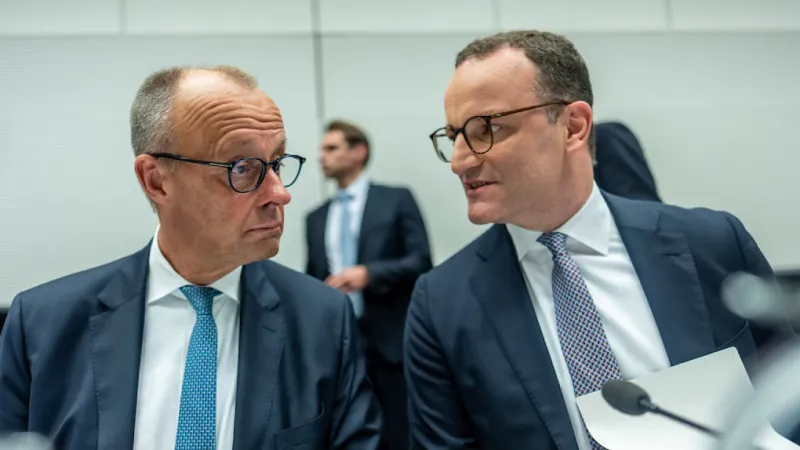
Berlin – Jens Spahn, a prominent figure within Germany's Christian Democratic Union (CDU), today announced his immediate resignation as leader of the party's parliamentary faction. This abrupt departure, fueled by intense public and internal scrutiny over a surrogacy arrangement Spahn commissioned in the United States, directly follows pressure from Chancellor Friedrich Merz.
Sources close to the Chancellery confirm that Chancellor Merz had recently conveyed to Spahn a direct suggestion for his withdrawal, citing the escalating damage the controversy inflicted upon the government's and the party's image. The resignation effectively averts a potentially divisive public confrontation within the ruling party's upper echelons.
The storm surrounding Spahn originated from revelations concerning his decision to engage a surrogate mother in the U.S. to carry his child. While surrogacy is legal in certain American states, it remains explicitly prohibited in Germany, triggering a fierce debate about ethical standards for public officials.
Public opinion has been sharply divided, with critics arguing that Spahn, as a lawmaker, should uphold German legal and ethical norms, even when conducting private affairs abroad. Proponents, conversely, emphasize individual reproductive freedom and the legal nature of the arrangement under U.S. law.
The issue created a significant fissure within the CDU, a party traditionally rooted in conservative values and often seen as a moral compass in German politics. Many within the party expressed concerns that the controversy was eroding the CDU's credibility and distracting from key policy initiatives.
In a brief statement to the press, Spahn acknowledged the heavy burden the situation had placed on his party and family. He did not explicitly admit wrongdoing but expressed hope that his resignation would allow the CDU to regain focus on the pressing challenges facing our nation.
Chancellor Merz, speaking shortly after Spahn's announcement, thanked him for his service to the party and the country. Merz underscored the importance of unity and integrity within the CDU, without directly referencing the surrogacy matter.
Spahn's exit creates a power vacuum within the CDU parliamentary group, necessitating a swift succession plan. The search for a new faction leader will likely reveal the current power dynamics and ideological fault lines within the party as it navigates the mid-term of the legislative period.
German law prohibits commercial surrogacy and the arrangement of surrogacy, viewing it as an infringement on human dignity, particularly that of the surrogate mother. This stark contrast with the legal framework in parts of the U.S. highlighted the ethical dilemma faced by Spahn.
Political analysts suggest this case sets a challenging precedent for German politicians, forcing a reevaluation of how personal choices made within legal foreign frameworks intersect with domestic ethical expectations and public service. It also reignites broader discussions on family law reform.
Jens Spahn, 45, has been a rising star in the CDU for over a decade. He previously served as Health Minister and was considered a potential future leader of the party. His political trajectory now faces significant uncertainty following this development.
This incident echoes past instances where the personal lives of politicians have clashed with public expectations, though the specific nature of the surrogacy debate adds a novel dimension to Germany's political landscape.
While surrogacy is a complex legal and ethical issue globally, the specific ramifications for a high-profile German politician engaging in it abroad underscore national legal and cultural differences.
The CDU leadership will undoubtedly prioritize restoring party unity and projecting an image of stability in the wake of Spahn's resignation, especially as the party prepares for upcoming regional elections.
Names such as Carsten Linnemann and Andreas Jung are already circulating as potential candidates for the influential faction leader position, though no official statements have been made regarding a successor.
Beyond the political implications, Spahn's case has catalyzed a wider societal conversation in Germany about evolving family structures, reproductive technologies, and the boundaries between personal freedom and public responsibility.