Gabriella
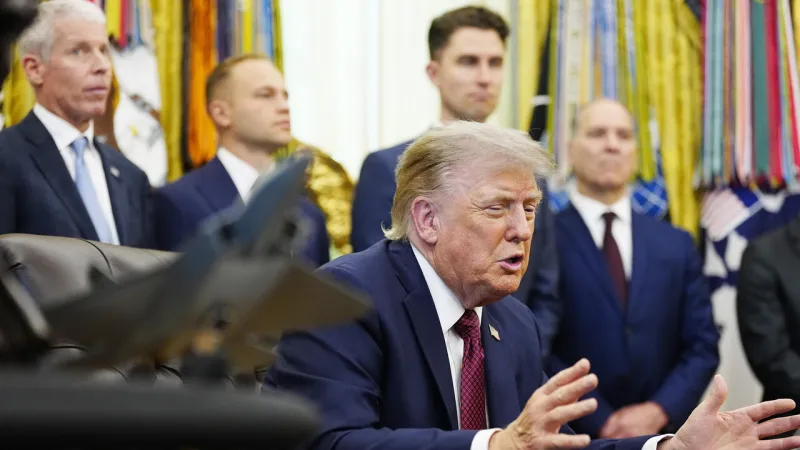
President Donald Trump has initiated a significant de-escalation of military posturing in the turbulent Persian Gulf, a move directly attributed to a pressing shortage of the advanced Patriot missile defense systems. This strategic recalibration coincides with a notable overture from Tehran, indicating its willingness to restart diplomatic discussions, offering a potential pathway out of the protracted regional tension.
The revelation of the Patriot missile deficiency underscores the logistical challenges currently faced by the U.S. military. These highly capable interceptor systems are crucial for defending against ballistic missiles, cruise missiles, and advanced aircraft, making their reduced availability a critical factor in strategic planning and operational readiness.
Israeli Prime Minister Benjamin Netanyahu confirmed the American President's decision, conveying to reporters that “The decision is his,” referring to President Trump's singular authority in this sensitive matter. This statement emphasizes the direct and personal nature of the President's intervention in managing the Gulf crisis.
Tehran's readiness to “resume talks” represents a cautious olive branch, signaling a potential shift from its previous hardline stance. The exact nature and scope of these proposed discussions remain unclear, but the mere offer suggests an appetite for dialogue amid mounting regional and international pressures.
For decades, the Middle East has been a crucible of geopolitical tension, with the Persian Gulf often at its epicenter. Previous administrations have grappled with Iran's nuclear ambitions and its regional proxy activities, frequently leading to heightened military readiness and rhetorical clashes.
The Patriot system, developed by Raytheon, forms a cornerstone of integrated air and missile defense for the United States and its allies. Its advanced radar and interception capabilities are designed to protect critical assets and personnel from sophisticated aerial threats. A shortage therefore compromises both offensive military options and defensive safeguards.
This announced scarcity of Patriot systems not only hampers offensive military options but also compromises defensive capabilities for US assets and regional allies. This vulnerability likely played a substantial role in the decision to curb the escalation, prioritizing the protection of existing assets and personnel deployed in the region.
The suspension of escalation sends a mixed signal to regional allies and adversaries alike. While some may welcome the reduced tensions as a step toward stability, others might perceive it as a sign of American constraint or a shift in commitment to regional security guarantees.
Crucially, the prospect of renewed diplomatic talks offers a glimmer of hope for a peaceful resolution to the current impasse. Past negotiations, often fraught with difficulty, have sought to address Iran's nuclear program, its enrichment activities, and its broader role in regional conflicts.
For President Trump, the decision to de-escalate, particularly if it leads to successful negotiations, could be framed as a pragmatic move that prioritizes national resources and actively seeks peace. Domestically, such an outcome might appeal to segments of the electorate advocating for reduced military entanglements abroad.
Global powers, including the United Nations and numerous European nations, have consistently urged de-escalation and dialogue in the Persian Gulf. Tehran's recent offer and President Trump's subsequent decision will likely be met with cautious optimism from the international community, hopeful for a diplomatic breakthrough.
The coming weeks will be critical in determining whether this temporary pause translates into sustained diplomatic engagement or if the region remains poised for future confrontations once the Patriot missile inventory is replenished and strategic capabilities are restored.