 Edward DP Situmorang
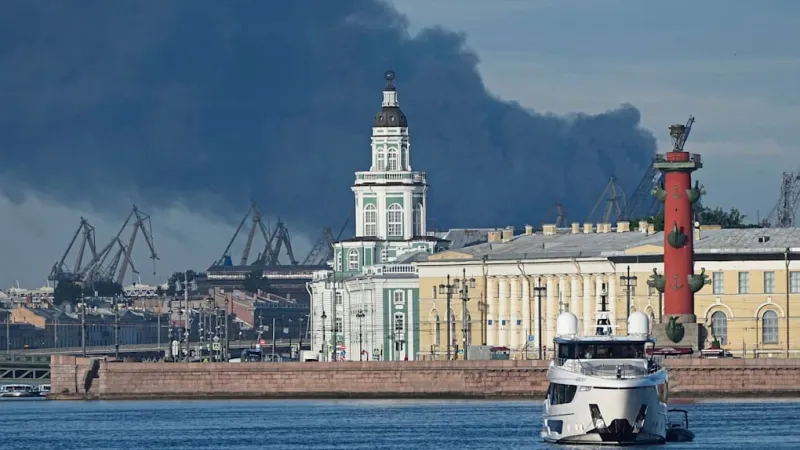
ST. PETERSBURG – Ukrainian military forces executed a sophisticated drone attack targeting Russia's International Economic Forum in St. Petersburg, a high-profile event designed to project stability and economic prowess, according to defense intelligence reports. The coordinated strike, occurring as prominent international guests convened, has brutally exposed glaring vulnerabilities within Russian air defense systems and profoundly challenged President Vladimir Putin's meticulously crafted narrative of national security and control.
The International Economic Forum, often dubbed Russia's Davos, serves as a critical platform for Moscow to attract foreign investment and assert its geopolitical influence. This year's iteration, held under increasing international scrutiny, was intended to demonstrate Russia's resilience against Western sanctions and its continued viability as a global economic player. The incursion directly into this highly secured zone sends a powerful message.
While specific details regarding the drone types and launch locations remain largely unconfirmed by official sources, the presence of smoke plumes and reported explosions near the event site created immediate disruption and alarm. Eyewitness accounts indicated a swift, albeit chaotic, response from local authorities, highlighting the unexpected nature of the assault on a city considered strategically vital and heavily protected.
The most damaging aspect of the incident, from Moscow's perspective, is the palpable failure of its advanced air defense network. St. Petersburg, as a major port city and home to critical military installations, is theoretically shielded by multiple layers of anti-aircraft systems. The successful penetration by Ukrainian drones, therefore, raises serious questions about the operational effectiveness and integrity of these defenses, particularly in the vicinity of the nation's leadership.
President Putin has consistently emphasized Russia's robust military capabilities and impregnable borders since the full-scale invasion of Ukraine. This drone incursion directly contradicts that assertion, revealing a strategic weakness at a moment when Russia aimed to showcase strength and stability to both its domestic audience and potential international partners. The damage extends beyond physical infrastructure to the very image of state control.
This tactical maneuver by the Ukrainian military aligns with a broader strategy of asymmetric warfare, focusing on deep strikes against Russian military and economic targets far behind the front lines. Ukraine has increasingly employed unmanned aerial vehicles to hit critical infrastructure, including oil depots and military bases, aiming to disrupt logistics, demoralize forces, and exert pressure on the Russian populace. For more on this strategy, see Ukraine Intensifies Deep Strikes: Kamikaze Drones Target Russian Fuel Depots.
The attack inevitably sparked discussions among the forum's attendees, many of whom represent countries Russia is actively courting. While no immediate official statements from foreign delegations condemned the attack or withdrew participation, the incident undoubtedly cast a shadow over the proceedings, underscoring the persistent volatility of the conflict and the risks associated with engaging with Moscow amidst ongoing hostilities.
Domestically, the incident presents a propaganda challenge for the Kremlin. State media outlets have largely downplayed the severity or attributed it to Ukrainian terrorist acts, attempting to frame it as a minor inconvenience rather than a significant security breach. However, public perception of government competence in safeguarding critical events and citizens may be eroded, especially among those who witnessed or were affected by the disruption.
Military analysts suggest that the sophistication required for such a long-range, coordinated drone attack indicates advanced planning and intelligence gathering by Ukraine. It signals an evolving capability to bypass complex air defense systems, potentially through electronic warfare countermeasures or by exploiting blind spots within the Russian network. This development could reshape future engagements.
The symbolic significance of targeting a major economic summit harks back to historical instances where adversaries sought to undermine a nation's prestige and economic stability through calculated disruption. The psychological impact of demonstrating vulnerability at such a high-profile gathering can be as potent as any physical damage inflicted.
In the aftermath, Russian authorities are expected to heighten security protocols significantly, not only around future high-level events but also across critical infrastructure nationwide. The St. Petersburg incident will likely prompt a thorough review and potential overhaul of Russia's air defense strategies, particularly regarding urban centers and strategic assets.
Ultimately, the drone strike in St. Petersburg serves as a stark reminder of the escalating nature of the conflict in Ukraine and Kyiv's resolve to challenge Moscow on multiple fronts. It underscores that even deeply entrenched power displays, such as an international economic forum, are not immune to the realities of modern warfare and strategic disruption.