 Demian Sahputra
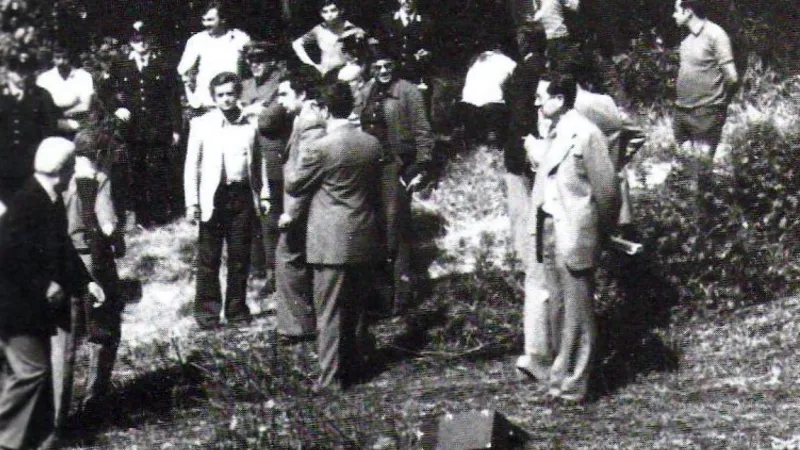
ROME, Italy — Prosecutors have formally requested life imprisonment for Renato Curcio and Mario Moretti, two figures historically associated with Italy's Red Brigades, during a significant hearing in the ongoing Cascina Spiotta legal proceedings. The demand for the maximum penalty underscores the gravitas of the charges and the enduring impact of the period often referred to as the Anni di piombo, or Years of Lead.
The prosecutor articulated this firm stance to the presiding judges, stating, "The penalty can be adapted, but I must ask for this." This declaration highlights a complex judicial duty, where the prosecution, while recognizing the court's ultimate discretion, is bound to seek the most severe sentence dictated by the nature of the alleged crimes.
The Cascina Spiotta case is a focal point in Italy's continuous reckoning with its turbulent past. While specifics of the current proceedings remain under judicial review, the names Curcio and Moretti immediately evoke the violent political struggles that gripped the nation in the 1970s and early 1980s.
Renato Curcio, a founder of the Red Brigades, and Mario Moretti, another prominent leader, were central figures in the domestic terrorism that sought to destabilize the Italian state through kidnappings, assassinations, and armed insurrections. Their trials and subsequent convictions have been extensively documented, yet new legal facets or reviews occasionally emerge.
The prosecutor's request for life imprisonment is not merely a formality; it reflects the state's persistent pursuit of justice for victims and its unequivocal condemnation of political violence. Such demands often carry immense symbolic weight, reiterating the principle that grave crimes, regardless of how much time has passed, warrant the most serious legal consequences.
The Anni di piombo were characterized by a sharp increase in political extremism from both far-left and far-right groups. The Red Brigades, a Marxist-Leninist urban guerrilla group, were among the most active and lethal, responsible for numerous high-profile acts of terror, including the kidnapping and murder of former Prime Minister Aldo Moro in 1978.
While Curcio was arrested in 1976 and Moretti in 1981, their legal sagas have spanned decades, marked by appeals, reinterpretations, and occasional new investigations. The current proceedings related to Cascina Spiotta suggest a re-evaluation or a new angle of their historical involvement in specific violent episodes.
The judicial system in Italy often grapples with the legacy of this era, balancing the need for justice with evolving legal interpretations and the passage of time. The prosecutor's assertion that the penalty "can be adapted" points to the judiciarys capacity for nuanced judgment, even when severe demands are made.
Public interest in cases involving such historical figures remains substantial, drawing attention to how contemporary Italian justice confronts its past. The outcomes of these proceedings often serve as benchmarks for national memory and the pursuit of accountability.
This development occurs amidst broader political discourse in Italy, where figures like Prime Minister Giorgia Meloni continue to navigate complex national issues. (See related coverage on Meloni Pushes EU Migrant Hubs Amidst Franco-Spanish Opposition).
The legal process will now continue with defense arguments and judicial deliberations, culminating in a verdict that will undoubtedly be scrutinized by legal experts, historians, and the wider public. The demand for life imprisonment ensures that the profound historical implications of the Cascina Spiotta case, and the actions of Curcio and Moretti, remain central to the discourse.