 Edward DP Situmorang

SHENZHEN – The global diplomatic landscape shifts significantly as U.S. President Donald Trump, Chinese President Xi Jinping, and Russian President Vladimir Putin prepare to converge in Shenzhen, China, for a pivotal APEC leaders meeting. This rare alignment of the worlds most influential heads of state fuels intense speculation regarding potential breakthroughs and persistent friction points across economic, security, and strategic domains.
The gathering, scheduled amidst the broader Asia-Pacific Economic Cooperation forum, represents a critical juncture for international relations. Analysts widely view the tripartite presence as an opportunity, however fraught, for direct engagement on a range of pressing global challenges, from trade imbalances to regional conflicts and emergent geopolitical realignments.
The APEC summit itself serves as a crucial platform for fostering economic growth and cooperation among 21 member economies in the Pacific Rim. While its primary focus remains trade and investment liberalization, the attendance of these three leaders inevitably elevates the agenda to include high-stakes political and security discussions that extend far beyond traditional economic parameters.
President Trump arrives in Shenzhen with a clear mandate to advance American economic interests and secure strategic advantages. His administration has consistently prioritized fair trade practices, intellectual property protection, and confronting what it perceives as unfair market access barriers. Discussions with China will likely revisit ongoing trade dialogues and technological competition.
Beyond commerce, President Trump is expected to engage on issues of regional stability, including cybersecurity and maritime security in the Indo-Pacific. His presence underscores Washingtons commitment to its alliances while simultaneously seeking avenues for pragmatic cooperation with both Beijing and Moscow on specific global issues.
Chinese President Xi Jinping, as the host, aims to showcase Chinas role as a responsible global leader and advocate for multilateralism. His agenda will emphasize deepening regional economic integration through initiatives like the Belt and Road, while also asserting Chinas sovereignty and development priorities. The Shenzhen summit provides a platform for President Xi to project stability and strength.
Economically, China seeks to reinforce its position as a central pillar of the global trading system, despite facing external pressures. President Xi will likely highlight Chinas domestic economic reforms and its commitment to an open global economy, aiming to reassure international partners amidst complex geopolitical currents. The article Lee Arrives in Shenzhen: APEC Navigates Tumultuous Geopolitical Currents further elaborates on the broader context of geopolitical challenges facing APEC.
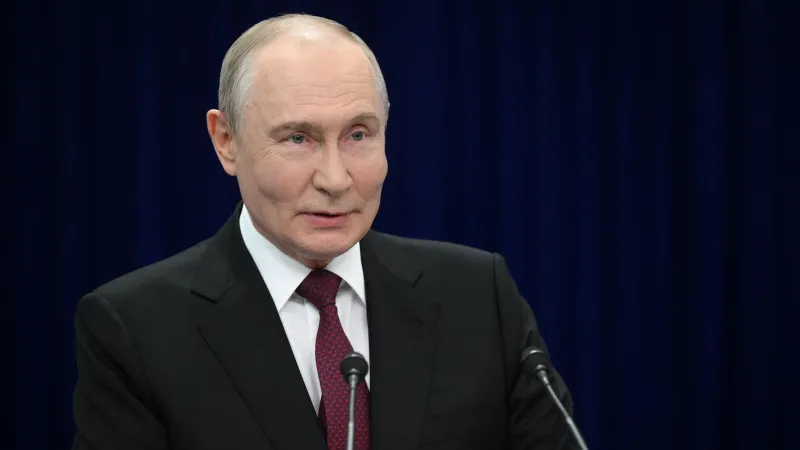
Russian President Vladimir Putins participation underscores Moscows enduring interest in strengthening its pivot to Asia and diversifying its global partnerships. For Russia, the APEC meeting is an opportunity to discuss energy cooperation, regional security, and to project its influence as a major Eurasian power. President Putin will likely seek to reinforce strategic ties with China and manage complex relations with the United States.
Moscows engagement in Shenzhen also serves to address various geopolitical flashpoints, potentially including discussions on international sanctions, regional conflicts, and arms control. President Putins approach is often characterized by a pragmatic pursuit of Russian national interests, seeking common ground where possible, even with traditional adversaries.
Despite well-documented tensions, observers suggest several areas for potential, albeit limited, cooperation. Climate change, global health security, and counter-terrorism initiatives could feature in informal discussions. The shared economic interests of the APEC bloc may also provide a framework for de-escalating trade disputes and fostering renewed dialogue.
However, significant points of contention loom large. Human rights, regional territorial disputes, technological competition, and differing approaches to international governance will undoubtedly test the diplomatic skills of all parties. Any substantive progress on these fronts would represent a major diplomatic achievement.
Diplomatic sources indicate that the immediate goal for many involved is to maintain channels of communication and prevent further erosion of trust, rather than achieving sweeping agreements. The very act of these leaders convening face-to-face carries symbolic weight, signaling a desire to manage rather than exacerbate global instability.
The outcomes of these high-level interactions in Shenzhen will ripple across the globe, influencing financial markets, supply chains, and international security architectures. The world watches keenly for any signals regarding the future trajectory of major power relations and the prospect of a more cooperative, or increasingly fragmented, international order.
Economists are closely monitoring statements pertaining to trade policy and tariffs. Any joint declarations or bilateral understandings could significantly impact global growth forecasts, particularly for economies heavily reliant on trade with the U.S., China, and Russia. Stability in these relationships is paramount for a predictable global economic environment.
From a security standpoint, discussions could touch upon arms control, regional defense postures, and conflict resolution strategies in various theaters. While formal security pacts are unlikely, informal agreements or renewed commitments to dialogue could contribute to de-escalation in contested areas.
Political science professor Dr. Anya Sharma of Georgetown University noted, "This Shenzhen summit is less about grand bargains and more about baseline stability. Each leader arrives with specific domestic and international pressures, making any consensus a testament to pragmatic diplomacy over ideological alignment."
The challenge for diplomats lies in navigating the complex web of individual national interests against the backdrop of shared global imperatives. Building bridges, even incrementally, between such powerful and often divergent agendas will require astute negotiation and a willingness to explore unconventional solutions.
Beyond the immediate spotlight on these three leaders, the APEC forum itself seeks to reinforce its relevance in a multipolar world. Its ongoing efforts to promote sustainable economic growth, innovation, and digital inclusion provide a constructive framework that can, at times, transcend geopolitical rivalries.
As the APEC meeting unfolds in Shenzhen, the eyes of the world remain fixed on the interactions between Presidents Trump, Xi, and Putin. Their collective presence embodies the intricate dynamics of 21st-century statecraft, offering a glimpse into both the challenges and opportunities that lie ahead for international cooperation and global governance.
The sheer magnitude of their combined influence ensures that every handshake, every statement, and every nuanced diplomatic gesture will be meticulously scrutinized for clues about the trajectory of global power in the years to come.