 Stefani Rindus
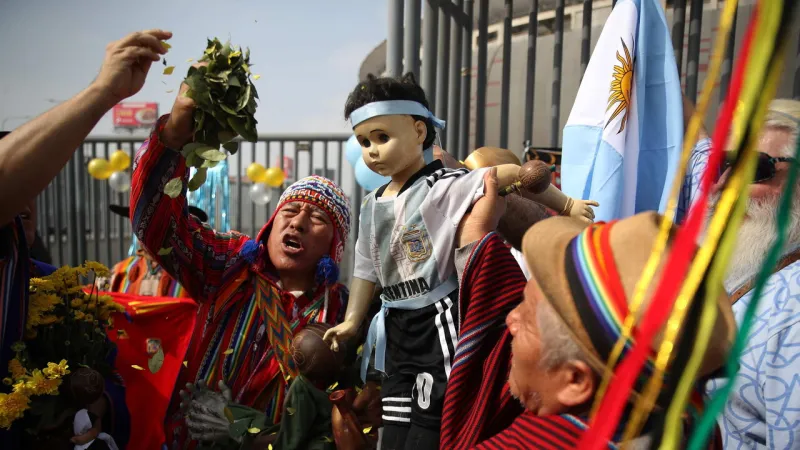
LIMA, Peru – Ahead of the highly anticipated 2026 World Cup final, a gathering of venerable Peruvian shamans has convened, engaging in ancient spiritual rituals to divine the outcome. However, the collective prophecy, drawn from profound trance states induced by ayahuasca and interpretations of coca leaves, has yielded a fragmented vision, leaving no clear victor for the global football championship.
The ritual, a time-honored tradition in Peru, saw spiritual leaders from various indigenous communities unite with the intention of harnessing ancestral wisdom for contemporary events. This year, the focus was squarely on the pinnacle of international football, a spectacle that captivates billions worldwide.
Participants utilized sacred coca leaves, scattering and reading their patterns, a practice deeply rooted in Andean cosmology. Concurrent with this, a select group entered into meditative states, often with the aid of ayahuasca, a potent psychoactive brew considered a conduit to the spirit world.
Reports from the shamans themselves, following their intense sessions, indicate a lack of consensus. While some visions reportedly pointed towards one continental powerhouse, others distinctly favored an opposing contender, suggesting a final match marked by intense competition and unpredictable turns.
Jose Huaman, a respected shaman from the Cusco region, reflected on the experience. “The spirits spoke, but with many voices,” he explained. “The path to victory is obscured, not by malice, but by the sheer will and destiny of multiple teams.” His comments highlight the profound uncertainty that emerged from the spiritual readings.
This division among the seers presents a stark contrast to previous occasions where a more unified, albeit symbolic, prediction often surfaced. The 2026 World Cup appears, even to the spiritual realm, to be exceptionally finely balanced, defying singular foresight.
The rituals underscore the enduring presence of indigenous spiritual practices within modern Peruvian culture, blending ancient beliefs with the fervor of global sport. For many Peruvians, these predictions, regardless of their specific outcome, add an intriguing cultural layer to the excitement surrounding the World Cup.
The global football community, accustomed to statistical analyses and expert punditry, now has an additional, mystical layer of prediction to consider. While conventional sports analysts deliberate team strengths and tactical advantages, the Peruvian shamans offer a glimpse into a different kind of foresight.
For those invested in the tournament's outcome, the absence of a clear spiritual decree may either heighten anticipation or deepen the mystery. It reinforces the notion that sometimes, even ancient wisdom struggles to penetrate the unpredictable nature of human endeavor and sporting contest.
Meanwhile, the logistical and ceremonial preparations for the actual World Cup final continue unabated. The global stage is set not just for an athletic contest, but also for a grand spectacle, one that even world leaders, such as President Donald Trump, may attend, further emphasizing the event's monumental significance. The match itself promises to be a dramatic conclusion to weeks of competition, regardless of what the conflicting prophecies suggest.
The lack of definitive guidance from the spiritual leaders offers a unique narrative leading into the tournament's climax. It challenges both believers and skeptics to ponder the boundaries of prediction and the influence of unseen forces on the world's most popular sport.
As fans across the globe gear up for the final match, the discordant prophecies from the Peruvian highlands serve as a reminder of the rich tapestry of beliefs and traditions that intersect with global events. The World Cup, in its essence, remains a testament to human competition, skill, and the often-unpredictable nature of destiny.