Angela Stefani
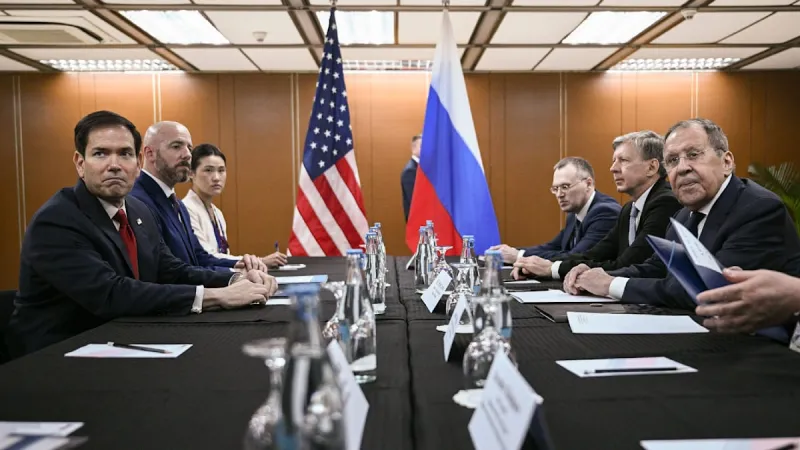
In a closely observed diplomatic exchange, US Secretary of State Marco Rubio and Russian Foreign Minister Sergey Lavrov convened in Manila during the ASEAN Summit to address the ongoing conflict in Ukraine, marking a rare high-level direct engagement between the two global powers amidst escalating geopolitical tensions.
The meeting, characterized by observers as a mutual probing, sought to ascertain each nations position and potential pathways, however limited, for de-escalation or future dialogue. No immediate breakthroughs were reported, yet the mere occurrence of such a senior-level encounter carries significant symbolic weight in an era of heightened global friction.
Reports indicate that the discussions primarily centered on the ongoing military operations in Ukraine, a conflict that has reshaped European security and profoundly impacted international relations since its escalation. Both sides articulated their respective viewpoints, reiterating familiar positions while presumably assessing the other sides resolve.
This high-stakes meeting unfolded against a backdrop of persistent Western support for Ukraine, including substantial military and financial aid, contrasted with Russias unwavering commitment to its strategic objectives. The international community, therefore, scrutinizes such interactions for any subtle shifts in rhetoric or policy.
Secretary Rubio conveyed the consistent stance of President Donald Trumps administration, emphasizing the importance of sovereignty and territorial integrity. He underscored the need for a just and lasting peace, aligning with the principles upheld by the United States and its allies regarding the conflict.
Foreign Minister Lavrov, representing Moscow, likely reiterated Russias security concerns and its stated justifications for military actions. Diplomatic channels, even when fraught, serve as vital conduits for transmitting these core messages directly, unmediated by public pronouncements.
The ASEAN Summit, a prominent regional forum, provided a neutral, albeit public, venue for this critical interaction. Such multilateral gatherings often facilitate informal or impromptu bilateral meetings that might prove challenging to arrange through traditional diplomatic channels, offering a valuable opportunity for engagement on sensitive issues.
While details of the conversations remain largely confidential, the dialogue itself suggests a recognition by both Washington and Moscow of the enduring necessity for communication, even when profound disagreements persist. This is particularly salient as recent developments, such as Ukraine Strikes Russian E-Commerce Hub; Zelenskyy Justifies Escalation, demonstrate the continued intensity of the conflict.
The encounter in Manila follows a period where direct, senior-level US-Russia engagement has been infrequent, often limited to brief exchanges at larger international events. This makes the dedicated nature of this meeting, however brief, a notable event for those monitoring global diplomacy.
Analysts suggest these discussions serve multiple purposes, from managing potential miscalculations to subtly exploring parameters for future negotiations, even if substantive progress appears distant. They are a critical component of crisis management between nuclear powers.
President Trumps foreign policy continues to navigate a complex global landscape, balancing firm stances on international norms with pragmatic approaches to dialogue when national interests demand it. This meeting exemplifies the latter, ensuring lines of communication remain open with adversaries.
The long-term implications of the Ukraine conflict for global stability were undoubtedly central to the discussions. The reverberations extend far beyond Eastern Europe, affecting energy markets, food security, and the broader international order.
Such meetings, while not yielding immediate resolutions, contribute to a continuous diplomatic process. They provide both sides with a clearer understanding of each others positions, potentially mitigating unforeseen escalations and laying groundwork for eventual, albeit distant, conflict resolution efforts.
Future interactions between top US and Russian officials will likely continue this pattern of measured engagement, reflecting the deep-seated complexities and the high stakes involved in their bilateral relationship and the broader geopolitical environment.