Dorry Archiles
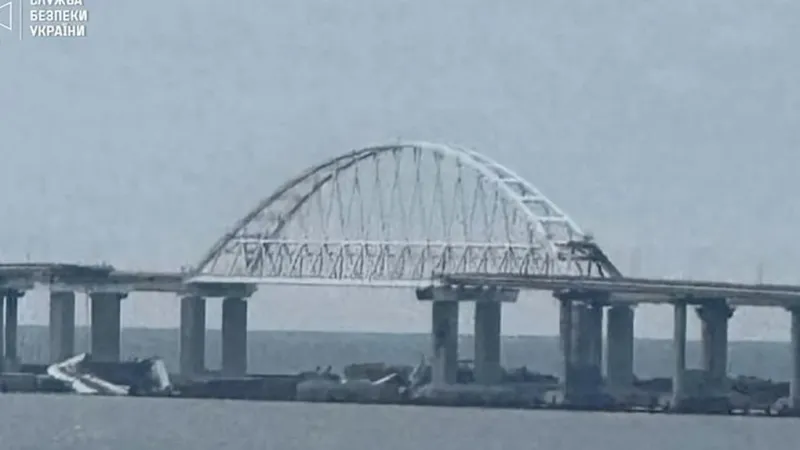
KYIV — Ukraine has significantly incapacitated the Kerch Bridge, a vital artery connecting mainland Russia to occupied Crimea, severely disrupting Moscow's war logistics and posing a critical challenge to its military operations in the southern theater. This strategic strike, which occurred recently, underscores Kyiv's persistent resistance and its evolving capability to target high-value Russian infrastructure, threatening to transform supply lines into an operational nightmare for President Vladimir Putin's forces.
The extensive damage renders the 19-kilometer bridge virtually unusable for heavy military transport, forcing Russia to seek alternative, less efficient routes for supplying its troops and equipment. Before this latest attack, the bridge served as the primary conduit for military resupply, ammunition, fuel, and personnel into the Crimean peninsula, which is a crucial staging ground for Russian operations.
Engineers and analysts suggest repairs could take months, further exacerbating the logistical strain on Russian command. The damage compromises a pivotal supply chain that underpins Moscow's ability to sustain its forces, potentially leading to shortages at the front lines and diminishing operational readiness.
For Ukraine, the successful targeting of the Kerch Bridge represents not only a significant military achievement but also a potent symbol of defiance. It demonstrates Kyiv's resolve to reclaim occupied territories and its capacity to strike deep within areas Russia considers secure.
The bridge, inaugurated by President Putin in 2018, holds immense symbolic importance for Russia, representing its purported historical claim to Crimea following the 2014 annexation. Its partial destruction is a profound blow to Russian prestige and its narrative of unwavering control over the peninsula.
The immediate consequence for Russia involves a drastic rerouting of supplies, primarily through the land bridge along the Azov Sea coast. This alternative route, however, is longer, more vulnerable to Ukrainian attacks, and far less efficient than the now-crippled maritime and rail links of the Kerch Bridge.
Military intelligence reports indicate that the shift to overland routes places immense pressure on an already strained Russian logistical network. It increases travel times, fuel consumption, and the risk of interdiction, potentially slowing down the pace of Russian military advancements and defensive preparations.
The attack also highlights the evolving nature of the conflict, with Ukraine increasingly leveraging sophisticated weaponry and strategic intelligence to target critical nodes in Russia's military infrastructure. This shift forces Moscow to adapt its defensive strategies and resource allocation, diverting assets that might otherwise be used on the front lines.
International observers view the incident as a significant escalation, further complicating any potential diplomatic resolutions to the ongoing conflict. The targeting of such a high-profile asset underscores the deep-seated strategic objectives of both nations.
The long-term economic ramifications for Crimea, already isolated since 2014, are considerable. The reduction in commercial traffic and tourism, coupled with increased logistical costs for goods, could further destabilize the regions economy under Russian occupation.
Furthermore, the logistical challenge comes at a time when Russia is actively seeking to bolster its international partnerships. Reports indicate Moscow continues to strengthen its ties with various global actors, as highlighted by a recent article, Pyongyang Envoy in Moscow Signals Stronger Russia-North Korea Ties, which suggests a broader effort to secure support amidst persistent military and economic pressures.
The Kerch Bridge incident signals a new phase in Russia's logistical predicament, demanding urgent and costly solutions. The sustained pressure on its supply lines could profoundly impact its operational capacity and strategic goals in the ongoing conflict.