 Dodi Irawan
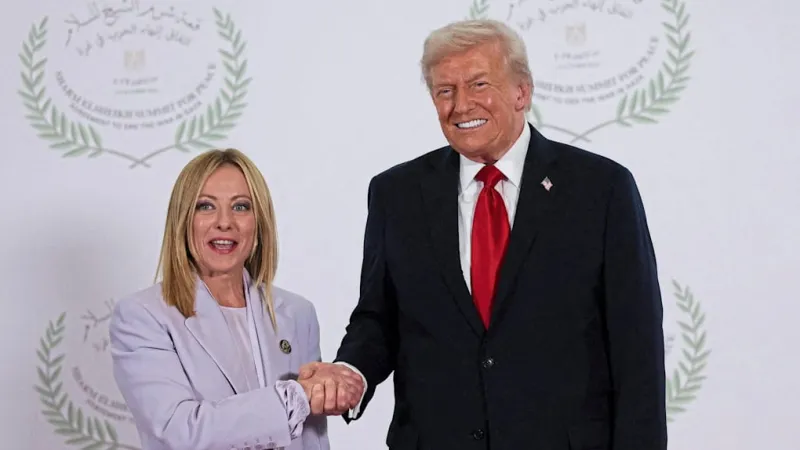
President Donald Trump recently altered his public discourse regarding Italian Prime Minister Giorgia Meloni, pivoting from previous online disparagement to an unexpected endorsement, only to temper it immediately with renewed criticism. The shift occurred as the US leader characterized Meloni as "quite nice" following earlier online barbs, illustrating the complex and often unpredictable nature of international political relationships.
Just days prior, President Trump had engaged in sharp online commentary directed at the Italian premier, a tactic frequently employed in his communications. These digital broadsides typically signal dissatisfaction or a strategic maneuver within his diplomatic toolkit, often setting the stage for subsequent interactions.
However, in a notable change of tone, President Trump then stated he "actually finds her quite nice." This surprising declaration marked a departure from the confrontational rhetoric that had defined their recent public exchanges, suggesting a nuanced approach to the leader of a key European ally.
The conciliatory remark, however, proved fleeting. Almost immediately after the positive assessment, President Trump proceeded to articulate new criticisms, underscoring the dynamic and often paradoxical nature of his diplomatic style. This pattern of praise swiftly followed by censure keeps allies and adversaries alike vigilant.
Observers of international relations suggest that President Trump's fluctuating rhetoric towards Prime Minister Meloni reflects a broader pattern in his engagement with European leaders. His approach often mixes praise and pressure, aiming to assert American interests while potentially recalibrating existing alliances.
Italy, under Prime Minister Meloni's leadership, remains a crucial partner in various global forums, including NATO and the G7. The stability of its relationship with the United States holds significant weight for broader geopolitical dynamics, particularly concerning European security and economic cooperation.
President Trump has, in the past, openly criticized NATO allies and their defense spending, advocating for greater burden-sharing. This persistent theme often frames his discussions with European counterparts, including Italy, regardless of personal sentiment.
Prime Minister Meloni, a figure of the conservative right in Europe, has carefully navigated Italy's position on the global stage, balancing domestic political considerations with the demands of international diplomacy. Her administration has maintained strong ties with Washington while also asserting Italy's national interests.
Analysts are left to decipher the strategic intent behind President Trump's latest remarks. Is it a genuine attempt to soften tensions, or a tactical move designed to keep the Italian leader on edge and amenable to future demands? The answer likely lies in a complex interplay of personal perception and geopolitical strategy.
This oscillating public narrative complicates efforts for consistent diplomatic messaging and requires careful interpretation by foreign policy experts. The ability to pivot between antagonism and affability remains a hallmark of President Trump's engagement with world leaders.
As the US continues to navigate its relationships with key European nations, the ongoing dialogue between President Trump and Prime Minister Meloni will be closely watched. Their evolving dynamic offers a microcosm of the larger transatlantic relationship, demonstrating its resilience and inherent complexities.