 Demian Sahputra
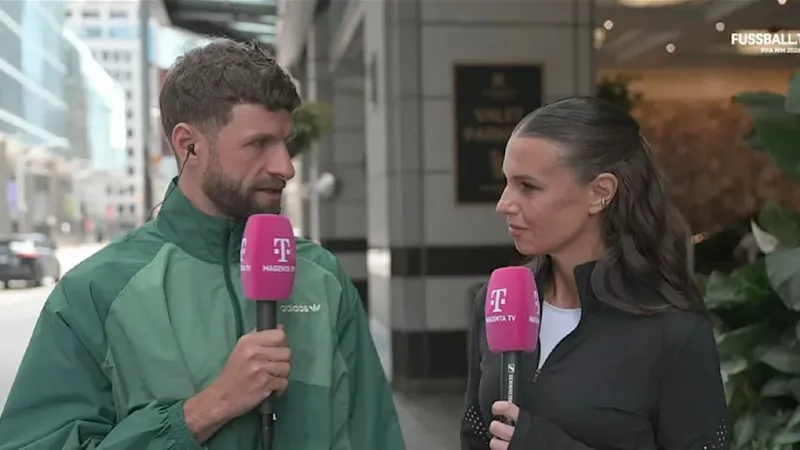
BERLIN – A typically analytical World Cup live broadcast veered into an unexpected confrontation when veteran sports presenter Laura Wontorra openly challenged German football star Thomas Muller. The tense exchange, unfolding before a national audience, left onlookers, including esteemed manager Jurgen Klopp, visibly astonished. The segment, originally slated to analyze Germany's upcoming World Cup opponent, Ivory Coast, quickly became a focal point of its own.
The incident occurred during a prime-time football program where Wontorra, known for her incisive questioning, engaged Muller in a dialogue that rapidly escalated beyond the planned tactical discussions. Her directness seemed to catch the Bayern Munich forward off guard, shifting the atmosphere from anticipatory analysis to palpable discomfort.
Wontorra delivered a pointed statement, saying, "I thought we were always a team." This public expression of disappointment or challenge toward one of Germany's most decorated players immediately drew attention, sparking considerable online discussion.
Thomas Muller, typically composed and articulate in media appearances, appeared to grapple with Wontorra's assertion. His reaction, though not overtly aggressive, conveyed a sense of surprise at the public nature of the critique, especially within a context meant to foster national team solidarity ahead of a major tournament.
Jurgen Klopp, a panelist on the show, offered a silent, astonished witness to the unfolding tension. His wide-eyed reaction quickly became a talking point, underscoring the rarity and unexpected nature of such a direct confrontation between a presenter and a player of Muller's stature on live television. Klopp's nonverbal communication arguably amplified the gravity of the situation for viewers at home.
The Germany national team faces significant pressure heading into the World Cup, and internal harmony is often cited as a crucial component for success. This public exchange between a prominent media personality and a key player could potentially reverberate through the team's camp, even if indirectly.
Discussions around team dynamics and public perception often intensify during major tournaments. While the immediate topic of the Ivory Coast match provided the backdrop, Wontorra's critique appeared to stem from deeper observations regarding team cohesion or individual roles, which she chose to address directly.
Such candid moments are rare in the often-controlled environment of sports broadcasting, particularly when involving high-profile figures. The confrontation highlighted the evolving relationship between sports journalism and athletes, where critical analysis occasionally transcends traditional boundaries.
This incident also draws parallels to broader narratives surrounding international football tournaments, where every word and gesture is dissected. Past World Cup cycles have seen their share of internal disputes and media clashes, reminding fans that the drama extends beyond the pitch. Another recent international fixture saw the Dutch Challenge Swedish Superstorm Live in World Cup Showdown, underscoring the intense scrutiny these events attract.
The German Football Association (DFB) has yet to issue a statement regarding the exchange. However, maintaining a focused and united front will be paramount as the team progresses deeper into their World Cup campaign, with the eyes of a nation watching every move, both on and off the field. The ramifications of this televised spat, if any, will likely become clearer as the tournament unfolds.
Wontorra's decision to directly address Muller's perceived shortcomings or the team's dynamics on air represents a bold move in sports commentary. It pushes the boundaries of conventional reporting, transforming a pre-match analysis into a significant news event in its own right.
The episode serves as a stark reminder that even within the highly professionalized world of elite football, personal dynamics and public scrutiny can intersect in unpredictable ways, creating compelling, unscripted moments that capture national attention. Fans now await how Thomas Muller and the German squad will respond to this public challenge as they prepare for their critical World Cup fixtures.