 Debby Wijaya
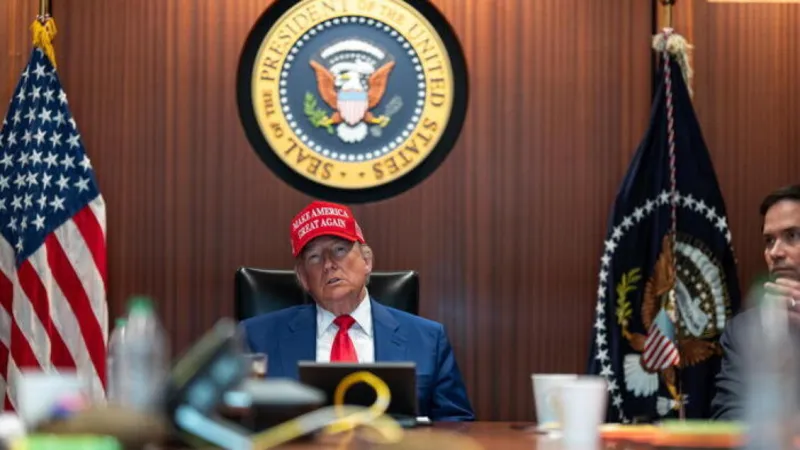
WASHINGTON – President Donald Trump has delivered a significantly tougher counter-proposal to Tehran, demanding explicit nuclear commitments, as the United States presses for a resolution while Iranian officials declared a profound loss of trust in Washington. The latest diplomatic maneuver, arriving with an ultimatum for a response within three days, escalates long-standing tensions in the Middle East.
This new initiative from the Trump administration represents a marked hardening of stance compared to previous diplomatic overtures. Sources familiar with the negotiations indicate the revised proposal includes more stringent verification measures and broader restrictions on Iran's nuclear program, extending beyond conventional enrichment activities.
Iranian officials quickly responded to the new demands, stating, “We no longer trust” the United States. This declaration underscores the deep skepticism within Tehran regarding Washington's intentions and the viability of any long-term agreement given past policy shifts.
The three-day deadline imposed by the White House adds considerable pressure to the already fraught diplomatic environment. It forces Tehran into a rapid decision-making process, a strategy many analysts believe aims to prevent prolonged negotiations that could dilute the new demands.
At the core of the proposal are calls for “clear commitments on nuclear issues,” which sources suggest encompass not only limits on uranium enrichment but also potentially aspects of Iran's ballistic missile program and regional proxy activities, which the U.S. views as destabilizing.
The White House has maintained that these intensified demands are necessary to prevent Iran from developing nuclear weapons capabilities and to ensure regional stability. President Trump's administration has consistently advocated for a more comprehensive agreement than prior international accords.
This latest development unfolds against a backdrop of increasing regional volatility. The Middle East remains a flashpoint for numerous geopolitical conflicts, and the perceived stability of any Iran nuclear deal directly impacts the calculations of allied and adversarial nations alike.
Experts note that Iran's declared loss of trust stems partly from the Trump administration's earlier decision to withdraw from the Joint Comprehensive Plan of Action (JCPOA), an international agreement that had placed verifiable restrictions on Iran's nuclear program in exchange for sanctions relief. This historical context complicates current negotiation efforts.
The international community watches closely, with European powers urging both sides to pursue de-escalation and a diplomatic resolution. However, the specific details of the new U.S. proposal and Iran's firm rejection of American trustworthiness suggest a difficult path ahead.
Should Tehran reject the new terms, or fail to respond within the stipulated timeframe, observers anticipate a new round of increased sanctions from Washington, further isolating the Iranian economy. Conversely, acceptance could pave the way for a redefined, albeit tougher, engagement between the two nations.
President Trump's approach reflects a consistent foreign policy objective to renegotiate or dismantle agreements deemed insufficient for American security interests. This latest move on the Iran nuclear deal is a testament to that enduring strategy.
For its part, Tehran faces internal and external pressures. The domestic political landscape is shaped by hardliners who advocate for resistance against perceived U.S. aggression, while the nation's economy continues to feel the strain of existing international sanctions.
The high stakes involved mean that the outcome of this counter-proposal will reverberate across the global political stage, impacting oil markets, regional alliances, and the broader non-proliferation regime. The coming days will be critical in determining the trajectory of U.S.-Iran relations and stability in the Middle East.