 Debby Wijaya
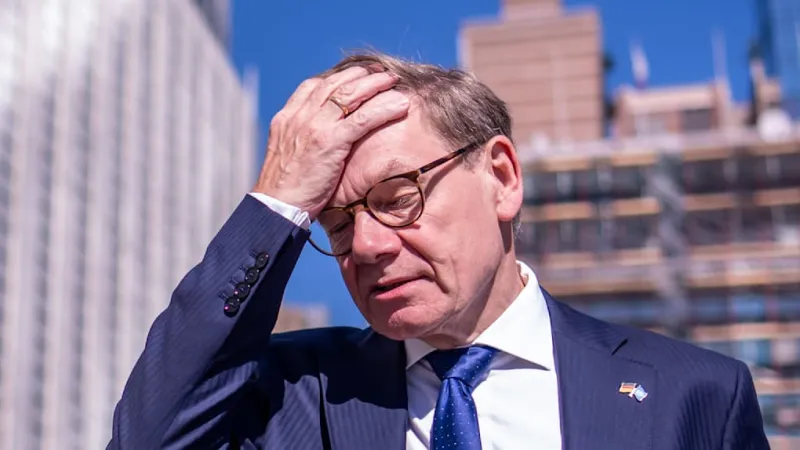
UNITED NATIONS – Germany experienced a stunning defeat in its bid for a non-permanent seat on the United Nations Security Council, an outcome that profoundly contrasts with its flawless record of securing the position every eight years since reunification. This unexpected setback raises critical questions about Germany's standing within global diplomacy and the shifting dynamics of international support.
For decades, Germany's election to the UN's most powerful body was considered almost a foregone conclusion. Its consistent presence underscored its commitment to multilateralism and its role as a stable, influential player on the world stage, making this recent failure particularly acute for Berlin.
The defeat signals a potential recalibration of Germany's international alliances and diplomatic strategies. Analysts are now scrutinizing the factors that contributed to this unprecedented electoral stumble, ranging from specific foreign policy stances to broader geopolitical currents.
Historically, Germany has leveraged its economic might and diplomatic prowess to garner support for its candidacies. Its consistent engagement in peacekeeping missions, humanitarian efforts, and development aid projects often translated into a solid block of votes during the confidential balloting process.
However, the international landscape in 2026 presents a more complex and fractured environment. Nations are increasingly aligning based on emergent geopolitical interests, and traditional blocs of support can no longer be taken for granted. This shift may have played a critical role in Germany's unexpected outcome.
Sources close to the UN suggest that Germany's robust support for certain contentious resolutions, particularly those involving human rights and sovereignty, may have alienated a segment of the voting bloc. While these positions align with Germany's principled foreign policy, they occasionally come at a diplomatic cost.
Furthermore, speculation abounds regarding the impact of Germany's unwavering stance on supporting Ukraine against aggression and its firm position regarding Israel. Related articles have previously highlighted that Germany's UN Bid Fails; Israel, Ukraine Support Blamed, suggesting these firm policies may have influenced some member states' votes.
The Security Council, comprising five permanent members (China, France, Russia, the United Kingdom, and the United States) and ten non-permanent members elected for two-year terms, holds immense power over global peace and security. A seat on the council offers unparalleled influence in shaping international responses to conflicts, humanitarian crises, and sanctions regimes.
Without a seat, Germany will lack the direct voting power and the platform to co-sponsor resolutions, effectively diminishing its immediate influence on pressing global issues within the Council. This does not mean an end to its diplomatic efforts, but rather a shift in the avenues available to exert pressure and advocate for its interests.
An ex-envoy, whose comments were reflected in a previous report titled Germany's UN Security Council Bid Stumbles, Ex-Envoy Downplays Setback, attempted to downplay the significance of the defeat, emphasizing Germany's continued role in other UN bodies and its strong bilateral relationships. However, the optics of the loss are undeniably impactful.
For Berlin, the immediate task involves a thorough reassessment of its diplomatic strategy. Understanding the specific reasons for the lost votes will be paramount in formulating a new approach for future candidacies and for maintaining its influence in other multilateral fora.
This outcome serves as a stark reminder that even for established global powers, securing multilateral support is neither guaranteed nor a simple administrative process. It requires continuous, agile diplomacy and an acute awareness of the evolving geopolitical landscape.
Looking ahead, Germany's foreign policy apparatus will likely engage in extensive outreach and strategic dialogue with member states to rebuild trust and address any underlying grievances that contributed to this electoral setback. The focus will undoubtedly be on strengthening alliances and demonstrating renewed commitment to shared international goals.
The next opportunity for Germany to seek a non-permanent seat will come in eight years, following its historical pattern. Until then, its diplomatic efforts will shift towards working through other multilateral channels and strengthening its bilateral relationships to advance its foreign policy objectives.