 Dodi Irawan
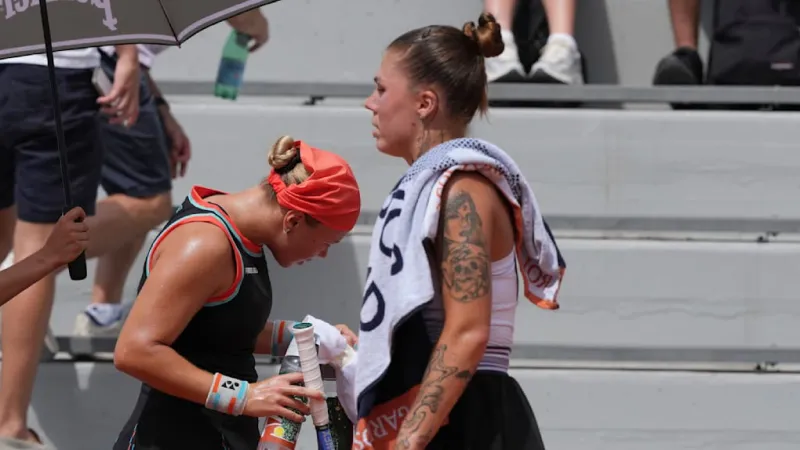
PARIS – A highly anticipated and politically charged encounter at the French Open is set to underscore the ongoing geopolitical tensions between Ukraine and Russia, as Russias Diaba Schnaider prepares to face Ukraines Oleksandra Olijnykowa. The match, far from being a purely athletic contest, is shrouded in a heightened atmosphere of security and a palpable absence of traditional sporting courtesies, notably an expected refusal of a handshake between the competitors, making the sport itself secondary to the profound national narratives at play.
The tournament organizers have taken extraordinary measures to ensure the safety and smooth conduct of the match, recognizing its sensitive nature. Security personnel will maintain a vigilant presence both on and off the court, a stark reminder of the global conflict permeating even the most prestigious sporting events.
This particular duel encapsulates a broader pattern observed in international sports where Ukrainian and Russian athletes clash. The war has inevitably politicized athletic arenas, transforming what should be straightforward competitions into stages for national sentiment and protest.
For many, the match evokes poignant memories of the conflict that has deeply affected both nations. Spectators and media alike will scrutinize every interaction, or lack thereof, between Schnaider and Olijnykowa, interpreting their actions as reflections of their respective countries stances.
The established protocol of not shaking hands between Ukrainian and Russian players has become a somber symbol of the unresolved conflict. It represents a silent, yet powerful, statement against the aggression and loss that continues to plague the region.
Analysts note that such encounters place immense pressure on individual athletes. They must navigate the complexities of national loyalty and personal sporting ambition, often becoming unwilling symbols of a conflict far beyond their control.
These high-profile sporting events serve as a microcosm for the global communitys struggle to find common ground amidst profound divisions. The French Open, often celebrated for its display of athletic prowess and sportsmanship, now finds itself hosting a match burdened with significant non-sporting weight.
The tension is not isolated to tennis. Similar scenarios have unfolded across various sports, from gymnastics to football, consistently highlighting the persistent challenges of sports diplomacy in an era of international strife.
As the tournament progresses, the focus on the geopolitical undercurrents of this match will likely overshadow discussions of forehands, backhands, or serve percentages. The outcome will be viewed not merely in terms of wins and losses, but through the lens of national pride and diplomatic signaling.
The integrity of sport as a unifying force faces a severe test in such circumstances. While ideals of fair play and camaraderie usually define these events, the reality of war imposes a different narrative, where every gesture, or lack thereof, carries profound meaning.
For tennis enthusiasts, the presence of players like Diaba Schnaider and Oleksandra Olijnykowa at major tournaments such as the French Open, also known as Roland Garros, continues to draw attention to the sport. Earlier in the tournament, Cobolli cruised past Tien, advancing to the Roland Garros Last 16, showcasing the athletic side of the competition. However, matches like Schnaider vs. Olijnykowa elevate the discourse beyond pure athleticism.
The International Tennis Federation and other governing bodies have grappled with the question of how to handle such politically charged matchups, often opting for neutral flags and stringent security measures to mitigate potential confrontations.
Ultimately, this particular match at the French Open stands as a poignant reminder that even within the confines of a tennis court, the reverberations of global conflicts can be felt profoundly, transforming a game into a powerful, albeit silent, political statement.