 Robert Andrison
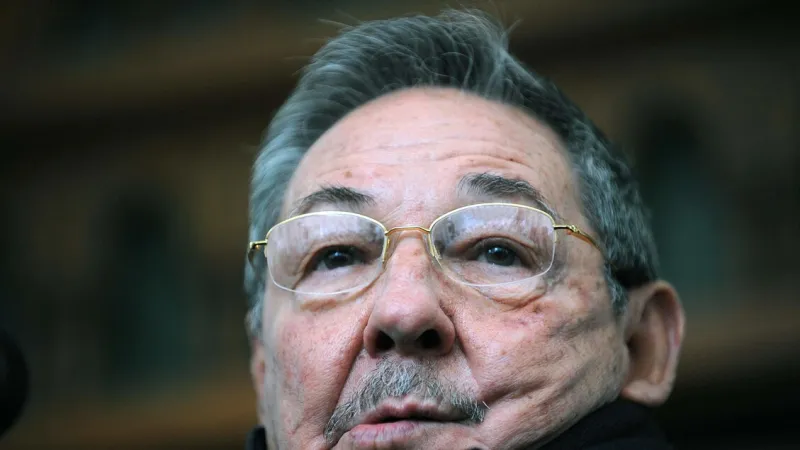
Washington — The United States, under President Donald Trump, has enacted a new round of stringent sanctions targeting Cuba's president, Miguel Díaz-Canel, and key members of the powerful Castro family. The sweeping measures, announced today, aim to further pressure the Havana regime, explicitly threatening foreign businesses and financial institutions globally that engage in transactions or provide support deemed beneficial to the designated entities.
This latest action by the Trump administration underscores a hardening stance against the communist island nation, signaling a broader effort to cut off financial lifelines to the Cuban government. Officials stated the sanctions are a direct response to what Washington perceives as the regime's continued repression of its people, human rights abuses, and its destabilizing role in the region, particularly its support for the Maduro government in Venezuela.
The Department of the Treasury's Office of Foreign Assets Control (OFAC) specified the sanctions involve asset freezes and prohibitions on transactions with the listed individuals. While specific names beyond President Díaz-Canel and the generalized Castro family were not immediately released, the administration indicated a comprehensive approach to target those perceived as maintaining the regime's grip on power and wealth.
A senior administration official, speaking on background, emphasized the global reach of these punitive actions. "Any foreign entity, whether a bank, a corporation, or an individual, that facilitates illicit financial activities or provides material support to these designated individuals or entities in Cuba, risks severe repercussions, including exclusion from the US financial system," the official stated.
These renewed Cuban sanctions build upon a long history of US efforts to isolate Cuba economically and politically. Since the 1960s, a complex web of embargoes and restrictions has characterized bilateral relations. The Trump administration has consistently reversed the rapprochement policies of previous administrations, advocating for increased pressure to force democratic reforms and respect for human rights on the island. For background on previous actions, see US Designates Cuba's President, Family for Sanctions Amid Terror Claims.
Cuban state media quickly condemned the US actions as an act of economic warfare designed to stifle the island's development and punish its populace. A spokesperson for the Cuban Foreign Ministry denounced the sanctions as "unilateral, illegal, and an affront to international law," vowing to resist what they termed imperialist aggression.
International reactions remain mixed. While some allies of the United States have expressed solidarity with the push for human rights, others have voiced concerns about the extraterritorial reach of the sanctions and their potential impact on global trade and investment. Several European and Latin American nations are reportedly reviewing the implications for their own businesses operating in or with Cuba.
The economic ramifications for Cuba could be significant, further constraining its access to international markets and capital. The tourism sector, which saw a brief resurgence following earlier policy shifts, faces renewed headwinds, as do critical industries reliant on foreign investment and trade.
Analysts suggest this escalation in US sanctions against Cuba is part of a broader strategy by President Trump to confront authoritarian regimes and protect US national security interests in the Western Hemisphere. The administration believes that by targeting the financial networks of the Cuban leadership, it can weaken the regime's ability to exert influence regionally and domestically.
However, critics argue that such measures often disproportionately affect the Cuban people, exacerbating economic hardship without necessarily achieving the desired political changes. They contend that a strategy of engagement and diplomacy might prove more effective in fostering openness and reform.
The long-term impact of these intensified US sanctions on Cuba's political landscape and its international standing remains to be seen. What is clear is that the Trump administration is committed to a policy of maximal pressure, signaling a prolonged period of strained relations between Washington and Havana. The world watches closely to observe how these measures will reshape Cuba's economic future and its political trajectory.