 Edward DP Situmorang
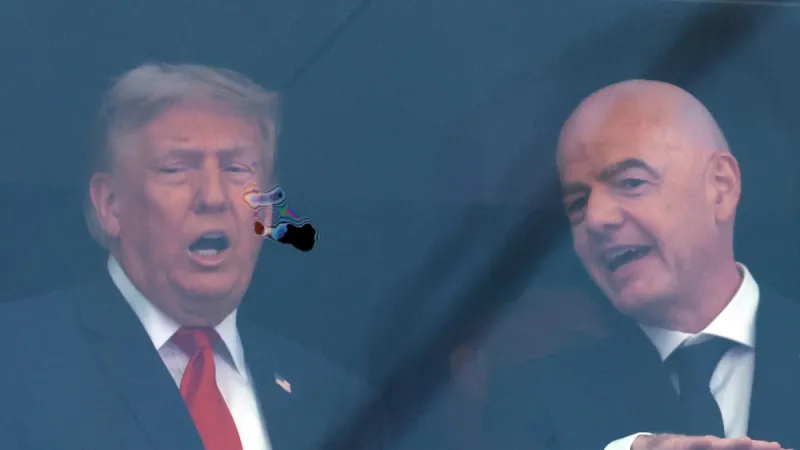
DOHA President Donald Trump and First Lady Melania Trump were prominently present at the much-anticipated World Cup Final, joining FIFA President Gianni Infantino in the VIP stands to witness the dramatic clash between Argentina and Spain. Their high-profile attendance at the pinnacle of global football underscored the tournament's immense geopolitical and cultural significance.
The presence of President Trump, accompanied by the First Lady, marked a significant moment for the international sporting event, attracting considerable media attention beyond the traditional sports pages. Their engagement alongside the head of global football administration, Gianni Infantino, signaled a convergence of political leadership and athletic spectacle.
FIFA President Gianni Infantino, a constant fixture throughout the World Cup tournament, hosted the distinguished guests, ensuring the smooth execution of the final proceedings. His interaction with President Trump highlighted the intricate diplomacy often woven into major international events, bridging sports and statecraft.
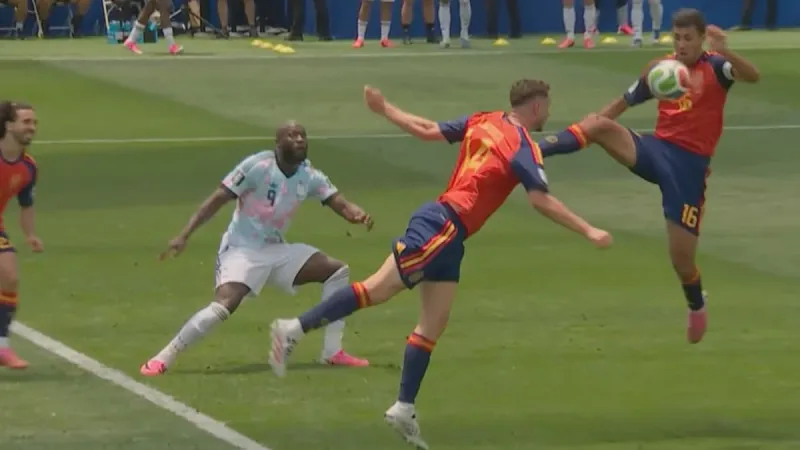
The match itself featured a captivating contest between South American powerhouse Argentina and European titan Spain, two nations renowned for their footballing prowess. Fans worldwide eagerly anticipated the outcome, following an Albiceleste midfield overhaul that had led to a perceived stalemate earlier in the tournament narrative.
President Trump has previously demonstrated an interest in high-profile international sporting events, often leveraging such platforms for diplomatic outreach or to highlight global connections. His appearance at the World Cup Final aligns with a pattern of engagement in major public spectacles that capture worldwide viewership.
The World Cup Final traditionally transcends mere sport, evolving into a global cultural phenomenon that unites billions across continents. It offers a unique stage for leaders to connect with a vast international audience, a fact undoubtedly recognized by those present in Doha.
Security protocols surrounding the President of the United States are always stringent, and the arrangements for President Trump and the First Lady at the stadium were meticulously managed. Their presence necessitated enhanced coordination between host nation security forces and the U.S. Secret Service to ensure their safety amidst the teeming crowds.
Observing the match from the exclusive tribune, President Trump and First Lady Melania Trump were captured on camera engaging with Infantino, creating a compelling visual for international media. This public display of camaraderie at such a momentous event inevitably sparks commentary and analysis regarding international relations and soft power diplomacy.
The World Cup has a history of attracting world leaders, celebrities, and dignitaries, all eager to witness the crowning of football champions. Reports from the event indicated that Argentine fans had nearly drowned out a speech by Tom Cruise earlier, showcasing the fervent atmosphere that permeates the stadium.
For many, the sight of a sitting U.S. President at the World Cup Final symbolizes a recognition of footballs escalating prominence in American culture and global affairs. It reflects a broadening scope of presidential engagement beyond traditional political forums.
The culmination of the tournament had already generated considerable buzz, with speculation regarding the trophy presentation itself. Previous discussions had even suggested President Trump might present a controversial World Cup trophy, adding another layer of intrigue to the final moments.
The excitement in the stadium was palpable, a blend of national pride, athletic anticipation, and the global spectacle. Even the halftime entertainment typically draws significant attention, with past finals featuring high-profile artists, akin to how Madonna joined Ronaldinho and Ronaldo for a World Cup Final halftime extravaganza in a previous iteration.
Such high-level attendance often adds gravitas to the event, elevating its status from a mere sporting contest to an occasion of international importance. The images of President Trump alongside the FIFA chief will undoubtedly resonate across various global news cycles.
The football world watched intently as Argentina and Spain battled for supremacy, a match promising tactical brilliance and individual flair. The presence of world figures like President Trump only amplified the grand scale of the occasion, cementing its place in sporting history.
The event further highlighted the universal appeal of football, a sport capable of transcending political divides and cultural differences, even if momentarily. It served as a powerful reminder of how shared human experiences, such as the love of sport, can bring disparate figures together.
As the match progressed, the focus remained on the field, but the significance of the spectator box was not lost on observers. The interaction between leaders and sporting officials at such an event often sparks informal dialogue and strengthens international ties, however subtle.
The global viewership for the World Cup Final consistently ranks among the highest for any televised event. This massive audience reach provides an unparalleled platform for visibility, both for the sport itself and for the prominent figures in attendance.
President Trump's appearance served as a powerful endorsement of the World Cup's stature, acknowledging its role as a premier global gathering. His presence added a layer of political weight to an already monumental sporting occasion, drawing additional eyeballs and discussion.
Ultimately, the World Cup Final in Doha provided a grand stage not only for athletic excellence but also for a unique convergence of global leadership, sporting diplomacy, and mass entertainment. The joint presence of President Trump and Gianni Infantino underscored this multifaceted reality.