 Chandra Wijayanto
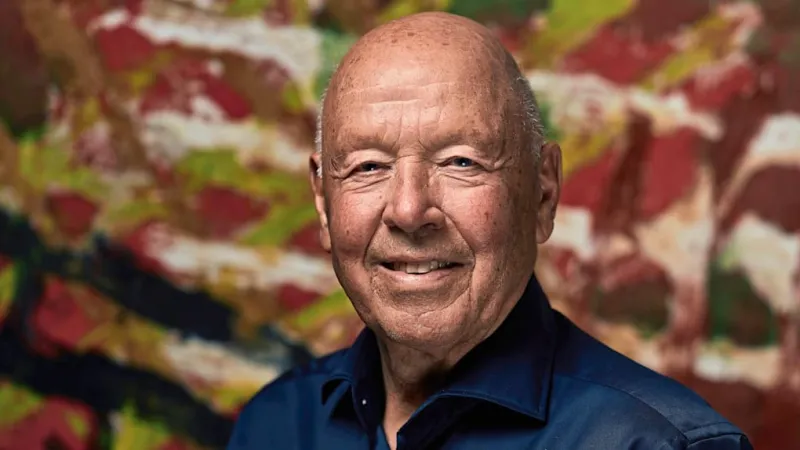
Prominent German businessman Theo Müller has publicly thrown his support behind Alice Weidel, co-leader of the Alternative for Germany (AfD) party, for the nation's Chancellery, asserting her candidacy as a "logical" choice. Müller, the patriarch of the esteemed Müller Group dairy empire, further advocated for a collaborative government between the Christian Democratic Union (CDU) and the AfD to address what he perceives as critical national issues. His remarks also included a call for Germany to maintain neutrality in the ongoing Ukraine conflict.
Müller's endorsement comes amidst a shifting political landscape in Germany, where the AfD has seen a notable surge in regional and national polling. His statement regarding Weidel's suitability for the highest office reflects a segment of the business community's growing frustration with established political norms and an openness to more radical alternatives. The businessman's explicit backing lends considerable weight to the AfD's ambition to move from opposition to a potential governing role.
The entrepreneur described the recent election results in Sachsen-Anhalt as a "stroke of luck," a reference to the AfD's strong performance in the eastern German state. This outcome, he believes, signals a clear mandate for new political directions and compels traditional parties, particularly the CDU, to reconsider their stance on cooperation with the populist right-wing party.
His call for the CDU to rehabilitate the country in conjunction with the AfD marks a significant intervention into Germany's long-held political consensus against the far-right. For years, mainstream parties have largely ruled out any form of coalition with the AfD, citing concerns over its extremist tendencies and anti-democratic rhetoric. Müller's proposition challenges this established consensus, pushing for a pragmatic, albeit controversial, partnership.
Beyond domestic politics, Müller also articulated a firm position on international affairs, urging Germany to distance itself from the conflict in Ukraine. This stance aligns with certain segments of the AfD's foreign policy platform, which often advocates for a more isolationist or Russia-friendly approach, contrasting sharply with the current government's robust support for Kyiv.
Theo Müller, a figure synonymous with the success of the Müller Group, has a long history of public commentary on political and economic issues. His influence as a leading industrialist grants his opinions a platform that can resonate across various societal layers, particularly within the German business sector. His views often encapsulate a traditional, economically liberal, yet socially conservative perspective.
Alice Weidel, co-chair of the AfD parliamentary group in the Bundestag, has emerged as one of the most prominent faces of the party. Under her leadership, the AfD has capitalized on public discontent regarding immigration, energy policy, and economic challenges, solidifying its position as a significant political force. The party's electoral gains have consistently challenged the long-dominant positions of the CDU and SPD.
The prospect of a CDU-AfD coalition, however distant it might seem to some, remains a deeply divisive topic. Critics argue that such an alliance would legitimize a party accused of xenophobia and undermining democratic institutions. On the other hand, proponents, like Müller, might view it as a necessary step to address perceived national decline and restore economic competitiveness.
The AfD's electoral successes, particularly in eastern German states, have already prompted significant internal debate within established parties. Reports have surfaced suggesting federal coercion might be considered as the AfD's influence grows. Furthermore, the struggles of the CDU to regain voter trust, with only 15% confidence in its revival, according to recent polls, as discussed in Merz Leadership Challenged As Just 15% Trust CDU Revival, underscore the difficult position mainstream parties face.
Müller's provocative remarks also reflect a broader sentiment among some German business figures who believe the country's economic and social fabric requires drastic measures. His vision for national rehabilitation appears to hinge on a political realignment that would allow the AfD a direct role in governance, a move that would fundamentally alter Germany's post-war political order.
The ongoing debate about Germany's role in the Ukraine conflict further complicates the political landscape. While the current coalition government, under Chancellor Olaf Scholz, has committed significant military and financial aid to Ukraine, voices advocating for reduced involvement or diplomatic neutrality have persisted, finding resonance within parts of the AfD and, evidently, among some business leaders like Müller.
This public endorsement from a high-profile industrialist could further embolden the AfD as it seeks to expand its appeal beyond its traditional voter base. It also places additional pressure on the CDU, which has struggled to articulate a clear strategy for addressing the rise of the populist right while maintaining its democratic integrity. The party has consistently ruled out cooperation, yet the electoral reality in certain states makes such a stance increasingly challenging.
The implications of Müller's statements stretch beyond party politics, touching upon Germany's economic future and its standing on the global stage. His call for a shift in foreign policy, particularly concerning Ukraine, signals a desire for a more self-reliant and potentially less interventionist Germany, aligning with a nativist narrative often promoted by the AfD.
Ultimately, Müller's candid appraisal of Alice Weidel's chancellery prospects and his advocacy for a CDU-AfD collaboration underscore a pivotal moment in German political discourse. His declaration reflects a growing appetite, at least in some influential circles, for unconventional political solutions, even if they challenge long-standing democratic norms and raise significant ethical questions about the country's future direction.