 Edward DP Situmorang
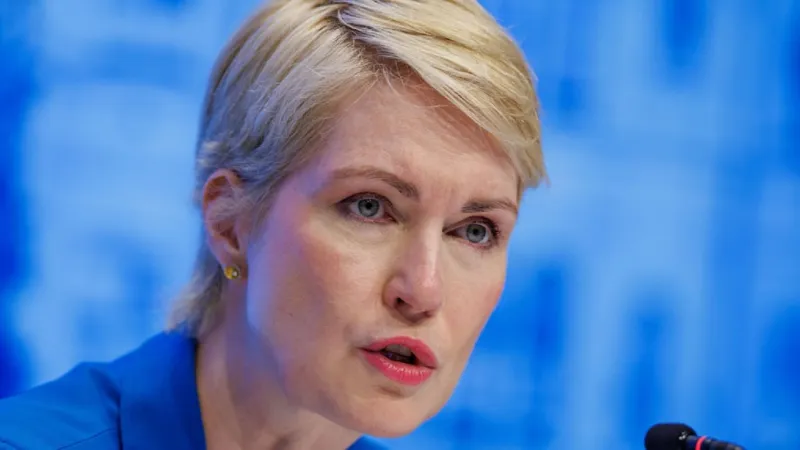
Mecklenburg-Vorpommerns Minister President Manuela Schwesig faces strong accusations from the Christian Democratic Union (CDU) and The Left party, who allege her camp deliberately excluded them from a planned four-way television debate. This political row erupted over claims Schwesigs team pushed for a direct confrontation between her Social Democratic Party (SPD) and the Alternative for Germany (AfD), while disinviting the other two major parties, though both the SPD and the television broadcaster deny these manipulations.
The controversy centers on the format of a crucial pre-election TV debate in Mecklenburg-Vorpommern. Originally conceived as a broad discussion involving four prominent parties, the proposed change to a two-party duel has ignited a fierce political firestorm, questioning the fairness of the electoral process.
CDU leadership in Mecklenburg-Vorpommern publicly voiced their displeasure, asserting that Schwesigs inner circle exerted pressure on the broadcast organizers. A spokesperson for the regional CDU stated that such tactics undermine democratic principles by attempting to control the narrative and limit public discourse to preferred antagonists.
Similarly, The Left party decried the alleged maneuver as an attempt to marginalize smaller, yet significant, political voices ahead of upcoming elections. Party officials from The Left argued that a four-way debate allows for a more comprehensive representation of political platforms and voter options, which is essential for informed decision-making.
The core of the accusation posits that representatives close to Minister President Schwesig actively lobbied the broadcasting station to reformat the debate. This alleged intervention would have transformed a multilateral discussion into a focused head-to-head encounter solely between the SPD and the AfD, a move seen by the excluded parties as strategically advantageous for the incumbent.
Both the Social Democratic Party and the unnamed television broadcaster have vehemently refuted these claims. SPD spokespersons maintained that their party advocates for open and fair political competition and had no involvement in any alleged attempts to alter the debate format. They suggested the accusations were politically motivated to garner attention.
The broadcasting station involved also issued a statement denying any undue influence from political parties regarding the planning of its electoral programming. The broadcaster affirmed its commitment to journalistic independence and balanced reporting, emphasizing that decisions on debate formats are made internally based on journalistic considerations.
Political analysts suggest that the timing of this dispute is particularly sensitive, given the ongoing election campaign in the northeastern German state. Televised debates serve as a critical platform for candidates to articulate their policies and vision directly to the electorate, making their format and participant list subject to intense scrutiny.
Observers note that a direct SPD-AfD confrontation could frame the election as a clear choice between two opposing poles, potentially galvanizing specific voter segments. However, this strategy risks alienating voters who seek alternative political perspectives or feel their parties are deliberately sidelined from public view.
The accusations underscore growing tensions within the political landscape of Mecklenburg-Vorpommern, highlighting concerns about media access and the equitable representation of all democratic parties during election cycles. As the campaign progresses, the demand for transparency in the organization of such pivotal events will likely intensify.
This incident reflects a broader trend in political campaigning where the control of media appearances and debate formats has become a contentious issue. Parties often seek to maximize their exposure while simultaneously limiting platforms for rivals, making the impartiality of broadcasters paramount.
The Christian Democratic Union and The Left continue to press for answers, demanding a full clarification regarding the initial debate planning and any subsequent changes. Their collective stance emphasizes the importance of maintaining public trust in electoral processes and the fairness of political discourse.
Despite the denials from the SPD and the television station, the shadow of these allegations persists, contributing to an already charged atmosphere in Mecklenburg-Vorpommerns political arena. The electorate awaits to see if these claims will be further investigated or if the current denials will suffice.