 Stefani Rindus
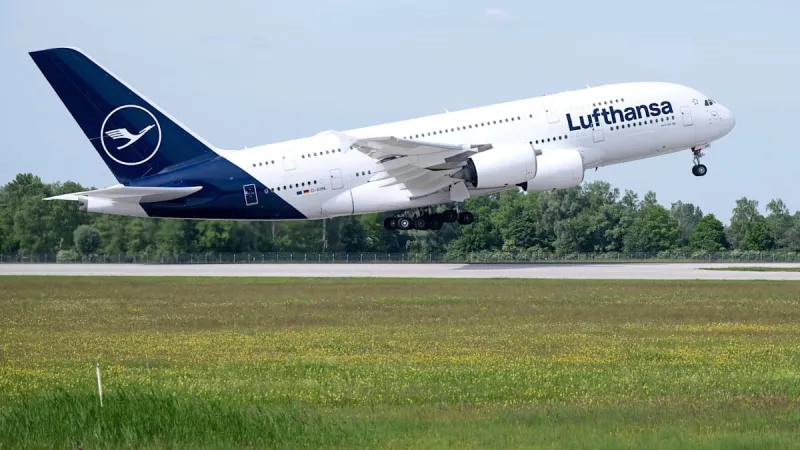
A Lufthansa Airbus A380, carrying 351 passengers, experienced a premature touchdown at Munich Airport on Tuesday, damaging runway threshold lighting, though all individuals aboard disembarked without injury, airline representatives confirmed.
The incident involved a routine landing sequence that deviated from standard procedure, resulting in the aircraft contacting the runway surface prior to the designated touchdown zone. The German flag carrier quickly moved to reassure the public about the safety of its operations and the well-being of those onboard.
According to a statement released by Lufthansa, the double-deck aircraft completed its landing safely despite the unexpected contact with the runway threshold. Passengers were subsequently deplaned and processed without further complications or reported injuries.
Initial assessments indicate that the premature contact caused significant damage to several ground-level illumination fixtures located at the runway's approach end. These lights are critical for guiding pilots during both day and night landings, ensuring precise alignment and touchdown.
The specific Airbus A380 involved, one of the largest passenger aircraft in the world, typically operates on long-haul routes, emphasizing the extensive training and precision required for its handling, particularly during critical phases of flight like landing.
Following the event, airport authorities initiated a comprehensive inspection of the affected runway segment. This mandatory procedure ensures that the landing strip remains safe for continued operations and identifies the full extent of the structural and electrical damage.
The German Federal Bureau of Aircraft Accident Investigation (BFU) is expected to launch a formal inquiry into the incident. Such investigations typically examine flight data recorders, cockpit voice recorders, air traffic control communications, and crew statements to determine the exact sequence of events and causal factors.
Pilots undergo rigorous training for various landing scenarios, including those in adverse conditions. Understanding why the aircraft touched down early will be a central focus of the investigation, potentially involving factors like weather conditions, aircraft systems, or human input.
Lufthansa stated its full cooperation with the investigating bodies, emphasizing its commitment to maintaining the highest safety standards across its fleet. The airline operates a modern fleet and adheres to strict maintenance and operational protocols.
While major incidents involving passenger safety are rare in commercial aviation, events that cause damage to airport infrastructure are taken seriously. Repair work on the damaged lighting system is anticipated, and further details on the timeline for runway re-opening will be provided by Munich Airport officials as the assessment progresses.
This incident underscores the complex interplay of human skill, advanced technology, and environmental factors inherent in modern air travel. The swift response from the airline and airport personnel ensured that a potentially serious situation concluded with all passengers safely accounted for.
Lessons learned from the BFU investigation will contribute to ongoing improvements in aviation safety practices, benefiting the entire industry. Findings typically lead to enhanced training programs or operational adjustments designed to prevent similar occurrences in the future.