 Chris Robert

BERLIN – The federal Christian Democratic Union (CDU) has issued a categorical nationwide ban on cooperation with the Alternative for Germany (AfD) party, a decision announced by Thorsten Frei, parliamentary group leader of the CDU/CSU Union. This fundamental prohibition came in the wake of the state election in Saxony-Anhalt, specifically preventing the state chapter from entering any coalition with the far-right AfD.
Frei, speaking on WELT TV, underscored the gravity of the decision, stating directly, "the whole party is affected." This declaration elevates the existing reluctance to work with the AfD into a binding, overarching principle, designed to guide all CDU state associations across Germany.
The directive follows persistent debate within the CDU regarding its strategy towards the AfD, particularly in regions where the populist party has gained significant electoral traction. The state of Saxony-Anhalt, a key eastern German state, has often been a crucible for these discussions due to the AfD's strong showing there.
For years, the CDU has navigated a complex path in response to the AfD's rise. While consistently rejecting formal coalitions at the federal level, regional nuances and electoral pressures have occasionally sparked calls for pragmatism or even cooperation from certain local chapters. This new mandate aims to quash such internal dissent and solidify a unified party line.
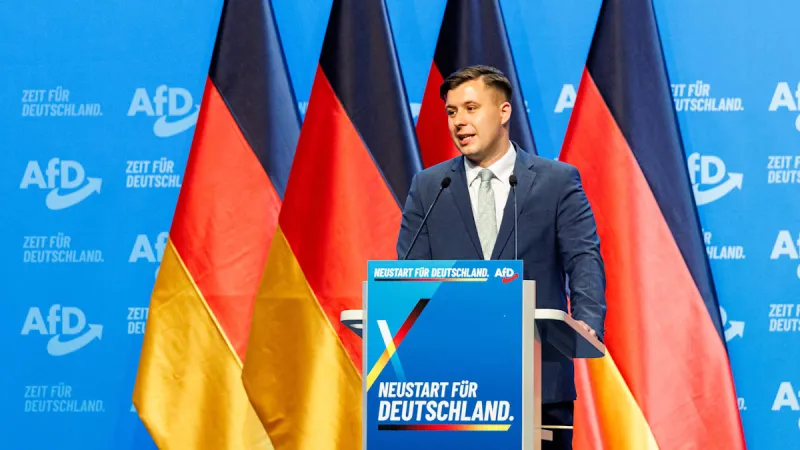
This explicit ban thwarts any aspirations the AfD might have harbored regarding a future partnership with the CDU. An earlier report highlighted how an AfD candidate eyed CDU partnership, seeking to normalize relations and gain mainstream political legitimacy. Such hopes now face a definitive federal barrier.
The decision reverberates through the German political landscape, sending a clear message about the CDU's stance on extremist parties. It aims to prevent any blurring of ideological lines, especially as the AfD continues to be a subject of intense scrutiny from domestic intelligence agencies.
The "cooperation ban" is not merely symbolic; it has tangible implications for government formation. In states where no clear majority emerges between established democratic parties, the exclusion of the AfD complicates coalition negotiations, potentially leading to minority governments or repeat elections.
Political analysts suggest the federal CDU's move is a strategic attempt to reassert its center-right identity and distance itself from any perception of legitimizing the AfD's often controversial and divisive policies. This stance is critical for the party's broader electoral appeal.
The repercussions extend beyond the CDU. Other political entities have also grappled with the question of engagement with the AfD. For instance, the BSW party recently experienced mass resignations sparked over AfD ties, illustrating the contentious nature of any association with the party across the political spectrum.
This federal mandate clarifies the CDU's commitment to maintaining a firewall against the AfD, defining the boundaries of political engagement in contemporary Germany. It reflects an ongoing effort to preserve democratic norms and principles in the face of a challenging political environment.
While the immediate impact is felt in state-level politics, particularly in regions like Saxony-Anhalt, the long-term effect is a reinforced ideological separation at the national level. The CDU is signaling unequivocally that the AfD remains outside the circle of acceptable governing partners.
The move is also likely to influence public discourse, as it further solidifies the narrative surrounding the AfD as an outlier in the established political system. It challenges the AfD's strategy of portraying itself as a legitimate alternative capable of forming government alliances.
Future state elections across Germany will undoubtedly test the resilience and interpretation of this nationwide ban. While the principle is clear, the practicalities of governance in fragmented political landscapes will continue to pose dilemmas for all parties.