 Angela Stefani
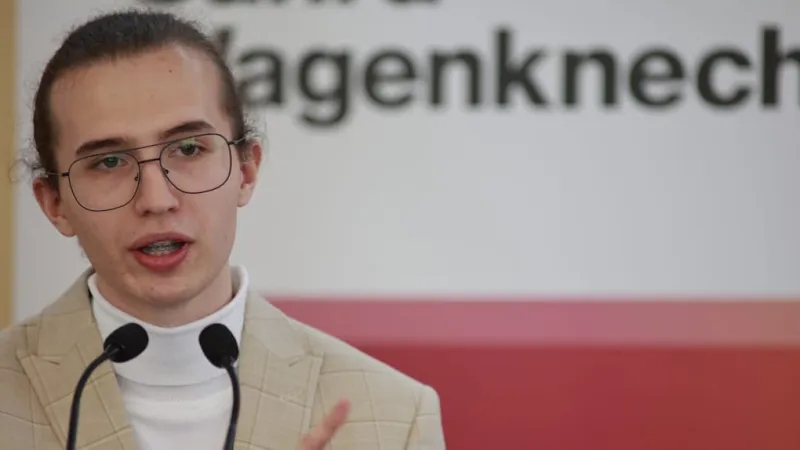
Twenty-one members of the Bundnis Sahra Wagenknecht (BSW) party have resigned, accusing the party leadership of an authoritarian management style, a severe lack of transparency, and engaging in cronyism. This wave of departures comes as the dissenting members also express profound anger over the party's perceived ideological drift and an increasing rhetorical alignment with the far-right Alternative for Germany (AfD) party.
Those departing articulate a pervasive atmosphere they describe as a culture of mistrust, a direct consequence of the central party apparatus decisions. They assert that the party's internal mechanisms have been subverted, leading to a concentration of power that stifles democratic participation and dissenting voices within the nascent political entity.
Accusations extend beyond mere procedural concerns, delving into allegations of Postengeschacher, a German term for the unsavory practice of trading or maneuvering for positions and perks within the party structure. This suggests a perceived prioritization of personal gain or internal power consolidation over the party's stated political objectives.
A significant driver behind the mass exodus is the BSW's evolving stance on rhetoric and policy, which the departing members claim increasingly mirrors that of the AfD. This rapprochement, they argue, betrays the BSW's foundational principles and undermines its stated ambition to offer a distinct political alternative.
The leadership of BSW has not remained silent amidst the turmoil. BSW-Chef Dittrich responded to the resignations with a stark assessment, stating, “It is good that clarity now prevails.” This comment suggests the party leadership views the departures as a necessary clearing of internal dissent, allowing the remaining members to pursue a unified agenda.
The BSW, founded by prominent politician Sahra Wagenknecht, emerged with the promise of challenging Germany's political establishment, positioning itself as a left-conservative force. Its platform often blends traditional left-wing economic policies with more conservative stances on issues such as immigration and cultural identity, appealing to voters disaffected with mainstream parties.
However, this unique ideological blend has presented challenges, particularly in navigating the sensitive terrain of mainstream German politics, where any perceived proximity to the AfD draws significant scrutiny. The AfD is widely considered a far-right, populist party, often criticized for its nationalist and anti-immigrant rhetoric.
The departing members specifically criticize the BSW for adopting language and themes that resonate with the AfD's narrative. This includes, by inference, discussions around immigration, national sovereignty, and critiques of European Union policies, which are central tenets of the AfD's agenda.
This internal revolt poses a substantial challenge for the BSW, a party still in its formative stages. The loss of 21 members, while perhaps numerically small in a larger party, signals deep-seated ideological fissures that could hamper its growth and electoral viability in a competitive political landscape.
The future trajectory of the BSW now hinges on its ability to either consolidate its base around its current leadership and direction or to address the concerns raised by the departing members. The crisis highlights the inherent difficulties in forging a new political movement that seeks to bridge traditional ideological divides while maintaining internal cohesion and public credibility.
As the BSW grapples with these internal struggles, the broader German political landscape watches closely. The party's ability to navigate this internal strife and define its ideological boundaries will be crucial in determining its long-term impact on German politics.