 Debby Wijaya
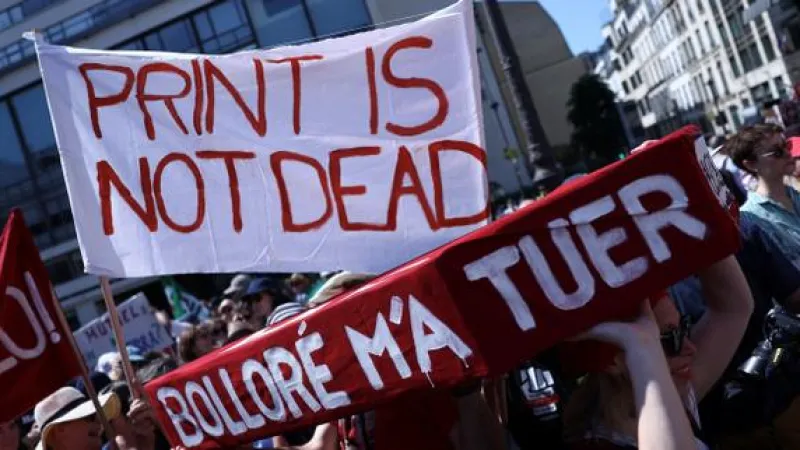
PARIS – A collective of concerned French educators, known as EducNat contre Bollore, has launched a compelling call for a boycott of school textbooks published by Hachette Livre, a dominant force in educational publishing. This concerted action stems from serious allegations that media magnate Vincent Bollore is leveraging his extensive business empire, which includes Hachette, to advance far-right political agendas, thereby influencing national education and potentially shaping young minds through classroom materials.
The EducNat collective articulated its motivation unequivocally, stating it aims to prevent financial support from reaching what it describes as a “media empire on a crusade to make the far right win.” This bold declaration underscores the group's profound concern regarding the ideological direction of educational content under Bollore's expanding corporate umbrella.
Vincent Bollore, through his holding company Vivendi, has systematically acquired a formidable portfolio of media assets across France. This empire now spans television (Canal+), radio (Europe 1), news channels (CNews), and a significant portion of print and digital media (Prisma Media), alongside his publishing interests.
Hachette Livre stands as one of the largest publishing houses globally, with a pervasive presence in the French educational sector. Its textbooks are widely adopted across primary and secondary schools, making its content a cornerstone of the national curriculum. This market dominance grants its owner considerable influence over the narratives and perspectives presented to millions of students.
EducNat contre Bollore is not merely calling for a passive boycott; it is actively proposing structured motions for presentation in school administrative councils across the country. These motions aim to formally challenge the procurement of Hachette Livre materials and encourage a broader reevaluation of publishing choices within the educational system.
Furthermore, the collective is diligently compiling and promoting a list of alternative textbooks and educational resources from publishers not affiliated with Bollore. This proactive approach seeks to provide viable options for schools, parents, and educators who wish to align with the boycott without compromising the quality or availability of learning materials.
The initiative raises critical questions about the ethics of media ownership and its spillover into educational content. Critics argue that when a single entity controls significant segments of both news dissemination and educational material production, the risk of ideological bias infiltrating classrooms becomes substantial. This issue touches upon core tenets of academic freedom and curriculum neutrality.
Indeed, the broader debate surrounding the autonomy of academic institutions from commercial and political pressures has been a long-standing one. Jurist Olivier Beaud has previously highlighted how bureaucracy imperils academic freedom, demanding urgent reform, a sentiment that resonates with EducNat's current push against perceived external ideological impositions.
Implementing a nationwide textbook boycott presents numerous logistical and financial challenges. Schools often operate on established procurement cycles and budgets, and shifting to new suppliers requires considerable effort, curriculum adjustments, and potential additional costs. Publicly funded schools, in particular, must navigate complex regulations.
Bollore's media ventures have frequently faced scrutiny for their editorial lines, particularly CNews, which critics argue has veered sharply to the right, often featuring commentators and discussions aligned with conservative and nationalist viewpoints. These prior controversies lend weight to EducNat's claims regarding a concerted ideological agenda.
The collective believes that continued purchase of Hachette Livre textbooks directly contributes to financing this expansive media and publishing conglomerate, thereby indirectly bolstering a political movement they fundamentally oppose. Their argument frames the act of textbook procurement as an economic endorsement of Bollore's wider political project.
Parents and civil society organizations are being called upon to support the boycott, emphasizing that educational choices at home and within local communities can collectively send a powerful message. The success of such a movement often hinges on widespread public awareness and participation.
As France navigates its own complex political landscape, marked by a palpable rise in far-right sentiment in various sectors, the textbook boycott by EducNat against Bollore reflects a broader struggle over the nation's ideological direction and the integrity of its educational foundations.
This movement underscores an imperative for transparency and accountability in the ownership and editorial policies of major publishing houses, particularly those responsible for shaping the intellectual development of future generations. The outcome of EducNat's campaign could establish a significant precedent for how media conglomerates engage with sensitive public sectors like education.