 Angela Stefani
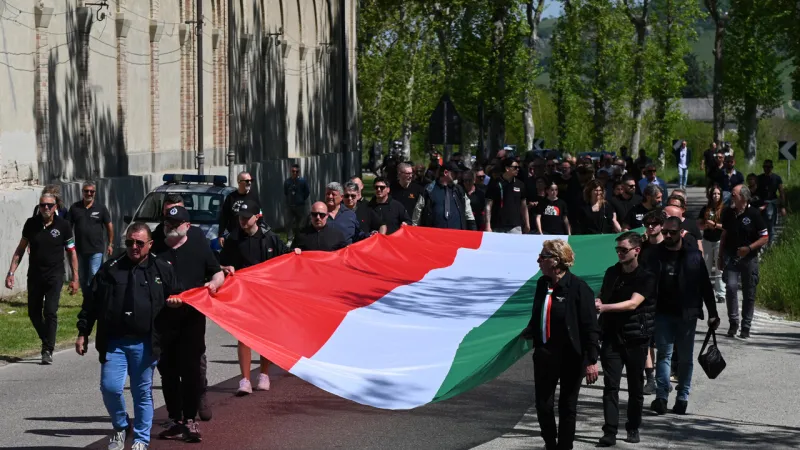
Approximately fifty fascist sympathizers convened in Predappio, Italy, this week to observe the anniversary of Benito Mussolini's birth. The annual commemoration at the former dictator's tomb transpired under a remarkably subdued atmosphere, notably absent of the overt Roman salutes and large-scale processions that have characterized previous gatherings, reflecting a diminished public display of fascism.
The reduced turnout and the absence of traditional, more provocative displays marked a significant departure from past anniversaries. Organizers reportedly encouraged a more discreet observance, possibly in response to heightened public scrutiny and legal prohibitions against the glorification of fascism.
Predappio, a small town in the Emilia-Romagna region, remains a focal point for those who revere Mussolini, whose remains are interred there. The town often becomes a pilgrimage site for neo-fascists and nostalgic groups, drawing visitors on key dates related to the dictator's life and death.
Benito Amilcare Andrea Mussolini was born on July 29, 1883. His political career culminated in him becoming the leader of the National Fascist Party and the prime minister of Italy from 1922 to 1943, establishing a totalitarian regime that profoundly impacted 20th-century European history.
Italy has a complex relationship with its fascist past. While the constitution explicitly forbids the reconstitution of the fascist party, debates frequently arise concerning freedom of expression versus the promotion of hate speech and historical revisionism. The country grapples with how to acknowledge its history while preventing the resurgence of extremist ideologies.
Italian authorities generally monitor such gatherings closely. Public opinion often diverges sharply, with many condemning the glorification of a regime responsible for widespread repression, anti-Semitic laws, and alliance with Nazi Germany during World War II.
In prior years, commemorations in Predappio have sometimes drawn hundreds, even thousands, of participants, often featuring regalia, chants, and overt displays of fascist symbolism, including the controversial Roman salute. These larger events frequently sparked condemnation from anti-fascist groups and political figures across the spectrum.
The specific reasons for this year's muted observance are subject to speculation. Potential factors include stricter enforcement of public order regulations, a societal shift in attitudes, or a deliberate choice by organizers to avoid confrontation and negative media attention.
For the residents of Predappio, these annual events present a recurring dilemma. Some benefit from the tourism generated by visitors, while others express discomfort or shame over their town's association with a divisive historical figure and the ideologies his followers promote.
The subdued nature of this year's Predappio gathering may signal a broader trend of diminishing overt displays of fascist sympathy in Italy, or it could simply be an isolated instance. Regardless, the persistent annual pilgrimage underscores the enduring presence of historical revisionism and extremist sentiment in certain segments of society.
While not directly linked, the global political landscape sometimes influences how national historical narratives are interpreted and presented. The rise of nationalism in various parts of Europe occasionally brings renewed attention to such historical commemorations.
The annual Predappio commemoration remains a poignant reminder of Italy's complex historical legacy and the ongoing societal efforts to reconcile with its past, especially in confronting ideologies that once plunged the nation into conflict.