 Edward DP Situmorang
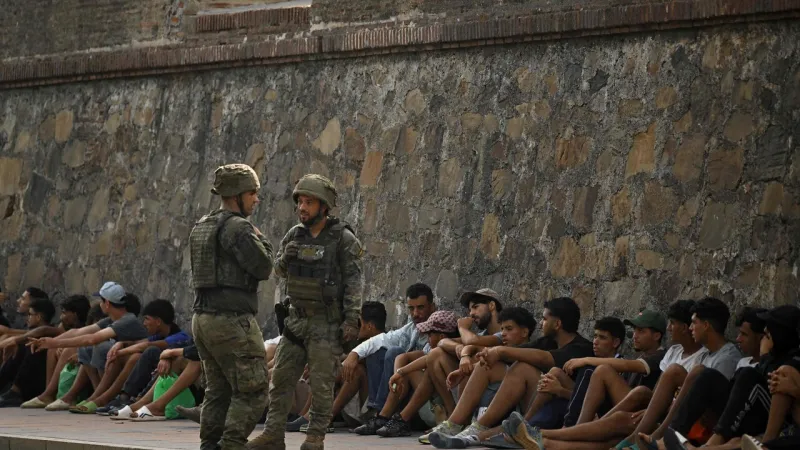
Brussels is at the heart of a brewing diplomatic storm as European Union leaders prepare for a critical summit on Tuesday, convened at the behest of Italian Prime Minister Giorgia Meloni and backed by 21 other member states. The urgent meeting aims to tackle the mounting migration crisis focused on the Spanish North African enclave of Ceuta, a move that has drawn sharp condemnation from Spanish Prime Minister Pedro Sanchez, who reportedly described calls to close Schengen borders as "ignorant."
Prime Minister Meloni spearheaded the initiative by dispatching a formal letter to EU institutions, expressing grave concerns over the influx of migrants into Europe, particularly through critical entry points like Ceuta. The letter underscored the necessity of a coordinated European strategy to manage external borders and to bolster repatriation efforts. Support for Meloni's stance highlights a growing faction within the EU advocating for stricter controls and a more unified approach to migration challenges.
Spanish Prime Minister Sanchez responded forcefully to the calls for greater border restrictions, specifically those implying a curtailment of the Schengen Area's foundational principle of free movement. His public comments, where he reportedly stated that "closing Schengen is ignorant," signal Spain's firm opposition to any measures that would dismantle or significantly weaken the open border system among EU nations. Spain views the Schengen Agreement as integral to European integration and economic prosperity.
The focus on Ceuta stems from recurrent surges in migrant arrivals at the enclave, a geographical anomaly sharing a land border with Morocco. Thousands of individuals, often from Sub-Saharan Africa, attempt to cross into Ceuta annually, seeking entry into European territory. The humanitarian and logistical challenges presented by these crossings frequently strain local resources and ignite broader debates on EU migration policy.
Tensions surrounding migration through Ceuta are not new. The region has historically been a flashpoint for border control debates, witnessing previous large-scale incursions that tested relations between Spain and Morocco, as well as between Spain and the broader EU. Past events have led to intense diplomatic exchanges and demands for European solidarity. This echoes earlier concerns discussed in articles such as Ceuta Migrant Surge Recedes, EU Confronts Spain Over Policy.
The broader European migration crisis continues to be a defining challenge for the bloc. Member states frequently diverge on issues of responsibility-sharing, external border management, and integration policies. The proposed Ceuta summit is emblematic of these deep-seated disagreements, bringing to the forefront the fundamental questions about the future of European solidarity and sovereignty.
Sources close to the negotiation indicate that the letter co-signed by Meloni and her counterparts emphasized the need for immediate, actionable steps rather than prolonged discussions. It reportedly called for enhanced cooperation with third countries, increased funding for border security technologies, and a reassessment of existing asylum procedures to prevent abuses. The urgency expressed aims to galvanize a consensus on concrete measures.
Spain has consistently argued that the burden of managing external borders, particularly its enclaves of Ceuta and Melilla, should be a collective European responsibility. Madrid often seeks greater financial and logistical support from Brussels, asserting that its geographical position places it on the front lines of migration flows. Sanchez's robust defense of Schengen reflects a stance that blames external factors and inadequate EU support, rather than internal Spanish policy, for the challenges.
The upcoming Tuesday summit faces a difficult path toward unanimous agreement. While a complete closure of Schengen borders appears unlikely given the strong opposition from Spain and other nations, discussions could center on reinforcing external border agency Frontex, as advocated by figures like Weber for enhanced powers amid the European migration crisis. Other potential outcomes include increased financial aid for front-line states or new agreements with North African nations to curb irregular migration.
The increasingly vocal disagreements between member states over migration policy, exemplified by the clash over the Ceuta summit, pose significant questions for the long-term unity and effectiveness of the European Union. The ability of the bloc to find common ground on such a sensitive and politically charged issue will heavily influence public perception of its governance and its capacity to act decisively in crises.
A senior diplomatic official, speaking on condition of anonymity due to the sensitivity of the talks, remarked, "The real test here is whether the EU can move beyond rhetoric and implement policies that satisfy both those demanding stricter controls and those upholding humanitarian principles and free movement." This sentiment underscores the delicate balancing act required from EU leaders.
The debate surrounding Ceuta and Schengen also resonates with ongoing discussions regarding Italy's own measures to bolster Schengen borders and target Spain arrivals amid concerns, indicating a wider trend of national concerns influencing EU-level policy. This interconnectedness highlights the complex web of domestic and international pressures shaping Europe's migration landscape.
Ultimately, the Tuesday summit will not only address the immediate crisis in Ceuta but also serve as a barometer for the evolving relationship between member states on critical issues of sovereignty, shared responsibility, and the foundational principles of the European project. The outcome will be closely watched across the continent, signaling the direction of future EU migration policies.