Gabriella
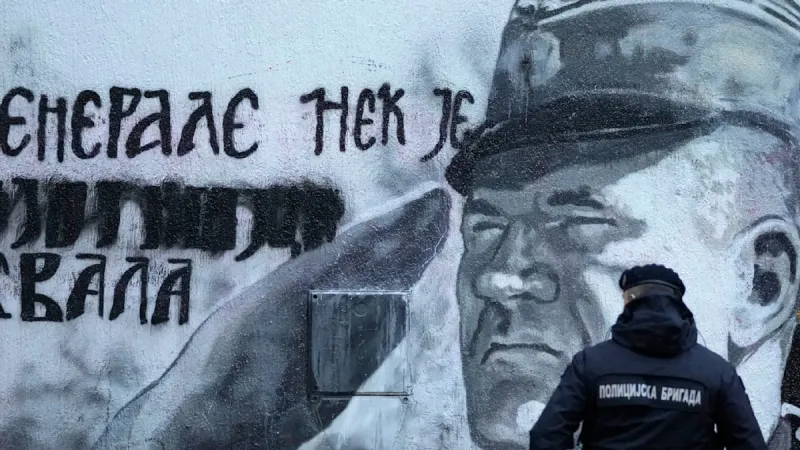
The Hague, Netherlands — The death of Ratko Mladic, convicted architect of the Srebrenica genocide and other atrocities during the Bosnian War, marks the formal close of a profoundly dark chapter in European history. However, experts caution that his passing does not signify an end to the deep-seated divisions or the arduous process of historical reckoning, particularly amid warnings that he could once again be glorified in parts of Serbia.
Mladic, often referred to as the Butcher of Bosnia, received a life sentence from the International Criminal Tribunal for the former Yugoslavia (ICTY) in 2017, a verdict upheld by its appeals chamber. His conviction for genocide, crimes against humanity, and war crimes solidified his place as one of the most infamous figures of the 1990s Balkan conflicts.
Southeast Europe Correspondent Erich Rathfelder articulated a stark warning regarding the potential for revisionism. Rathfelder cautioned that there is a tangible risk the convicted war criminal could be reinterpreted as a hero within certain circles in Serbia, an outcome that would severely impede genuine reconciliation.
The specter of Mladic's heroification underscores the enduring struggle to confront the brutal realities of the Bosnian War. For many victims and their families, particularly those who survived the Srebrenica massacre, his death brings a sense of finality to the legal process, yet the emotional scars remain profoundly unhealed.
Rathfelder emphasized the insidious nature of the rhetoric that fueled the conflict. He was quoted saying, "With this hate that was generated, the mass murders were made possible in the first place." This statement highlights how systematic dehumanization and propaganda laid the groundwork for the most horrific acts of violence committed on European soil since World War II.
The legal journey to bring Mladic to justice spanned decades. After years as a fugitive, he was arrested in Serbia in 2011 and subsequently transferred to The Hague, where his trial captivated international attention and reopened painful wounds for millions. His conviction affirmed international law's commitment to holding perpetrators of mass atrocities accountable.
Despite the verdict, the narrative surrounding Mladic remains contentious in the region. In Bosnia and Herzegovina, particularly among Bosniak communities, his name is synonymous with unimaginable suffering. In contrast, some segments of the Serbian population continue to view him as a wartime commander who defended his people, often denying or downplaying the scale of his crimes.
This divergence in historical interpretation poses significant challenges to building a stable, peaceful future in the Balkans. Educational initiatives and robust public discourse are critical to fostering an accurate understanding of the past, one that acknowledges the immense suffering endured by all communities but unequivocally condemns those responsible for genocide.
The international community, including bodies like the United Nations, has consistently stressed the importance of confronting war crimes honestly to prevent future conflicts and promote healing. The ongoing denial of genocide, particularly in relation to Srebrenica, is seen as a major obstacle to regional stability and European integration for nations like Serbia.
The Bosnian War, which raged from 1992 to 1995, resulted in the deaths of over 100,000 people and displaced millions. Ethnic cleansing campaigns, systematic rape, and widespread destruction characterized the conflict, leaving a legacy of trauma that generations continue to grapple with.
Mladic's long-awaited conviction and subsequent death provide a degree of closure for victims, yet the broader work of confronting his hateful legacy, ensuring accurate historical memory, and achieving true reconciliation across the former Yugoslavia is far from complete. As one article noted, "War Criminal Ratko Mladic Dies in Hague Prison Serving Genocide Sentence." His passing, while significant, merely shifts the focus to the ongoing battle against historical revisionism and the pursuit of justice beyond the courtroom.
The path forward demands continued vigilance against the glorification of war criminals and unwavering support for those seeking truth and justice. Only through such sustained efforts can the region hope to overcome the deep scars left by the hatred that Mladic personified.