 Angel Doris
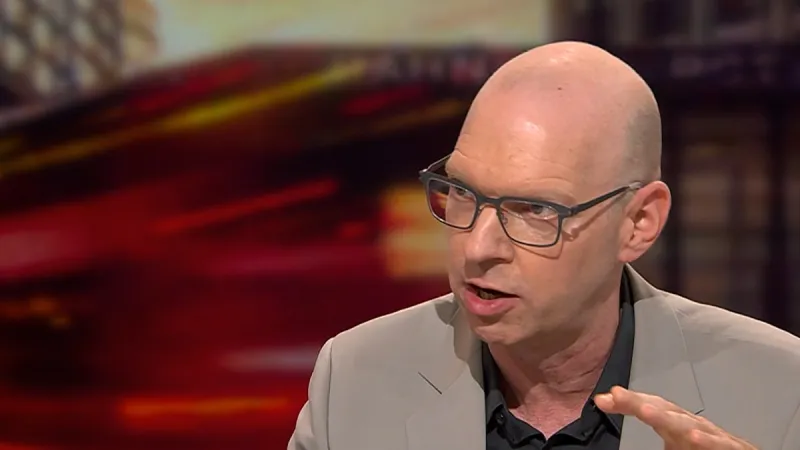
BERLIN – A prominent German political commentator has sharply criticized alleged political maneuvers aimed at preventing Ulrich Siegmund of the Alternative for Germany (AfD) from assuming the chairmanship of the Minister-President Conference, should his party emerge victorious in future state elections in Sachsen-Anhalt. Andreas Rosenfelder, chief commentator for WELT, warned that such exclusion strategies inadvertently bolster the AfD's electoral prospects, framing the perceived snub as a potent re-election campaign gift for the controversial politician.
Rosenfelder articulated his concerns during a segment on political freedom, arguing that attempting to sideline a democratically elected official, regardless of their party affiliation, undermines the very principles of representative governance. His critique comes amidst growing debate over how mainstream parties should engage with the AfD, which has seen significant electoral gains, particularly in Germany's eastern states.
The Minister-President Conference serves as a crucial forum for coordinating policy among Germany's 16 federal states and with the federal government. Its chairmanship rotates among the state premiers, typically following a predetermined schedule that prioritizes states in a specific order. Denying a state's premier this rotating role would be an unprecedented political slight.
Sachsen-Anhalt, a state often perceived as marginalized in national political discourse, is precisely where the AfD has established a strong foothold. The idea of its leader being excluded from a significant national platform is, according to Rosenfelder, bound to resonate negatively with voters who already feel overlooked by the federal establishment.
The AfD's increasing popularity in states like Sachsen-Anhalt is a complex phenomenon, driven by a confluence of economic anxieties, migration debates, and a sense of alienation from traditional political parties. This electoral surge has prompted mainstream parties to re-evaluate their strategies for countering the far-right populist movement. Relatedly, some analyses suggest that Russian Terror Allegations Fail to Sway East German AfD Support, indicating a resilient voter base despite external pressures.
Rosenfelder's statement, “He could not wish for a better re-election program,” directly implies that the proposed exclusion validates the AfD's narrative of being an anti-establishment force targeted by the political elite. This narrative often appeals to voters who feel unrepresented or ignored by established parties.
The debate extends beyond mere party politics, touching upon fundamental questions of democratic legitimacy. If a state premier, duly elected by their constituents, is intentionally barred from a procedural leadership role, it raises concerns about the integrity of the democratic process and the respect for electoral outcomes.
There is little to no historical precedent in post-war Germany for such a deliberate and overt exclusion of a state premier from a rotating chairmanship based on party affiliation. This potential move signals a new level of political tension and perhaps desperation among mainstream parties concerning the AfD.
The current political landscape in Germany is marked by heightened polarization. Discussions about the Sabotage Threat: Germany's Power Grid Vulnerable to Simple Attacks reflect underlying societal anxieties that the AfD often capitalizes on. The struggle to maintain national cohesion while addressing diverse regional political leanings remains a critical challenge.
Critics argue that such tactics could erode public trust in political institutions and further alienate segments of the electorate. It risks reinforcing the AfD's portrayal of itself as a victim of a biased system, thereby potentially strengthening its appeal to protest voters.
Mainstream parties face a profound dilemma: how to counter the AfD's influence without inadvertently granting it greater legitimacy or victim status. The proposed exclusion, according to Rosenfelder, falls squarely into the latter trap.
Should an AfD candidate win the premiership in Sachsen-Anhalt, the handling of the Minister-President Conference chairmanship will be a critical test for Germany's political system. The outcome will likely set a precedent for future interactions with the party in other federal bodies.
While the original source categorized this discussion under freedom of opinion, Rosenfelder's criticism itself is an exercise in this fundamental right, highlighting perceived threats to the democratic process through political maneuvering rather than direct censorship.
The situation in Germany resonates with broader European trends where populist parties challenge established political norms. Debates over how to manage such movements are ongoing across the continent, often intertwined with concerns about EU, NATO Unite to Escalate Pressure on Moscow Amid Hybrid Threats and maintaining democratic stability in uncertain times.
The unfolding debate surrounding the Minister-President Conference chairmanship underscores the deep divisions within German politics. The strategic response to the AfD's rise will define the trajectory of the country's democratic institutions in the coming years.