 Dodi Irawan
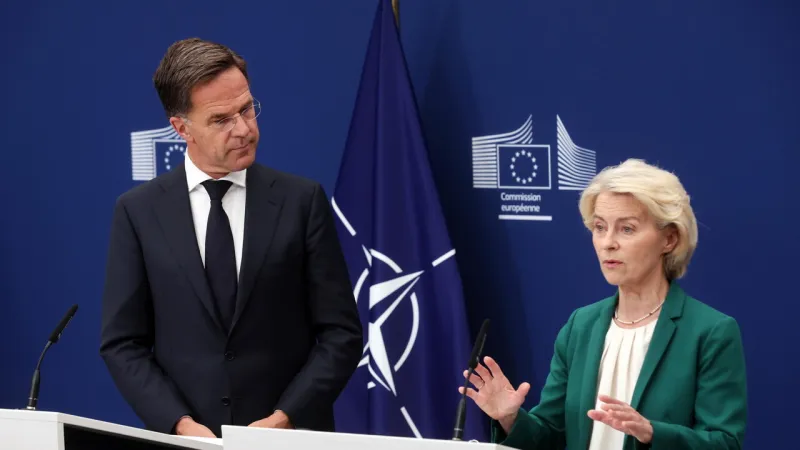
BRUSSELS – European Union Commission President Ursula von der Leyen and Dutch Prime Minister Mark Rutte convened recently to underscore the resolute unity between the EU and NATO, signaling a concerted effort to escalate pressure on Moscow. Their discussions emphasized the imperative of a united front against persistent Russian aggression and the evolving landscape of hybrid threats.
The high-level meeting solidified a shared strategic direction, coming amidst heightened tensions across the European continent. Both leaders stressed that the interconnected security of the transatlantic alliance demands a cohesive and unwavering response to challenges emanating from the Kremlin.
Estonian Prime Minister Kaja Kallas highlighted the immediate diplomatic repercussions of recent incidents, confirming that Estonia, like several other European capitals, summoned the Russian ambassador following the disruptive events in Leipzig. This coordinated diplomatic action signals a firm resolve to hold Moscow accountable for its destabilizing activities within Europe.
The Leipzig events, widely reported across European media, have been attributed to Russian interference and are perceived as a critical escalation in hybrid warfare tactics. The diplomatic summonses represent a direct and unified response to these provocative actions, as explored further in related reporting such as Germany Blames Russia for Leipzig Drone Attacks; Europe, NATO Vow Response.
German lawmaker Johann Wadephul further amplified calls for enhanced military assistance to Ukraine. He asserted that additional EU member states possess air defense interceptor systems suitable for transfer to Kyiv, urging a comprehensive discussion on their immediate deployment to bolster Ukraines defensive capabilities.
This push for increased military aid aligns with broader European efforts to support Ukraine against ongoing Russian aggression. The discussions between von der Leyen and Rutte included the strategic imperative of ensuring Kyiv receives the necessary resources to defend its sovereignty and territory.
The coordinated approach also extends to addressing Russian influence operations that seek to undermine democratic processes within the EU. Concerns about such interference have been a recurring theme, with Italian Foreign Minister Tajani previously describing Russian influence on Italian elections as a European concern. This underscores the multifaceted nature of the pressure being applied on Moscow.
The leaders reiterated that the comprehensive strategy against Russia involves not only military aid and diplomatic rebukes but also robust sanctions and countermeasures against cyberattacks and disinformation campaigns. The resolve to combat these diverse threats remains central to EU and NATO policy.
President von der Leyen emphasized the enduring strength of EU-NATO cooperation, stating, “Our unity is our greatest strength. We are unwavering in our commitment to defend our shared values and security interests, and we will continue to raise pressure on Moscow through every available means.”
Prime Minister Rutte echoed these sentiments, highlighting the necessity of sustained collective action. He underscored that a fragmented response would only embolden aggressive actors, making a unified stance paramount for regional stability.
The European Union has been actively re-evaluating its stance on Russian assets and aid to Ukraine, particularly in light of these hybrid attacks. Developments such as those detailed in Hybrid Attacks Prompt EU Rethink on Russian Assets, Ukraine Aid indicate a growing consensus for more decisive measures.
Further evidence of European resolve includes Germany's recent actions, such as accusing Russia of a hybrid attack and subsequently closing a consulate, a move highlighted in reports like Germany Accuses Russia of Hybrid Attack, Closes Consulate. Such steps demonstrate a firm commitment to reciprocal measures against Russian provocations.
Discussions also touched upon the long-term strategic implications of Europes energy independence and supply chain resilience, aiming to further diminish Moscows leverage over the continent. This diversification strategy is a critical component of the broader pressure campaign.
The renewed commitment to unity and increased pressure on Moscow reflects a consensus among leading European nations that a robust, coordinated response is the most effective means to deter aggression and ensure lasting peace and security on the continent.
Leaders concluded by reaffirming their intent to continue high-level consultations and to maintain a vigilant watch over geopolitical developments, prepared to adjust strategies as circumstances evolve. The message to Moscow remains clear: a united Europe and NATO stand ready to defend their collective interests.