 Chris Robert
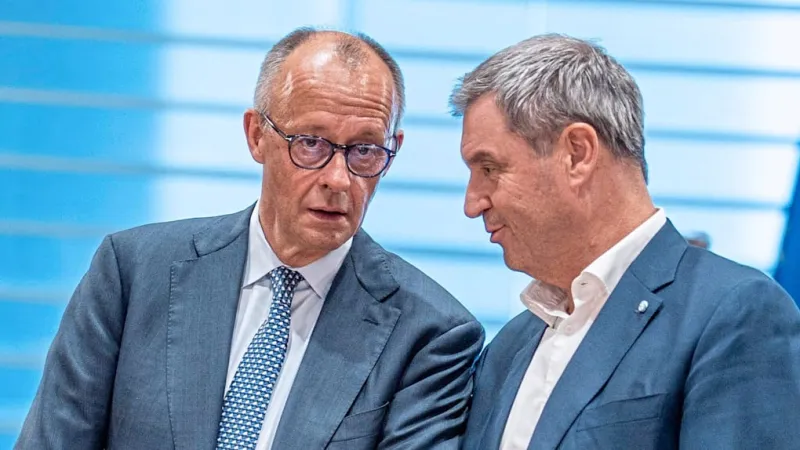
BERLIN – CSU Chairman Markus Söder has ignited significant speculation within Germany's conservative Union, publicly suggesting a potential political comeback for former Health Minister Jens Spahn. The remarks, made during a recent press conference, emerge amidst internal party realignments, including the election of Thorsten Frei as the new parliamentary group leader and Frei's steadfast defense of Chancellor Friedrich Merz. Söder's pronouncement injects a new layer of complexity into the Union's ongoing efforts to define its future direction.
Söder's statement was direct, asserting that Jens Spahn's political journey was “far from over.” This declaration immediately sparked widespread discussion among political analysts and party members, raising questions about the timing and motivation behind such a high-profile endorsement. Spahn, a prominent figure during the early 2020s, has maintained a lower profile in recent years but remains a recognizable name within German politics.
The prospect of a Spahn comeback is not without controversy. While some within the Union might welcome his return as a booster for the conservative wing or a fresh face for future campaigns, others express considerable apprehension. A sentiment has emerged, particularly in circles close to General Secretary Carsten Linnemann, warning of potential damage to the party's cohesion that would be difficult to repair should Spahn re-enter the leadership fray. This suggests deep-seated divisions over Spahn's past performance and future role.
This internal dialogue unfolds concurrently with other crucial developments. Thorsten Frei, a seasoned politician, recently secured his election as the new head of the Union parliamentary group. His elevation is seen by many as a move to stabilize leadership and consolidate support behind the current party structure. Frei brings a reputation for strategic thinking and a strong grasp of parliamentary procedure to his new demanding role.
In one of his initial acts as parliamentary group leader, Frei swiftly came to the defense of Chancellor Friedrich Merz. Merz has faced persistent challenges in unifying the disparate factions within the Christian Democratic Union (CDU), the larger partner in the Union alliance. Frei's public support signals an attempt to present a united front, crucial for the party's standing as the nation approaches future electoral cycles. The importance of internal cohesion for Merz cannot be overstated, as discussed in the analysis, "Merz Seeks Unity Amid Persistent CDU Fractures After Frei Election."
Jens Spahn, previously a significant figure, served as Federal Minister of Health in the federal government. His tenure was marked by both innovative policy proposals and significant public scrutiny, particularly during critical national health crises. A potential Spahn comeback would undoubtedly reignite debates surrounding his policy stances and leadership style, testing the Union's capacity to absorb differing viewpoints.
Söder's influence, stemming from his leadership of the Bavarian Christian Social Union (CSU), cannot be understated. As a powerful voice within the broader Union, his comments carry considerable weight and are often interpreted as strategic maneuvers in the complex power dynamics between the CDU and CSU. His public backing of Spahn could be a signal to elements within the party or a broader electorate.
The timing of Söder's remarks, following Frei's election and amid calls for unity, suggests a deliberate attempt to shape the ongoing conversation about the Union's trajectory. It highlights the persistent factionalism that Chancellor Merz continues to navigate, despite efforts to bridge divides and present a unified image. The path forward for the CDU/CSU will likely involve balancing these internal pressures while addressing the broader political challenges facing Germany.
Political observers are now closely watching how the Union leadership, particularly Chancellor Merz and Thorsten Frei, will respond to Söder's highly public intervention. The discussions around a potential Spahn comeback will undoubtedly dominate internal party forums and media coverage in the coming weeks, further underscoring the dynamic and sometimes unpredictable nature of German coalition politics.
The broader implications of Söder's statement extend beyond individual personalities, touching upon the ideological direction of the Union. A robust debate concerning conservative principles and the party's future identity is ongoing, influenced by figures like Spahn who represent particular viewpoints within the political spectrum. This ongoing internal struggle will define the party's electoral viability in the evolving German political landscape.
Ultimately, Söder's seemingly impromptu comments regarding Spahn's future underscore the fluid state of play within one of Germany's most influential political blocs. The Union faces the dual challenge of projecting unity externally while managing vigorous internal debates over leadership, policy, and personnel. The unfolding narrative will reveal much about the resilience and adaptability of the CDU/CSU in the current political climate.