 Angela Stefani

Cologne, Germany – Christopher Street Day (CSD) in Cologne recently ignited a contentious debate concerning its fundamental principles, as reports emerged of politically divergent individuals facing exclusion from the vibrant celebration of queer freedom. The incident has prompted significant introspection, challenging the movement's stated commitment to universal rights and inclusive representation for all LGBTQ+ people.
Historically, CSD events worldwide serve as crucial platforms for advocacy, protest, and celebration, originating from the Stonewall Uprising. Their core mission centers on championing the freedom and rights of queer individuals, irrespective of their background or beliefs. The recent occurrences in Cologne, however, appear to contradict this foundational tenet.
Eyewitness accounts and commentaries indicate that participants expressing views perceived as outside a specific progressive political spectrum were allegedly marginalized or denied full participation. This perceived ideological policing has struck a discordant note within a movement that purports to embrace diversity in its broadest sense.
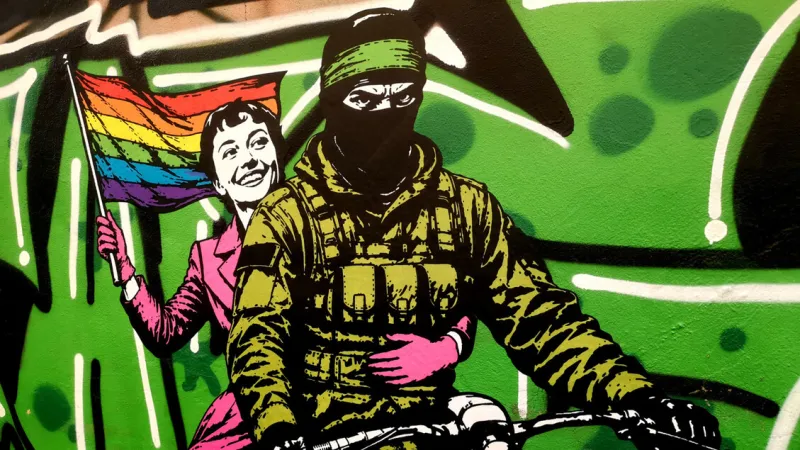
At the heart of the burgeoning controversy lies the argument, articulated by some German commentators, that "gay is not left-wing." This assertion underscores a growing demand to disentangle sexual orientation and gender identity from a singular political ideology, advocating for a queer movement that respects a plurality of political thought among its members.
Critics contend that conflating queer identity with a particular political stance risks alienating a significant segment of the community. They argue that such an approach undermines the very inclusivity CSD seeks to promote, potentially fracturing the movement rather than galvanizing it toward broader societal acceptance.
The incident in Cologne forces a critical examination of how collective identity movements navigate internal political differences. While many social movements inherently possess political dimensions, questions arise when certain political viewpoints become prerequisites for belonging or participation.
Observers suggest that these events reflect a broader trend of increasing polarization, where identity groups sometimes struggle to accommodate internal dissent. The challenge for the CSD, therefore, is to reaffirm its welcoming stance while still effectively advocating for its core objectives.
The original spirit of Christopher Street Day was born from a unified demand for civil rights and liberation. This spirit, proponents argue, should transcend partisan politics, uniting people under the banner of shared human rights rather than dividing them over ideological nuances.
As the European political landscape continues to evolve, similar debates on fundamental values and political alliances resonate across various spheres. For instance, discussions within the EU Parliament Challenges AfD Alliance on Fundamental Values also highlight tensions between diverse political groups and core democratic principles, albeit in a different context.
The discourse ignited in Cologne signals a pivotal moment for the queer rights movement in Germany and beyond. It prompts an evaluation of whether rigid political alignment ultimately benefits or hinders the long-term struggle for true equality and acceptance.
Maintaining an open and tolerant environment where queer individuals feel empowered to express their authentic selves, including their varied political opinions, is crucial for the continued strength and legitimacy of events like CSD. The path forward, many believe, involves fostering dialogue over enforcing dogma.
Ultimately, the events in Cologne underscore the enduring importance of ensuring that a movement founded on the principles of freedom and self-determination remains genuinely open to all, regardless of their political convictions, thereby embodying the expansive liberation it pledges to champion.