 Stefani Rindus
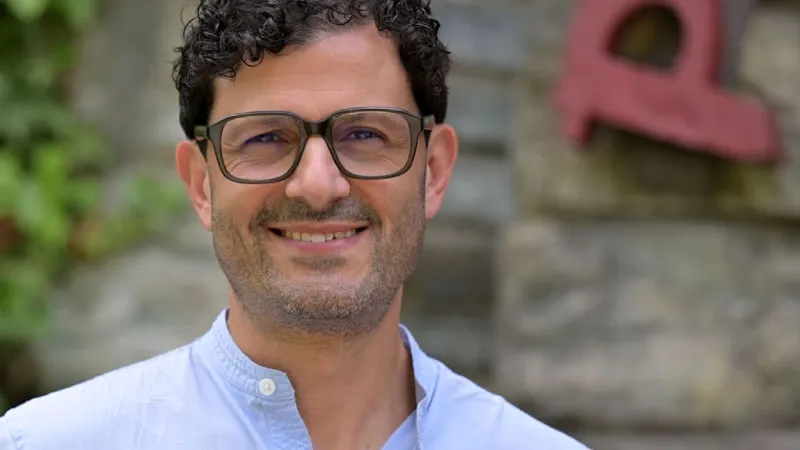
BERLIN – Luigi Pantisano, upon his election as the new chairman of Germany's Die Linke (The Left party) today, ignited a political firestorm by leveling severe accusations against the Christian Democratic Union (CDU), describing their policies as 'fascist.' His provocative statements, which also included labeling the Chancellor a 'failure,' have already begun to fracture opinions within his own party, particularly among its East German state associations.
Pantisano, a figure known for his outspoken nature, delivered a sharp rebuke to Germany's mainstream political landscape. The contentious remarks came shortly after he secured the leadership of Die Linke, signaling a potentially confrontational new era for the party.
His primary accusation targeted the CDU, the largest opposition party in the Bundestag. Pantisano did not mince words, asserting that he saw 'no difference between the CDU and the fascists themselves,' a statement poised to send shockwaves through German political discourse.
In addition to the broad condemnation of the CDU, Pantisano launched a direct personal attack. Prior to his election, he had already engaged in a frontal assault on Friedrich Merz, the leader of the CDU, indicating a deep-seated antagonism toward the center-right establishment.
The newly minted chairman also directed criticism towards the head of government, calling the Chancellor a 'failure.' While the specific individual was not explicitly named in the initial reports regarding this particular epithet, the sentiment underscores Pantisano's aggressive stance against incumbent power structures.
Such inflammatory rhetoric is highly unusual, even in the often-heated arena of German politics. Attributing 'fascist politics' to a major democratic party like the CDU is a charge that carries significant historical weight and is typically reserved for extremist groups.
The immediate fallout within Die Linke was palpable. Reports from East German state associations suggest that Pantisano's remarks were met with, at best, a lukewarm reception. Many within these regional chapters are wary of alienating potential allies or further marginalizing a party that has struggled with its electoral performance.
This internal dissonance highlights the precarious balance Die Linke must strike as it navigates its identity. Historically, the party has positioned itself at the far left of the political spectrum, advocating for radical social and economic change. However, extreme rhetoric can hinder broader appeal and coalition building.
Political analysts are observing closely how Pantisano's aggressive posturing will impact the party's future. The question remains whether this approach will galvanize its base or further isolate Die Linke from other political forces necessary for legislative influence.
Such internal rifts are not new to Die Linke, which has frequently grappled with ideological divisions. The party recently saw German Left's CDU Overture Sparks BSW Outcry Amid AfD Rise, highlighting ongoing tensions regarding its strategic direction and relationship with other parties.
The accusations against the CDU are likely to intensify the already strained relationship between Die Linke and Germany's mainstream parties. This could complicate any future attempts at collaboration or even dialogue on pressing national issues.
For the CDU, such characterizations from a leader of a parliamentary party are bound to be viewed as a grave insult and a distortion of its democratic principles. The party is expected to issue a robust defense against the claims of 'fascist politics.'
Pantisano's ascent and immediate declaration of a confrontational strategy suggest a hardening of Die Linke's position. This could signal a move away from any perceived moderation, potentially shaping the dynamics of the German political landscape for years to come.
The coming weeks will be crucial in determining the resonance of Pantisano's leadership and whether his bold, divisive rhetoric will ultimately strengthen or weaken Die Linke in the complex arena of German politics.