 Dodi Irawan
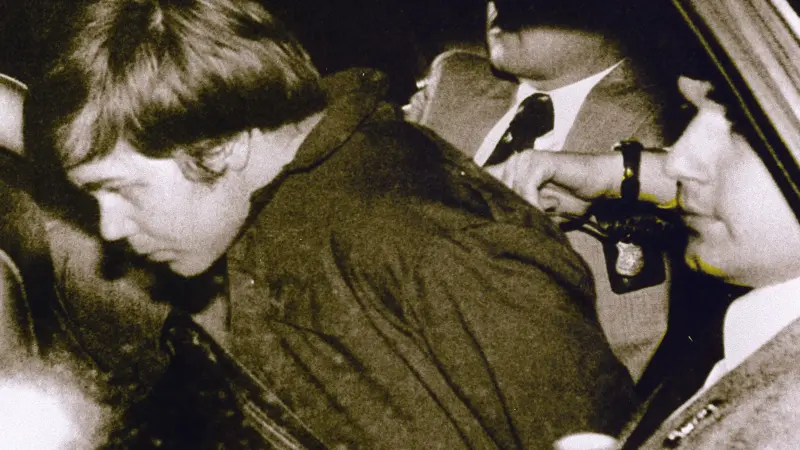
WASHINGTON — John Hinckley Jr., who attempted to assassinate President Ronald Reagan in 1981, recently described a shooting incident at a presidential press gala held at the Washington Hilton as \"spooky,\" acknowledging the chilling coincidence that the same hotel was the scene of his own notorious crime. The comment surfaced following a security breach during a high-profile event attended by President Donald Trump.
The incident, which occurred late last month during the annual White House Correspondents Dinner at the iconic Washington Hilton, involved a single shot fired in a non-public area of the hotel, causing immediate panic and a rapid security lockdown. While no one was injured, the breach forced the temporary evacuation of attendees and prompted a swift investigation by the Secret Service and local authorities.
Hinckley, now a free man after decades of institutionalization, reportedly made his observation via social media, stating, \"It is genuinely spooky that such an event could recur at that precise location, decades later.\" His words quickly reverberated across various platforms, drawing both criticism and unsettling introspection regarding the history of political violence.
The Washington Hilton holds a unique and somber place in American history. On March 30, 1981, as then-President Ronald Reagan exited the hotel after speaking to a labor conference, Hinckley opened fire, wounding Reagan, Press Secretary James Brady, a Secret Service agent, and a D.C. police officer. The incident shocked the nation and profoundly altered presidential security protocols.
For many, the recent shooting incident, however minor in comparison, served as a potent, if unwanted, reminder of that dark day. The coincidence of location reignited public debate about security measures for high-profile events and the lingering shadows of past acts of violence.
Hinckley was found not guilty by reason of insanity in the 1981 shooting and spent 34 years in a psychiatric hospital. He was granted full release in 2016, with a federal judge ruling he no longer posed a danger to himself or others. Since then, he has pursued a quiet life, including a career in music.
His latest comment, however, thrust him back into the national spotlight, prompting renewed discussions about his rehabilitation and his place in public discourse. Critics argue that his public statements, even those seemingly reflective, are insensitive given his past actions.
Security experts have weighed in on the implications of the new incident. \"Even a minor breach at such an event demands intense scrutiny,\" noted Dr. Eleanor Vance, a former Secret Service agent now consulting on threat assessment. \"The psychological dimension added by Hinckley Jr.'s comment and the historical context only amplifies the seriousness of the lapse.\"
President Donald Trump's administration has not publicly acknowledged Hinckley's statement. The White House did release a statement commending law enforcement for their swift response to the gala incident and reiterating the administration's commitment to public safety at all presidential events.
The incident at the Washington Hilton has reopened conversations about the persistent challenges of protecting high-profile figures in an increasingly complex world. It underscores the perpetual vigilance required to safeguard against threats, whether from deliberate acts or unforeseen circumstances.
Hinckley has attempted to forge a new identity separate from his past, often expressing remorse for his actions. Yet, the gravity of his history ensures that any public utterance he makes, especially one connected to a security event involving a President at the very location of his original crime, garners significant attention.
The "spooky" observation by John Hinckley Jr. serves as a stark reminder of history's echoes and the indelible marks left by pivotal moments of violence. The recurring locale forces a national reflection on how society grapples with its past and the security of its leaders.
Investigators continue to piece together the full details of the recent shooting at the Washington Hilton, working to ascertain motives and implement corrective security measures. Meanwhile, Hinckley's words continue to resonate, adding an eerie layer to an already unsettling event.
As the nation moves forward in 2026, the confluence of these events at a historic venue ensures that the conversation around presidential security, mental health, and the legacy of past crimes remains at the forefront of public consciousness.