 Dodi Irawan
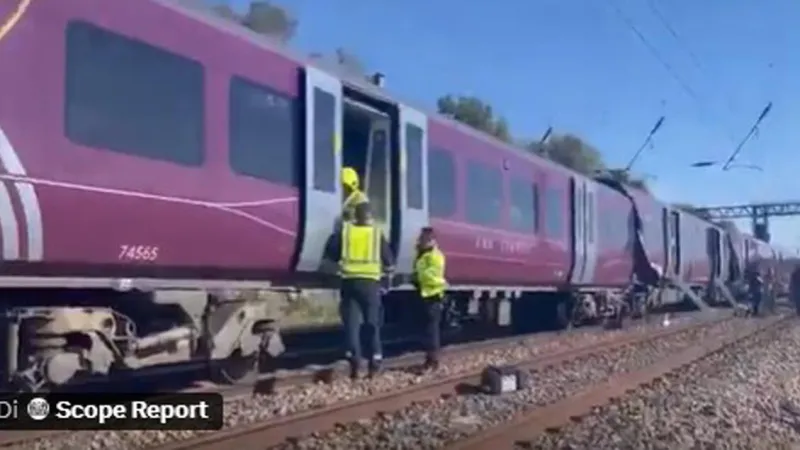
LONDON – A devastating train collision occurred earlier today north of the capital, resulting in the death of a train driver and leaving several passengers with serious injuries. The incident, unfolding between Bedford and Luton, has brought extensive sections of the national rail network to a standstill, prompting a massive emergency response.
Emergency services converged on the scene swiftly, with paramedics, fire crews, and police officers working to manage the chaotic aftermath. Multiple ambulances transported those injured to various hospitals across the region, where medical staff are treating individuals with conditions ranging from minor to critical.
Initial reports confirm one fatality, the driver of one of the involved trains, whose identity has not yet been released pending family notification. This profound loss casts a somber shadow over the ongoing rescue and recovery operations.
The collision has caused significant travel disruption. Network Rail confirmed the complete closure of the line between Bedford and Luton, affecting thousands of daily commuters and freight services. Passengers are advised to seek alternative routes and check for updated travel information before attempting journeys in the affected areas.
Authorities have initiated a comprehensive investigation into the precise circumstances leading to the North London train crash. The Rail Accident Investigation Branch (RAIB) is expected to play a central role, examining track conditions, signaling systems, and operational procedures to determine the cause of the catastrophic impact.
While details remain sparse, officials emphasize the priority lies with securing the site and caring for those affected. A spokesperson for the British Transport Police stated that initial inquiries are underway, and they are working closely with all relevant agencies.
The incident highlights the critical importance of stringent safety protocols within the rail industry. Train collisions, while rare, underscore the potential for severe consequences when such systems fail, reminding stakeholders of the continuous need for vigilance and investment in infrastructure.
Commuters face prolonged delays and cancellations as engineers assess the structural damage to the trains and the railway infrastructure. Recovery operations for the damaged rolling stock will be complex and time-consuming, indicating that services may not return to normal for an extended period.
This tragic event serves as a stark reminder of the inherent risks associated with complex transportation networks, even in systems designed with multiple redundancies for safety. The rail community and the public await further updates as the investigation progresses.
Local political representatives have expressed their condolences to the family of the deceased driver and their wishes for a swift recovery to all injured passengers. They have also called for a thorough and transparent inquiry into the collision.
Beyond immediate cancellations, the disruption extends to impact interconnected lines, creating a ripple effect across the broader transport system. Travelers are urged to remain patient and allow extra time for their journeys, particularly those relying on alternative bus or coach services being arranged.
As the affected community grapples with the aftermath, the focus remains on supporting the victims and preventing future occurrences through lessons learned from this severe incident. The full extent of the damage, both human and infrastructural, will become clearer in the coming days as investigators gather more evidence.