 Angela Stefani
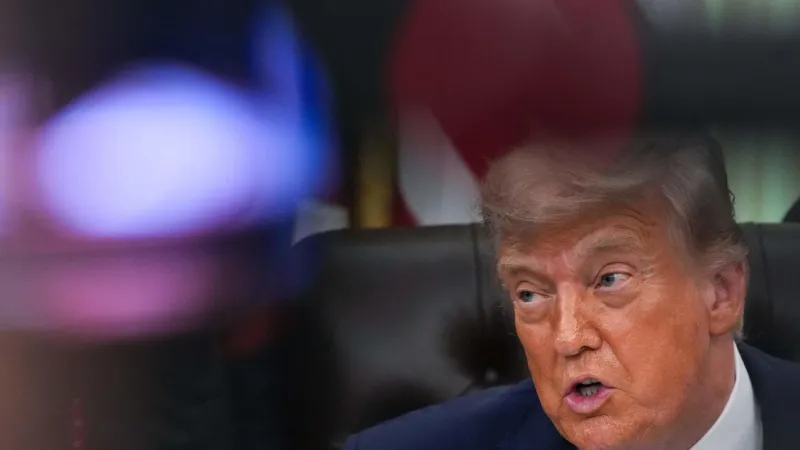
The United States, under President Donald Trump, initiated military strikes against several targets across Iran overnight, prompting Tehran to activate its air defenses and signaling a dramatic escalation of tensions in the Persian Gulf. The coordinated offensive, which reportedly included a US missile striking an oil tanker and drawing protest from India, aims to exert pressure on the Iranian regime to engage in negotiations.
Sources indicate President Trump was in the Situation Room as the strikes commenced, closely monitoring the unfolding events. According to a report by Axios, the administration's strategic objective behind these calculated Iran attacks is to compel the Iranian leadership to come to the negotiating table. This move marks a significant shift in the administration's approach to the long-standing geopolitical friction.
The head of the Pentagon affirmed the gravity of the military operation. "The attacks will be powerful and precise," the Pentagon chief stated, emphasizing the targeted nature and anticipated impact of the strikes.
Meanwhile, Iranian state media confirmed the activation of the nation's robust air defense systems across various regions. This defensive posture underscores Tehrans readiness to repel further assaults and signals a high state of alert throughout the country.
The strikes have immediately heightened concerns about a full-blown conflict in the volatile Persian Gulf region. Reports of winds of war circulating among international analysts reflect the palpable apprehension regarding the potential for wider destabilization.
A critical incident contributing to the escalating tensions involved a US missile striking an oil tanker. While details regarding the vessel's flag state and cargo remain scarce, India has officially lodged a protest, indicating potential collateral damage or a misidentification during the engagement. This development complicates the international response and could draw more nations into the diplomatic fallout.
Tensions between Washington and Tehran have simmered for decades, periodically flaring into crises. President Trump's administration has consistently adopted a firm stance against Iran's regional activities and nuclear program. This latest military action follows a period of heightened rhetoric and various provocations from both sides.
This incident echoes previous moments of severe friction, including an earlier report of President Trump weighing swift military action against Iran, as detailed in an article titled President Trump Weighs Swift Military Action Against Iran. That earlier contemplation now appears to have manifested into direct engagement.
Regional allies of the United States, particularly those in the Gulf, are closely watching the developments. The potential for a wider conflict poses significant security and economic risks for these nations, many of whom host US military bases.
International bodies and several world powers have begun issuing calls for de-escalation, urging both Washington and Tehran to exercise restraint. The prospect of an open conflict in a region vital for global energy supplies has triggered widespread alarm.
Global oil markets immediately reacted to the news, with crude prices seeing a sharp increase. Shipping lanes through the Strait of Hormuz, a critical choke point for international oil transit, face renewed scrutiny and security concerns.
The Trump administration's strategy appears to be a calculated gamble: demonstrating overwhelming force to coerce Iran into diplomatic concessions rather than allowing the current stalemate to persist. This approach carries inherent risks of miscalculation and unintended consequences.
Internally, Iran's leadership faces increasing pressure. While traditionally rallying support against external threats, the economic strain imposed by international sanctions and potential military strikes could exacerbate domestic discontent.
The ultimate success of this strategy hinges on Iran's willingness to negotiate under duress. Past instances have shown Tehran to be resilient and often defiant when faced with military pressure, preferring a protracted standoff over perceived capitulation.
As dawn breaks over the Middle East, the full extent of the damage from the Iran attacks remains unclear, and both sides are poised for further developments. The international community holds its breath, hoping for a diplomatic off-ramp rather than a full descent into regional warfare.