 Demian Sahputra

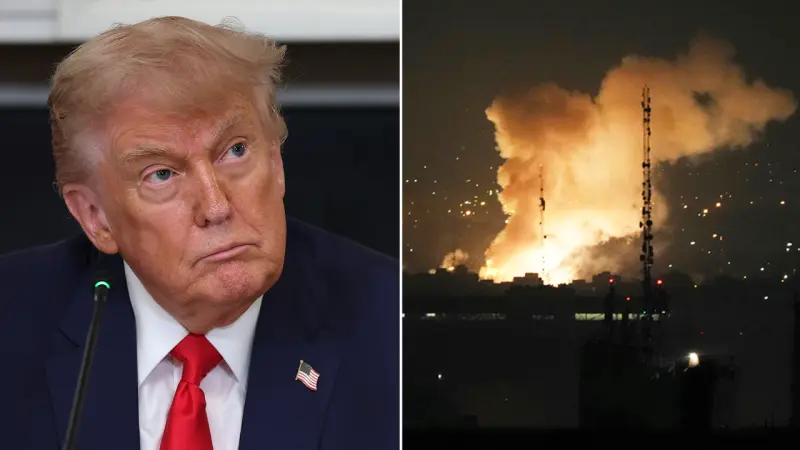
WASHINGTON, D.C. — President Donald Trump is reportedly evaluating a swift, large-scale military operation against Iran from the White House Situation Room. The strategic deliberation, as detailed by Axios, is reportedly intended to compel Tehran into engaging in negotiations amidst escalating tensions across the Persian Gulf region.
The discussions come as the geopolitical landscape in the Middle East grows increasingly volatile, characterized by what observers describe as clear “winds of war” sweeping through the Gulf. The immediate catalyst for these high-level talks appears to be a broader effort by the United States to exert significant pressure on the Iranian regime.
Adding a layer of complexity and international concern, recent reports indicate a tanker was struck by a U.S. missile, an incident that has reportedly drawn protests from Delhi, indicating significant international fallout.
President Trump has consistently emphasized the importance of securing vital maritime pathways. He previously stated, "I have ensured the transit of 100 million barrels of oil through the Strait of Hormuz," highlighting his administration's focus on maintaining global energy stability through the critical chokepoint.
The Strait of Hormuz, a narrow waterway between the Persian Gulf and the Gulf of Oman, is paramount for global oil shipments. Approximately one-fifth of the world's total oil supply passes through this strategic maritime route daily, making any disruption a severe threat to international energy markets and economies.
The potential for a rapid military intervention suggests a shift towards more assertive tactics to bring Iran to the negotiating table. This approach follows years of strained relations and intermittent confrontations between Washington and Tehran, particularly concerning Iran's nuclear program and regional influence.
Past incidents in the region have seen the United States engage in retaliatory strikes. For instance, previous reports detailed how US Retaliates: Strikes Hit Iran After Hormuz Helicopter Downing, illustrating a precedent for military responses to perceived provocations in the Gulf.
Regional allies and adversaries alike are closely monitoring the Situation Room discussions. The prospect of an extensive military operation, even a swift one, carries significant risks of widespread destabilization across the Middle East, potentially drawing in other regional and global powers.
Analysts suggest that while the stated goal is negotiation, the use of military force, even preemptively, could instead harden Iran's stance or provoke a broader conflict rather than yielding diplomatic concessions. The international community largely advocates for de-escalation and diplomatic resolutions.
Concerns about Iran's regional activities, including its support for various proxy groups and its ballistic missile program, have been long-standing points of contention. Efforts to curb Iran's influence have also been a focus for other regional actors, as evidenced by calls for nations like Lebanon to distance themselves from Tehran's agenda. The article Israel's President Dreams of Beirut, Urges Lebanon to Reject Iran underscores the widespread regional desire to counter Iranian influence.
Such an operation would represent a significant escalation in U.S. foreign policy toward Iran. The administration is likely weighing the potential short-term gains of forcing negotiations against the long-term strategic costs and unpredictable outcomes of military engagement.
The White House has yet to issue an official statement regarding the reported deliberations. However, the Axios report, citing unnamed sources, indicates that preparations and assessments for such a high-stakes military option are actively underway at the highest levels of the U.S. government.
The international community remains on edge, observing closely for any official confirmation or further developments. The implications of President Trump choosing to proceed with a large-scale military operation would resonate globally, affecting everything from oil prices to geopolitical alliances.