 Debby Wijaya
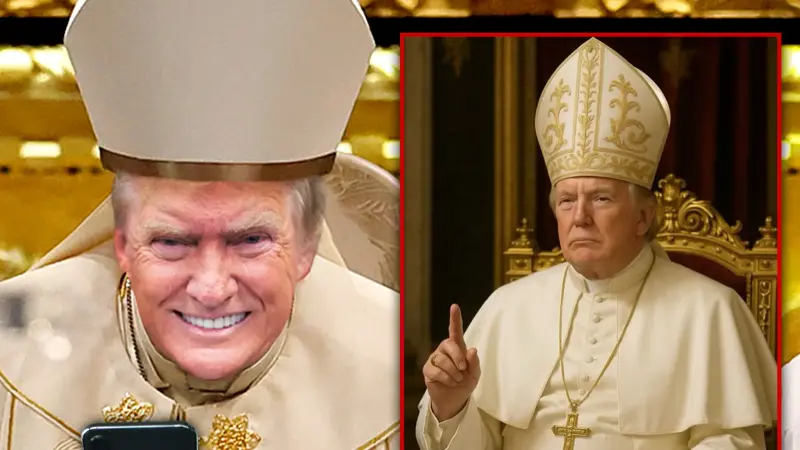
WASHINGTON — President Donald Trump sparked immediate and widespread controversy Tuesday morning when he shared an artificial intelligence-generated image depicting himself alongside Jesus Christ on his personal social media platform, Truth Social. The digitally created visual, which rapidly circulated online, ignited a fresh debate about the intersection of faith, technology, and political messaging ahead of the upcoming legislative agenda.
The image, a highly realistic yet clearly synthetic rendering, showed President Trump standing beside a serene figure resembling traditional depictions of Jesus, often in a pose suggesting shared purpose or divine endorsement. It appeared without explicit caption or commentary from the President, allowing for broad interpretation and fueling immediate speculation.
Posted just after 7 a.m. Eastern Time, the image quickly became the top trending topic across various social media platforms, drawing a torrent of reactions from both ardent supporters and staunch critics. The absence of context from the White House or the President's campaign team only amplified the public discourse.
Political analysts suggest the move could be interpreted as an attempt by President Trump to further solidify his appeal among evangelical Christian voters, a key demographic within his base. This demographic has historically shown strong support for him, often viewing his presidency through a lens of spiritual significance.
Religious leaders, however, expressed a range of sentiments. Reverend Mark Johnson, a prominent evangelical pastor from Georgia, lauded the image as a powerful symbol of faith in leadership. Conversely, Father Michael OConnell of the Catholic Diocese of New York voiced concern over what he termed the “sacrilegious use of religious iconography for political gain.”
Critics swiftly condemned the post as a potentially cynical exploitation of religious sentiment and a deliberate blurring of lines between religious devotion and political allegiance. They pointed to the increasing prevalence of AI-generated content in political campaigns and the ethical quandaries it presents regarding authenticity and manipulation.
This incident is not the first time President Trump has leveraged unconventional digital media to communicate with his base or provoke a reaction. His history of direct, unfiltered social media engagement has long been a hallmark of his political strategy, circumventing traditional media filters.
The burgeoning capabilities of artificial intelligence have introduced new complexities into the realm of public discourse, making it increasingly challenging for the average citizen to discern between genuine and synthetic content. Experts warn of the potential for deepfakes and AI-generated imagery to mislead voters and distort reality.
Dr. Evelyn Reed, a professor of digital ethics at Georgetown University, stated, “The use of AI to create powerful, evocative, and potentially misleading imagery presents a profound challenge to democratic processes. When religious symbols are incorporated, the ethical stakes become even higher.”
The broader conversation sparked by President Trump's post extends beyond its immediate political implications, touching upon the future of digital communication. As AI tools become more accessible, the capacity for individuals and political actors to craft highly persuasive, yet entirely fabricated, narratives will only grow.
While no official statement emerged from the White House regarding the intent behind the image, a campaign spokesperson, speaking off the record, indicated that President Trump often shares content he believes resonates with his supporters. This suggests a continuation of his characteristic communication style.
The episode serves as a potent reminder of how modern technology is reshaping political landscapes and the challenges it poses to factual reporting and media literacy. It underscores the ongoing need for critical engagement with digital content, especially in politically charged environments.
This event also reignites discussions within various faith communities about the appropriate representation of religious figures and the sanctity of spiritual imagery. Many believe such depictions should be reserved for genuine spiritual reflection rather than political messaging.
As the 2026 legislative session progresses and the political climate intensifies, the role of AI in shaping public opinion and electoral outcomes is expected to remain a significant point of contention. This incident provides a stark example of that evolving reality.