 Demian Sahputra
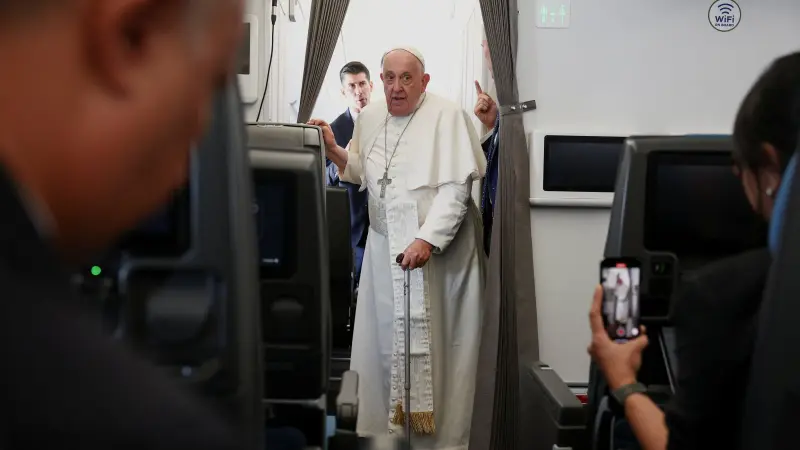
VATICAN CITY — Pope Francis today delivered a powerful and broadly interpreted condemnation of global leadership, asserting that the world is being ravaged by a handful of tyrants, a declaration that intensified an already tense ideological feud with President Donald Trump’s White House regarding international governance and human rights.
The pontiff’s remarks, made during his weekly general audience in St. Peter’s Square, did not explicitly name any nation or individual, but Vatican observers and diplomatic analysts quickly connected them to ongoing disagreements with the Trump administration over immigration policies, climate change initiatives, and the role of international institutions.
The Pope emphasized the moral imperative for leaders to prioritize the common good, lamenting what he described as a growing disregard for human dignity and the widespread suffering caused by conflicts and inequalities perpetuated by powerful, self-serving figures on the global stage.
This latest statement marks a significant escalation in the public discourse between the Vatican and Washington, a relationship characterized by friction since President Trump assumed office for his first term and which has only deepened in the current political climate of 2026.
Previous points of contention have included the Trump administration’s withdrawal from the Paris Climate Accord, its hardline stance on border security and migrant policies, and its skepticism towards multilateral organizations, all areas where Pope Francis has consistently advocated for cooperation and compassion.
Sources within the Vatican, speaking on background, indicated that the Pope’s address was a deliberate articulation of long-held concerns, signaling a deep frustration with what he perceives as a regressive trend in international leadership that prioritizes nationalistic interests over universal human values.
The White House, for its part, has maintained a public silence on the Pope’s most recent comments. However, senior administration officials have previously dismissed criticism from the Vatican as an overreach into sovereign political matters, reiterating President Trump's America First foreign policy agenda.
President Trump has often contrasted his approach to global affairs with what he views as the Vatican's more liberal social and political leanings, particularly on issues of economic protectionism and national sovereignty.
The pontiff’s use of the word “tyrants” resonates deeply within historical and theological contexts, evoking images of oppressive regimes and leaders who exploit their power for personal or nationalistic gain at the expense of justice and peace.
This high-profile dispute between two of the world’s most influential figures has prompted reactions from international diplomatic circles, with many nations watching closely as the ideological chasm widens between the spiritual leader of 1.3 billion Catholics and the leader of the free world.
Analysts suggest the Pope’s increasingly pointed rhetoric underscores a strategic effort by the Holy See to reassert its moral authority on global issues, particularly as traditional alliances shift and humanitarian crises persist across the globe.
The implications of such a pronounced disagreement could impact international efforts on peace, development, and human rights, potentially galvanizing opposition or support for both the Vatican’s and the White House’s respective worldviews.
Observers anticipate further commentary from the Vatican as the pontiff continues to champion causes related to social justice, environmental protection, and global solidarity, positioning the Holy See as a vocal counterpoint to policies perceived as detrimental to these values.
This ongoing tension highlights a fundamental clash of philosophies concerning global governance: one advocating for a shared human family with collective responsibilities, and the other prioritizing national interests and self-determination above all else.
As 2026 progresses, the world will likely continue to monitor the interactions, or lack thereof, between the Vatican and the Trump administration, recognizing the profound influence both institutions wield in shaping global narratives and policies.