 Demian Sahputra
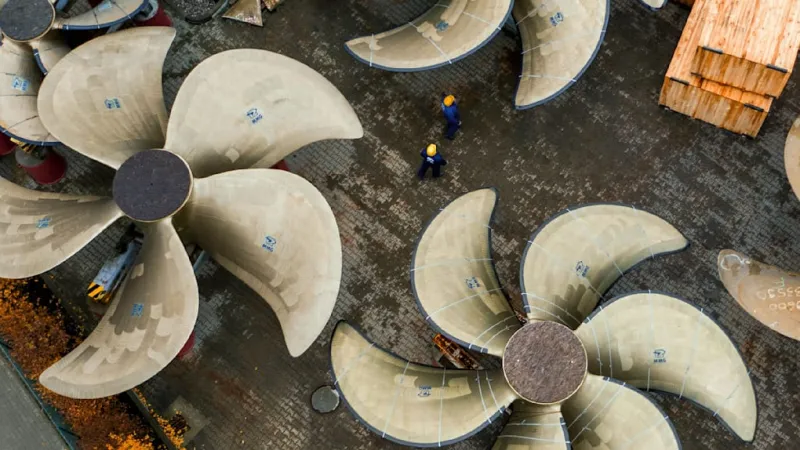
Hamburg – German shipbuilding supplier companies are experiencing their fourth consecutive year of robust business expansion, projecting substantial global growth through 2026, even as the industry scales back investments in less climate-damaging fuels. This sustained prosperity underscores a dynamic period for the sector, navigating both market triumphs and evolving environmental priorities.
The significant upturn signals a sustained resurgence for the sector, which provides critical components and technologies for vessel construction worldwide. Industry reports indicate that order books remain robust, reflecting strong demand across various segments of the maritime industry.
Analysts forecast that the powerful global growth trajectory for German shipbuilding suppliers will continue unabated into 2026. This optimistic outlook is buoyed by projected stability in international trade, renewed fleet modernization efforts, and increasing demand for specialized vessels.
Paradoxically, amidst this financial success, the sector has made a strategic pivot by curtailing investments in fuels designed to mitigate climate impact. This decision comes despite mounting global pressure for industries to adopt more sustainable practices.
Sector representatives indicate that the reduction in funding for climate-friendly propulsion technologies stems from a confluence of factors, including the high cost of development, infrastructure limitations for alternative fuels, and a perceived lack of immediate commercial viability for certain green solutions.
The current boom for German shipbuilding suppliers is largely attributed to a vigorous global shipping market. Increased e-commerce, geopolitical realignments necessitating new logistics chains, and a robust demand for offshore energy infrastructure projects contribute significantly to the surge in vessel orders.
This sustained period of prosperity marks a notable departure from the cyclical downturns that have historically characterized the shipbuilding industry. The current growth phase, now entering its fifth year if 2026 projections hold, illustrates an unprecedented era of stability and expansion for the German suppliers.
Domestically, the thriving business translates into significant economic contributions, particularly in coastal regions and industrial centers like Hamburg. Job creation, technological advancements, and a strengthened industrial base are direct benefits of this sustained growth, solidifying Germany's position as a maritime technology leader.
The decision to decelerate investments in green fuels presents a critical environmental quandary. While the industry acknowledges the necessity of decarbonization, the immediate financial and logistical hurdles appear to be prioritizing short-term gains over long-term environmental commitments.
One anonymous industry insider noted, "While we understand the global push for sustainability, the current economic landscape makes significant upfront investments in unproven green technologies challenging. Our focus remains on delivering efficient and reliable solutions for our clients."
Despite the slowdown in direct green fuel investments, innovation remains a cornerstone of the German shipbuilding supplier sector. Companies continue to develop advanced navigation systems, optimized hull designs, and more efficient engine technologies that indirectly contribute to reduced fuel consumption and emissions.
The current investment trend could spur policymakers to introduce stronger incentives or regulatory frameworks to accelerate the adoption of cleaner maritime fuels. Without such external drivers, the industry might prioritize conventional, proven technologies over emerging green alternatives.
German shipbuilding suppliers face intense global competition, particularly from Asian counterparts. Their competitive edge often relies on superior engineering, quality, and advanced technological integration, which requires continuous research and development. This global environment further complicates costly green transitions.
The growth is not uniform across all vessel types. There is a particularly strong demand for container ships, specialized chemical tankers, and vessels supporting the offshore wind energy sector, each requiring specific, high-tech components from German suppliers.