 Demian Sahputra
Bologna, Italy – Italian Prime Minister Giorgia Meloni on Tuesday denounced as “unacceptable” the violent clashes that gripped the city of Bologna overnight following the death of Fakir, a man whose passing has ignited widespread protests. The Premier called for a rigorous investigation to ascertain the full truth behind the incident, which saw intense street skirmishes continue into the late hours, involving protestors and law enforcement.
Meloni's strong statement underscored the gravity of the situation, directly addressing the unrest that has roiled the Emilian capital. She emphasized the imperative of upholding public order while ensuring transparency and accountability in the aftermath of Fakir's death.
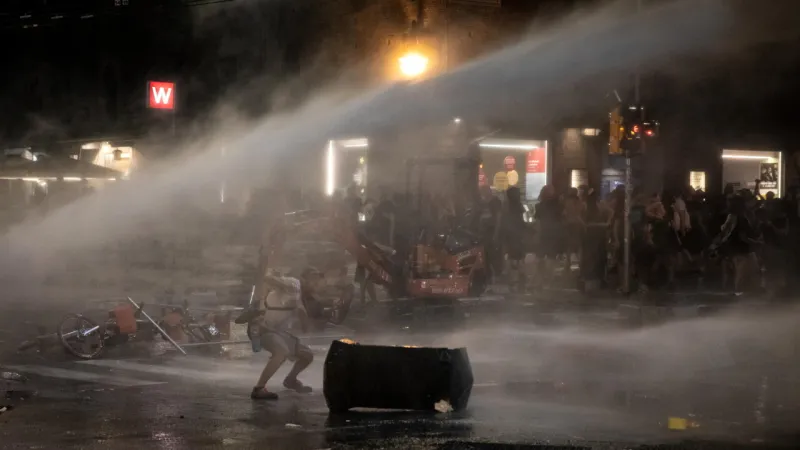
Eyewitnesses reported scenes of urban guerrilla warfare, with groups of protestors engaging in confrontations with police forces across various city districts. The demonstrations, which initially began as a mournful protest against Fakir's death, quickly escalated into direct clashes, leading to property damage and several injuries.
The precise circumstances surrounding Fakir's death remain under official investigation. While details are still emerging, preliminary reports suggest he died while in custody, a factor that has fueled public outrage and demands for justice from civil rights groups and local communities. This incident echoes concerns seen in other parts of the country, as documented in articles such as Moroccan Immigrant Death Ignites Violent Protests Across Italy, where similar tragic events have sparked widespread public reaction.
In her remarks, Prime Minister Meloni cautioned against attempts to exploit the tragedy for divisive purposes. “It is irresponsible to fuel a climate of hatred towards a state institution,” she stated, urging calm and a focus on establishing facts through official channels. Her comments were aimed at de-escalating tensions and fostering an environment conducive to a fair inquiry.
The Premier reiterated her demand for “rigor” in the investigation, signaling the governments commitment to uncovering what transpired. This pledge aims to address public skepticism and ensure that all aspects of Fakir's death are thoroughly examined, providing clarity to his family and the wider community.
The city of Bologna has witnessed previous instances of social unrest, though the scale and intensity of Monday night's clashes mark a significant escalation. Local authorities had anticipated demonstrations but were reportedly overwhelmed by the extent of the nighttime confrontations. The existing article Fakir Custody Death Ignites Bologna Protest for Truth, Dignity provides further context on the initial public outcry.
Local police officials confirmed multiple arrests made during the skirmishes, stating that officers faced aggressive behavior from certain factions within the protesting crowds. They maintain that law enforcement acted to restore order and protect public safety, despite the challenging circumstances.
The incident carries significant political weight for Meloni's administration, which has consistently emphasized law and order. The government faces the delicate task of balancing the public's demand for accountability with the need to support state bodies and prevent further societal fragmentation.
Community leaders and advocacy groups have expressed profound sorrow over Fakir's death and have called for peaceful but resolute demands for truth and justice. They argue that transparency in such cases is crucial for maintaining public trust in state institutions.
The events in Bologna underscore a broader national dialogue regarding police conduct, accountability, and the rights of individuals in custody. The outcome of the investigation into Fakir's death could set precedents for how similar incidents are handled across Italy.
The Ministry of Interior is expected to provide further updates on the investigations progress and the measures being taken to prevent future outbreaks of violence. The government's swift and decisive response is critical in managing the ongoing public sentiment.
As Bologna grapples with the aftermath, the emphasis from the highest levels of government remains on unity in the pursuit of truth, rather than allowing the tragedy to sow deeper divisions within society or between citizens and state authorities.