 Angela Stefani
FRANKFURT — The European Central Bank (ECB) initiated its first key interest rate hike in three years this week, citing persistent inflationary pressures across the eurozone. This pivotal decision arrives as escalating tensions from the Iran war rattle global markets, prompting leading financial analysts, including Konstantin Veit of PIMCO, to voice significantly weaker growth outlooks compared to the ECB's current projections.
The rate increase marks a significant shift in monetary policy, abandoning the accommodative stance maintained to bolster economic recovery following recent global disruptions. The move underscores the central bank's commitment to its primary mandate of price stability.
Inflationary pressures have mounted steadily, driven by a confluence of supply chain disruptions, energy price volatility, and robust consumer demand. The ECB has been under increasing pressure to act decisively to curb the rising cost of living impacting millions of European citizens.
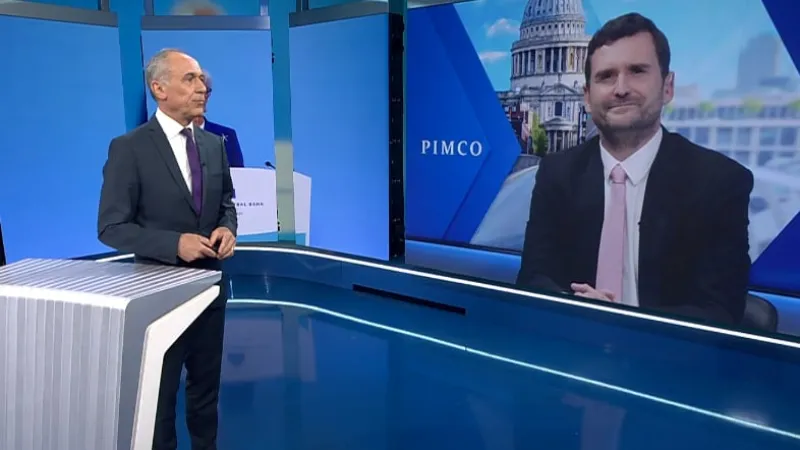
Konstantin Veit, a prominent portfolio manager at PIMCO, articulated a starkly different economic forecast during a recent interview with Dietmar Deffner. Veit stated, "We consider growth prospects significantly weaker than the ECB currently forecasts."
Veit emphasized the distinct focus of the central bank, noting, "The ECB has an inflation mandate, not a growth mandate." This distinction suggests that while the ECB prioritizes combating inflation, its actions might inadvertently impede broader economic expansion.
The ongoing escalation of the Iran war has injected considerable uncertainty into global financial markets, contributing to the turbulences observed. Oil prices, commodity markets, and investor sentiment have all reacted to the geopolitical instability, creating headwinds for economic recovery.
Such market jitters typically translate into reduced investment and consumer confidence, directly affecting economic growth trajectories. Businesses face higher operational costs and greater uncertainty, which can lead to cautious spending and hiring practices.
The ECB finds itself navigating a complex economic landscape where geopolitical events intersect with domestic inflation challenges. Balancing the imperative to control prices with the potential ramifications for economic growth presents a formidable challenge for policymakers.
While the ECB remains steadfast in its current projections, the divergence of opinion from respected financial institutions like PIMCO highlights a broader debate within economic circles about the true strength and resilience of the European economy.
Observers will closely monitor upcoming economic indicators and future statements from the ECB to gauge the trajectory of inflation and growth. The delicate balance between taming price surges and fostering sustainable economic activity remains central to the eurozone's financial stability.
The ripple effects of the Iran war extend beyond immediate market volatility, influencing everything from supply chains to energy costs, which directly feed into the inflationary pressures the ECB is attempting to mitigate.
The decisions made in Frankfurt will undoubtedly shape the economic realities for European households and businesses in the coming months, underscoring the critical nature of monetary policy in a turbulent global environment.