 Robert Andrison
Global leaders are converging on Evian, France, for the Group of Seven (G7) Summit, where an intensely guarded agenda will see discussions heavily focused on escalating global conflicts and strengthening defense strategies. French President Emmanuel Macron and President Donald Trump are scheduled for a crucial bilateral meeting tomorrow evening, preceding a highly anticipated, top-secret reception at the historic Palace of Versailles.
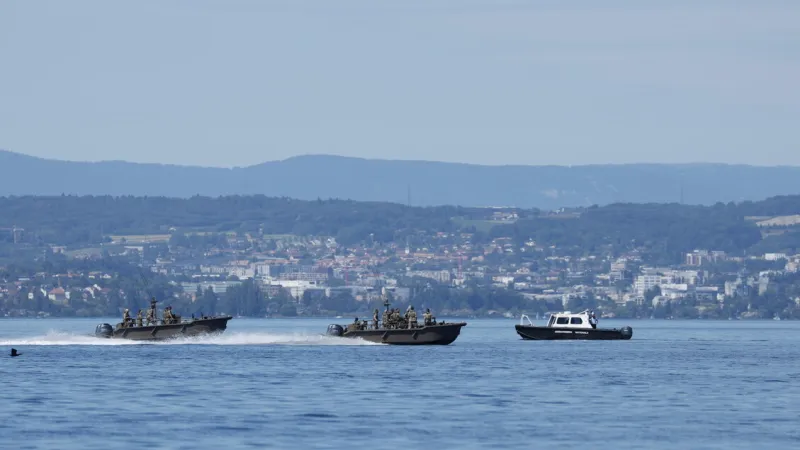
The picturesque lakeside town of Evian has undergone extensive fortification in anticipation of the high-stakes gathering. Security forces have established multiple perimeters, implementing stringent checks and surveillance to ensure the safety of the world leaders and their delegations. This heightened security underscores the gravity of the issues slated for debate.
Indeed, the core of the G7 agenda centers on pressing geopolitical instabilities. Persistent conflicts in various regions demand concerted international action, and member states are expected to deliberate on strategies to de-escalate tensions, foster peace, and address the humanitarian consequences of war.
Defense cooperation emerges as another dominant theme. With evolving threats and shifting alliances, G7 nations aim to align their defense postures, enhance intelligence sharing, and potentially forge new security partnerships. The discussions are critical for maintaining a stable international order in a volatile era.
A highlight of the summit will be the bilateral meeting between President Macron and President Trump. Scheduled for tomorrow evening, this encounter is expected to cover a wide array of topics, from trade relations and climate policy to their respective nations roles in global security. Both leaders seek to find common ground on contentious issues.
Following their meeting, President Macron will host a private reception at the Palace of Versailles. Details of this event remain top-secret, adding an element of intrigue to the diplomatic proceedings. Such a grand setting often symbolizes the weight and historical significance of the discussions held.
Beyond war and defense, leaders will likely touch upon global economic stability, energy security, and the ongoing efforts to combat climate change. The G7 represents an important forum for coordinating policies that impact billions worldwide, even as individual nations grapple with domestic challenges.
The summit participants include leaders from Canada, Germany, Italy, Japan, the United Kingdom, the United States, and France. Each arrives with a unique perspective on the worlds most pressing issues, making consensus-building a complex yet essential endeavor. President Trump, for instance, recently departed for the critical G7 Summit following his 80th birthday, a journey detailed in the article President Trump Commemorates 80th Birthday, Departs for Critical G7 Summit.
Historically, G7 summits have served as pivotal platforms for addressing global challenges, from financial crises to health pandemics. This years focus reflects a clear recognition of the current geopolitical landscape, where military and security concerns have ascended to the forefront of international discourse.
The choice of Evian, a location known for its tranquility, contrasts sharply with the turbulent global issues being discussed. This deliberate setting perhaps aims to foster an atmosphere conducive to candid and productive dialogue among the worlds most influential democratic nations.
Analysts suggest the summits success will be measured by its ability to produce tangible commitments rather than mere rhetoric. The stakes are particularly high given the interconnected nature of modern conflicts and the increasing need for multilateral solutions.
The leaders face the daunting task of navigating complex diplomatic terrain, balancing national interests with collective global responsibilities. Their decisions in Evian could set the tone for international relations for the remainder of the year and beyond, particularly concerning peace and security.