 Demian Sahputra
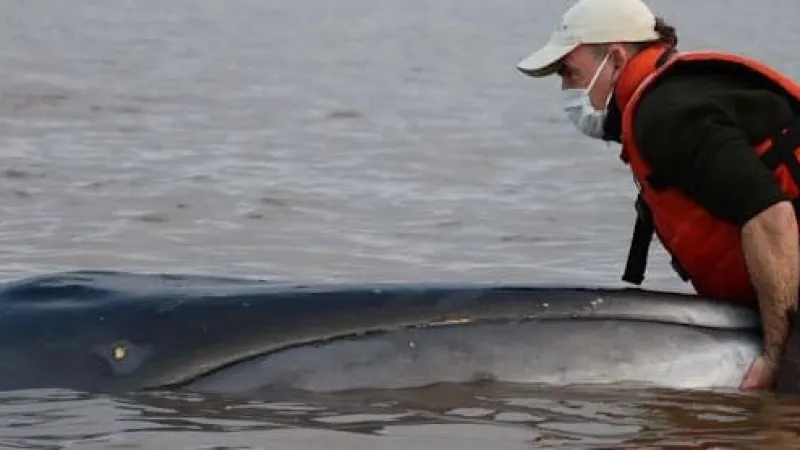
BUENOS AIRES — A seven-meter sei whale tragically perished on a sandbank in the Río de la Plata river after a prolonged, day-long rescue operation failed to dislodge the massive marine mammal. Hopes that rising water levels would aid its liberation were ultimately dashed, culminating in a somber outcome for the majestic creature.
The immense sei whale, an endangered species known for its sleek body and migratory patterns, had become inextricably trapped, its immense weight pressing into the shallow riverbed. Its presence so far upstream in the busy waterway was itself an unusual occurrence, immediately drawing concern from local authorities and environmentalists.
Local fishermen first alerted authorities to the stranded whales plight early yesterday morning. Upon arrival, rescue teams from various governmental and environmental agencies rapidly assessed the precarious situation, recognizing the immense challenge posed by the animal's size and location.
The primary strategy hinged on leveraging the natural tidal rhythms of the Río de la Plata. Experts calculated that an anticipated rise in water levels, usually occurring during specific periods, would provide sufficient depth to refloat the whale and guide it back to deeper, more navigable waters.
Over the course of more than 24 hours, dedicated teams worked tirelessly around the clock, deploying specialized equipment and gentle techniques. They attempted to keep the whale hydrated and calm, while meticulously monitoring water levels and the animal's deteriorating condition.
The shifting sands of the sandbank proved a formidable obstacle, creating an unstable environment for the heavy whale. Furthermore, the sheer scale of the operation required significant coordination among disparate groups, all working against time and the formidable forces of nature.
Despite the valiant efforts, the whale showed increasing signs of distress. Prolonged exposure out of its natural buoyant environment and the stress of its predicament took a severe toll on its health, leading to concerns among veterinarians on site.
As the expected high tide approached and then receded without providing the necessary lift, the grim reality of the situation became clear. The window of opportunity to successfully refloat the stranded whale had closed, leaving rescuers with few remaining options.
Officials regretfully announced the whale's death late this afternoon. The news cast a pall over the rescue site, with many onlookers and team members expressing profound sadness and disappointment at the unsuccessful outcome of their arduous mission.
Sei whales are among the fastest of all cetaceans, capable of reaching speeds up to 50 kilometers per hour. They are filter feeders, primarily consuming krill and small schooling fish. Their global populations have been severely depleted by commercial whaling in the past, making each individual loss particularly significant for conservation efforts.
Whale strandings, though often natural occurrences, can be exacerbated by human activities such as acoustic pollution or fishing gear entanglement. While the exact cause of this whale's initial stranding remains under investigation, such incidents highlight the vulnerabilities of marine life in increasingly busy coastal environments.
The tragic event prompts a reevaluation of emergency response protocols for large marine animal strandings in complex riverine systems. Marine biologists and rescue coordinators will likely analyze the operational details to glean lessons that could improve outcomes in future, similar circumstances.
The incident has resonated deeply within the local community and among environmental advocates, serving as a poignant reminder of the fragility of marine ecosystems and the constant challenges faced by wildlife in proximity to human habitation. The whale's death underscores the urgent need for ongoing conservation initiatives.