 Stefani Rindus
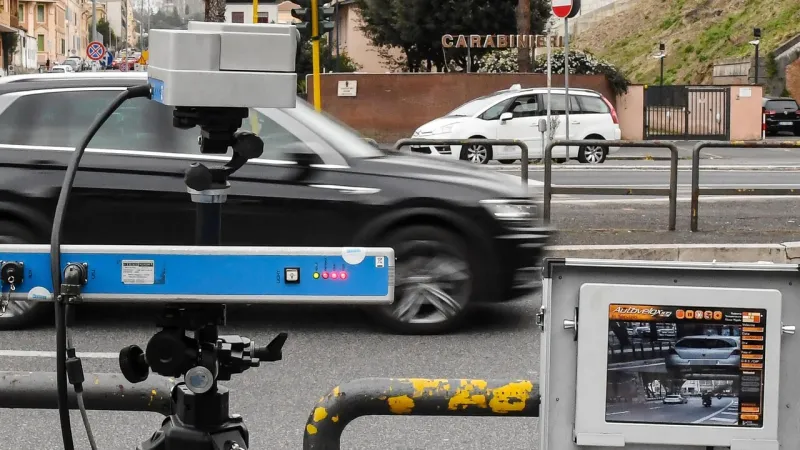
Italian cities have collectively amassed more than 300 million euros in revenue from speed camera fines over the past five years, according to a recent analysis by the consumer association Codacons. This substantial sum highlights the pervasive role of speed enforcement technology, known as autovelox, in municipal budgets across the nation. The findings reveal significant disparities among major urban centers, sparking renewed debate over the primary purpose of these traffic control measures.
The report details that these considerable funds were generated between 2021 and 2025, painting a clear picture of the fiscal impact of speeding infractions on motorists. Critics contend that such high revenue figures suggest an emphasis on financial gain rather than strictly on enhancing road safety, a claim often denied by local administrations.
Florence stands out as the undisputed leader in this revenue stream, having collected an astounding 86 million euros from speed cameras during the five-year period. This figure places the Tuscan capital far ahead of other major Italian cities, raising questions about the concentration and deployment of speed cameras within its municipal boundaries.
In stark contrast, Naples recorded a notably lower collection of just 59,000 euros from speed cameras over the identical timeframe. This considerable difference, as highlighted by Codacons, underscores a divergent approach or effectiveness in traffic enforcement strategies between major metropolitan areas. Such a wide gap prompts further scrutiny into local traffic policies and infrastructure.
Carlo Rienzi, president of Codacons, issued a clear statement regarding the findings. Rienzi declared, "Florence in testa con 86 milioni, a Napoli solo 59.000 euro."
This direct observation from the consumer advocacy group underscores their concern regarding the immense sums involved and the pronounced disparities. The association has consistently voiced its apprehension that speed cameras are often deployed more for their revenue-generating potential than for their stated objective of preventing accidents and promoting safer driving conditions.
Codacons advocates for greater transparency and more stringent regulations concerning the placement and calibration of these devices. They argue that public trust in traffic enforcement erodes when the perception shifts from safety to mere municipal income generation.
Across Italy, the implementation of autovelox systems is justified by authorities as a critical tool in reducing speeding and, consequently, traffic fatalities and injuries. However, the sheer volume of fines and the uneven distribution of revenues have long fueled public skepticism and sparked calls for reform among motorists and consumer groups.
The debate extends beyond mere numbers, touching on broader issues of urban mobility, infrastructure investment, and fair enforcement. Municipalities often argue that the funds generated are reinvested into road maintenance, public services, and further traffic safety initiatives, though detailed breakdowns are not always readily available to the public.
This substantial income stream has also drawn attention from various political factions and advocacy groups. Some argue that it places an undue burden on citizens, particularly those in lower-income brackets, who may rely on personal vehicles for commuting and face steep penalties for minor infringements.
The disparity between cities like Florence and Naples could be attributed to several factors, including the number of operational speed cameras, their strategic placement, the volume of traffic, and local enforcement priorities. An examination of these variables would be crucial for a comprehensive understanding of the situation.
Moving forward, the Codacons report is expected to intensify the ongoing public discourse surrounding speed camera policies. It will likely pressure local governments to provide more robust justifications for their enforcement strategies and greater accountability for how the substantial revenues are utilized. The goal, as often reiterated by consumer advocates, should be road safety first, with revenue generation a secondary, if inevitable, outcome.